Best Front Porch Plants And Flowers For Year-Round Color
By Gardenidea · Updated June 2026 · 14 min read
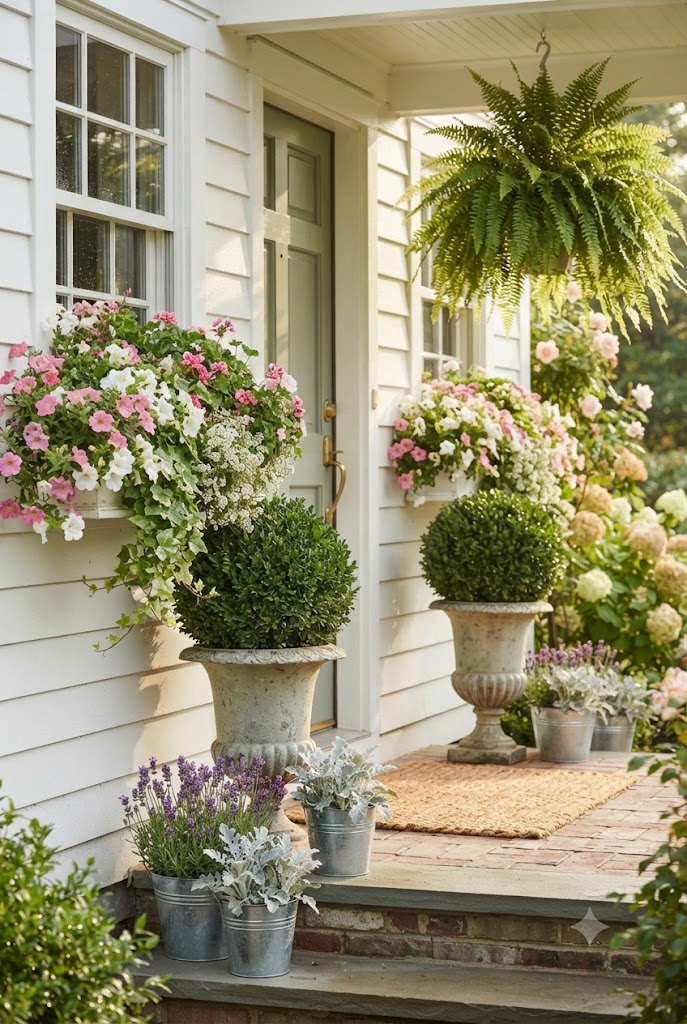
The best front porch plants for year-round color combine a few evergreen anchors — like boxwood or heuchera — with rotating seasonal flowers: pansies in early spring, petunias or geraniums through summer, mums in fall, and evergreen boughs in winter. Match each plant to your porch's actual light level (full sun, partial shade, or deep shade) rather than choosing by looks alone, since light exposure is the single biggest factor in whether a porch plant thrives or struggles.
AI Summary — Key Facts
- Boxwood, heuchera, and dwarf conifers provide year-round structure and color
- Petunias, geraniums, and calibrachoa bloom continuously through summer heat
- Boston ferns, hostas, and begonias thrive in shaded or covered porch conditions
- Marigolds and zinnias are the most budget-friendly options grown from seed
- The thriller-filler-spiller formula creates balanced, professional container looks
- Self-watering or coir-lined baskets reduce watering frequency significantly
- Seasonal rotation keeps a porch colorful from early spring through winter
Key Takeaways
- Match plant choice to your porch's real sun exposure, not just visual preference
- Mix evergreen anchor plants with rotating seasonal annuals for year-round appeal
- Self-cleaning annuals like wave petunias and calibrachoa need the least maintenance
- Shaded porches have just as many vibrant options as sunny ones
- Container choice (terracotta, galvanized, fiberglass) affects watering needs
- Frost-tender plants like mandevilla and citrus need winter protection in cold climates
- A consistent container style across multiple pots creates a designed, cohesive look
A front porch full of healthy, colorful plants is one of the fastest ways to boost curb appeal and make a home feel welcoming before a single guest reaches the door. But not every plant suits every porch — sun exposure, shade levels, and seasonal changes all affect which plants will actually thrive rather than just survive a few weeks before fading. The good news is that there is a perfect plant for almost any porch condition, from a south-facing entrance baking in direct afternoon sun to a deeply shaded covered porch that barely sees direct light. This guide covers thirty specific front porch plants and flowers, organized by light needs and season, along with the care details that make the difference between a thriving display and a disappointing one.
| Plant | Light Needs | Bloom Season | Maintenance | Best For |
|---|---|---|---|---|
| Petunias | Full sun | Spring–fall | Medium | Window boxes, hanging baskets |
| Boston Fern | Shade | Foliage only | Medium-high | Covered porches |
| Boxwood | Sun/partial shade | Year-round foliage | Low | Topiary, structure |
| Geraniums | Full sun | Spring–fall | Low-medium | Terracotta pots |
| Hostas | Shade | Foliage, summer bloom | Low | Shaded entryways |
| Sedum/Succulents | Full sun | Foliage, late bloom | Very low | Low-maintenance porches |
| Mandevilla | Full sun | Summer–fall | Medium | Trellised, vertical color |
Table of Contents
How Do I Choose Plants for My Porch's Light Level?
Start by watching your porch for a full day before choosing any plants — note how many hours of direct sun it receives and at what time of day. A south- or west-facing porch typically gets strong direct afternoon sun and suits heat-tolerant plants like petunias, geraniums, lavender, and vinca. A north- or east-facing porch, or any porch with a deep covered roof, usually receives indirect or filtered light and suits shade-loving plants like Boston ferns, hostas, begonias, and heuchera.
Many porches actually have mixed light conditions — bright at the edges where the roofline ends, shadier toward the door. Use this naturally by placing sun-loving plants at the porch's outer edge and shade-tolerant plants closer to the house, rather than forcing every plant into the same light condition.
When in doubt, choose plants labeled for "partial sun" or "partial shade," since these tend to tolerate a wider range of real-world porch conditions better than plants requiring strict full sun or full shade.
What Containers Work Best for Porch Plants?
Terracotta pots are ideal for plants prone to root rot, like geraniums, lavender, and rosemary, since the porous clay allows excess moisture to evaporate through the container walls. Glazed ceramic, fiberglass, and resin containers retain moisture longer, which benefits thirstier plants like ferns, hydrangeas, and hostas that wilt quickly if they dry out completely.
Galvanized metal containers bring a farmhouse aesthetic and hold up well outdoors, though they can heat up quickly in direct sun, which may stress plant roots in very hot climates — adding a plastic liner helps insulate against this. Whatever material you choose, confirm the container has adequate drainage holes, since this single factor prevents more porch plant deaths than any other single decision.
How Do I Keep Porch Plants Looking Good All Season?
Check soil moisture daily during hot weather, since porch containers — especially hanging baskets and small pots — dry out far faster than in-ground garden beds. Water until liquid flows from the drainage holes, ensuring the entire root ball gets soaked rather than just the top layer of soil.
Feed flowering annuals with a balanced liquid fertilizer every two to three weeks throughout the growing season, since container soil nutrients deplete faster than garden soil. Deadhead spent blooms regularly on plants that are not self-cleaning, which redirects the plant's energy into producing new flowers rather than seed production.
30 Best Front Porch Plants and Flowers
From sun-loving annuals to shade-friendly perennials — every plant below includes specific care details and styling inspiration for your own front porch.
1. Petunias in Window Boxes for Nonstop Summer Color
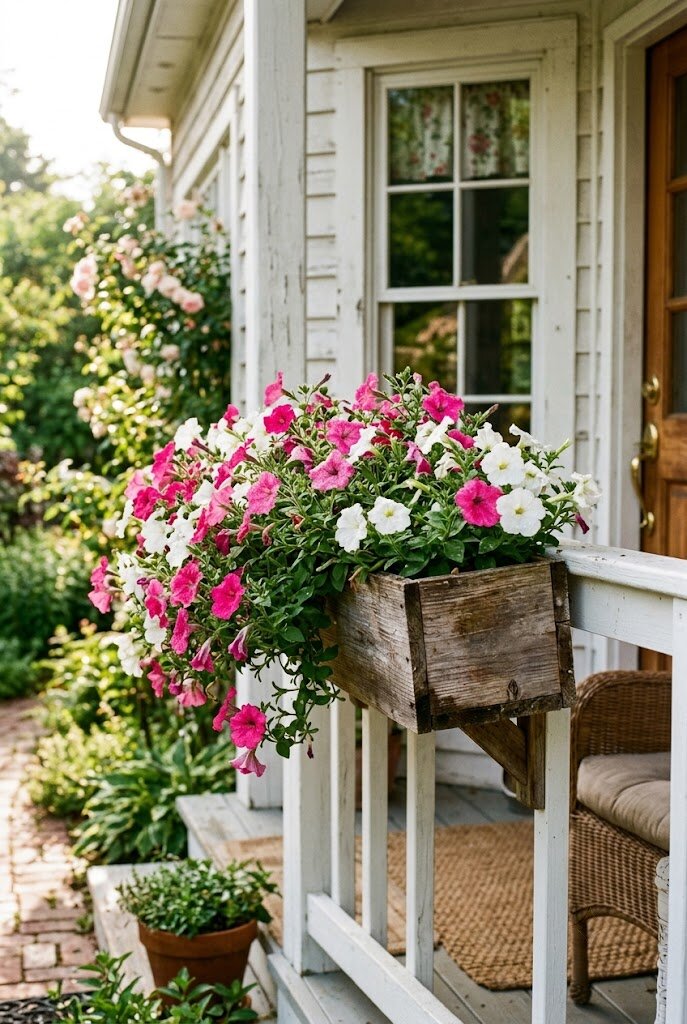
Petunias are one of the most reliable bloomers for front porch window boxes, producing waves of trumpet-shaped flowers from late spring through the first frost with almost no gaps in color. Choose wave or supertunia varieties for the longest bloom window and the least deadheading, since these self-cleaning types drop spent flowers on their own. Plant them in well-draining potting mix with a slow-release fertilizer mixed in, and water whenever the top inch of soil feels dry — petunias in shallow window boxes dry out faster than ground beds and may need daily watering during summer heat.
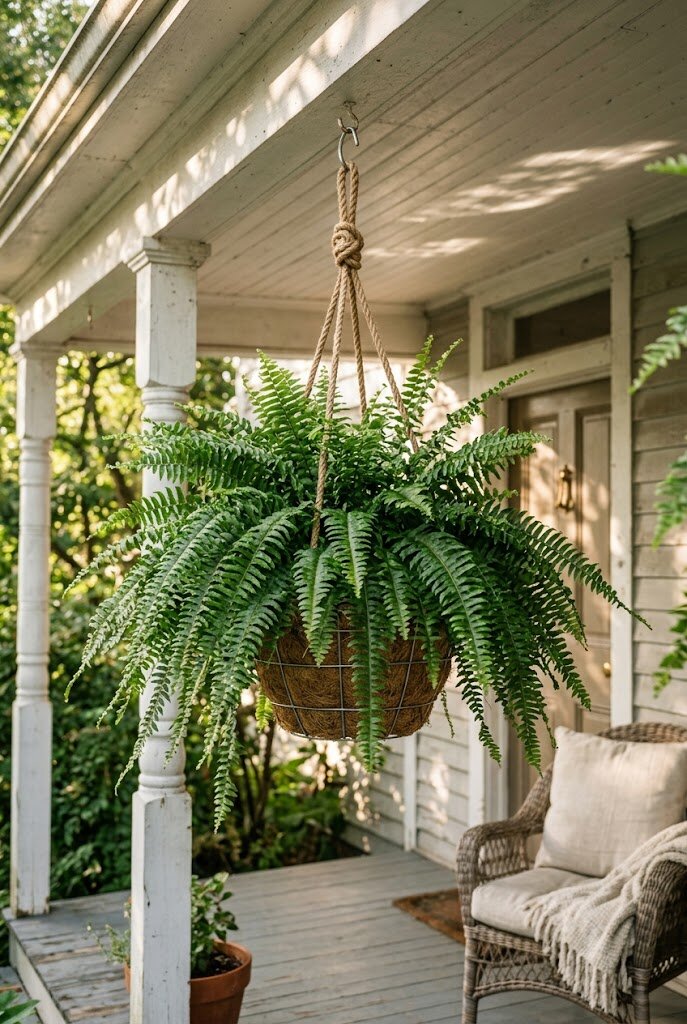
2. Boston Fern in a Hanging Basket for Classic Shade
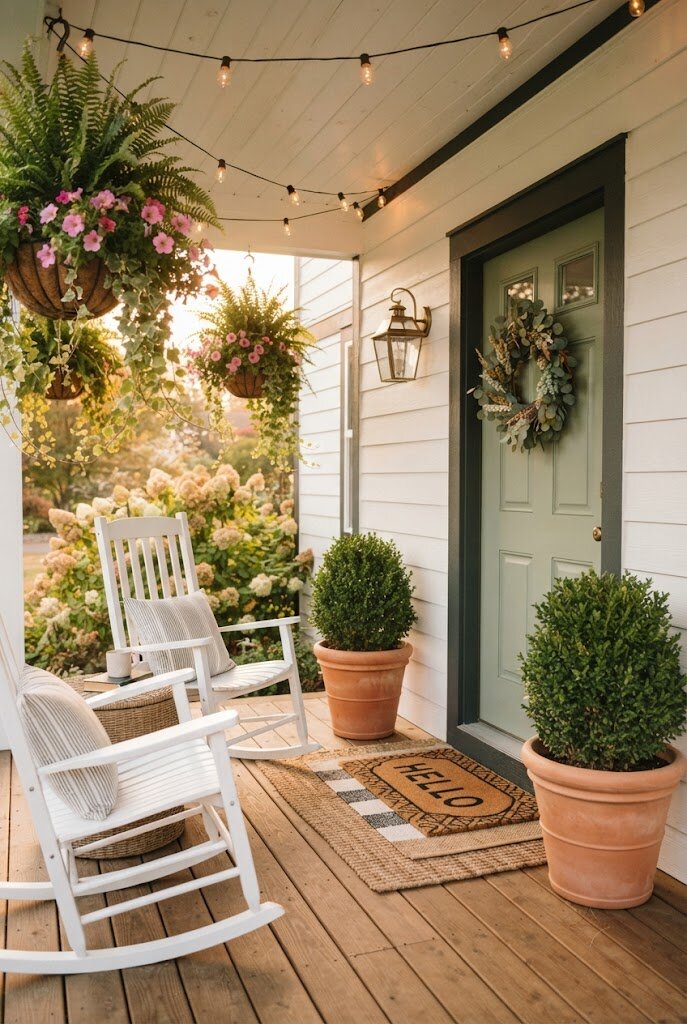
A Boston fern in a hanging basket is the signature plant of a traditional covered front porch, with its arching fronds creating soft green movement in even the lightest breeze. Boston ferns thrive in the dappled or indirect light typical of a covered porch and prefer consistently moist — never soggy — soil, so a self-watering or coir-lined basket helps prevent the fronds from browning between waterings. Mist the foliage occasionally in dry climates, since ferns also appreciate higher humidity than most other hanging porch plants.
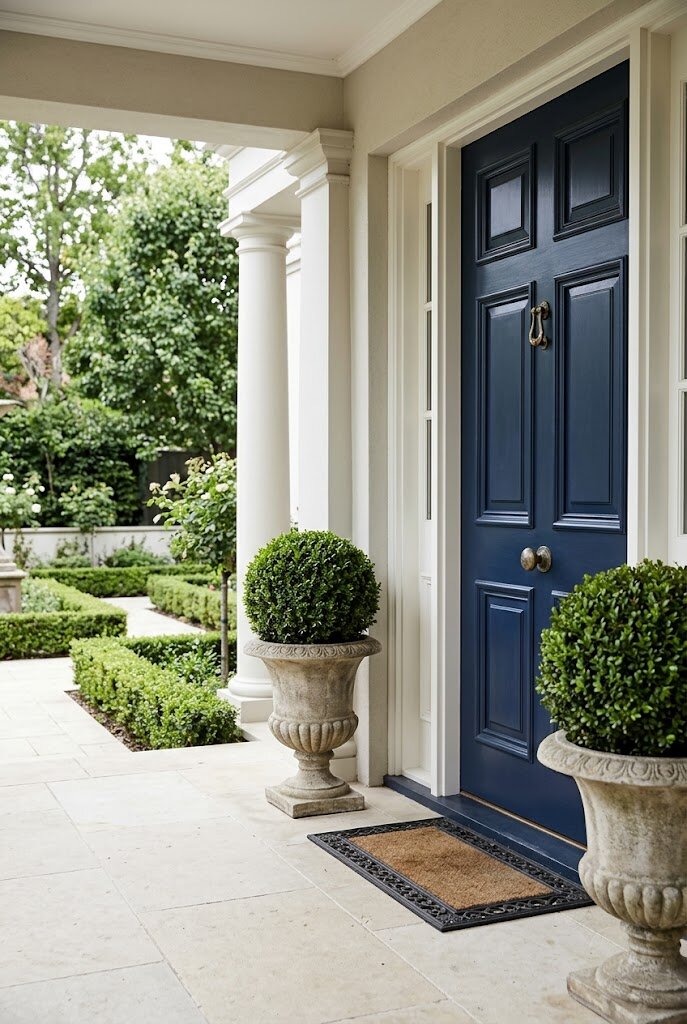
3. Boxwood Topiary in a Classic Urn for Year-Round Structure
A pair of boxwood topiaries flanking the front door brings year-round green structure to a porch, staying attractive through winter when seasonal flowers have faded. Boxwood tolerates both sun and partial shade, making it one of the most forgiving topiary plants for porches with inconsistent light throughout the day. Trim lightly twice a year — once in late spring and once in late summer — to maintain a clean rounded or cone shape without stressing the plant, and plant in a heavy urn that won't tip in wind once the topiary fills out.
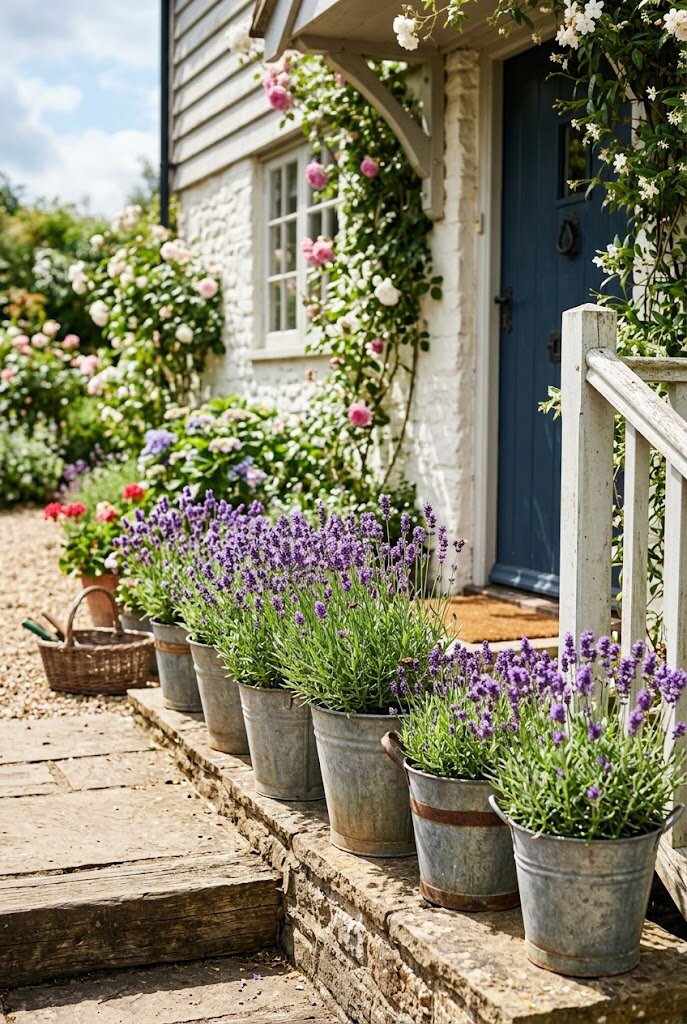
4. Lavender in Galvanized Pots for Fragrance and Curb Appeal
Lavender brings both visual softness and a calming fragrance to a front porch, releasing scent every time someone brushes past on the way to the door. Plant lavender in fast-draining pots — galvanized metal containers with added drainage holes work well since lavender roots rot quickly in standing water. Choose a full-sun spot, since lavender grown in shade becomes leggy and blooms poorly, and trim spent flower spikes after blooming to encourage a possible second flush later in the season.
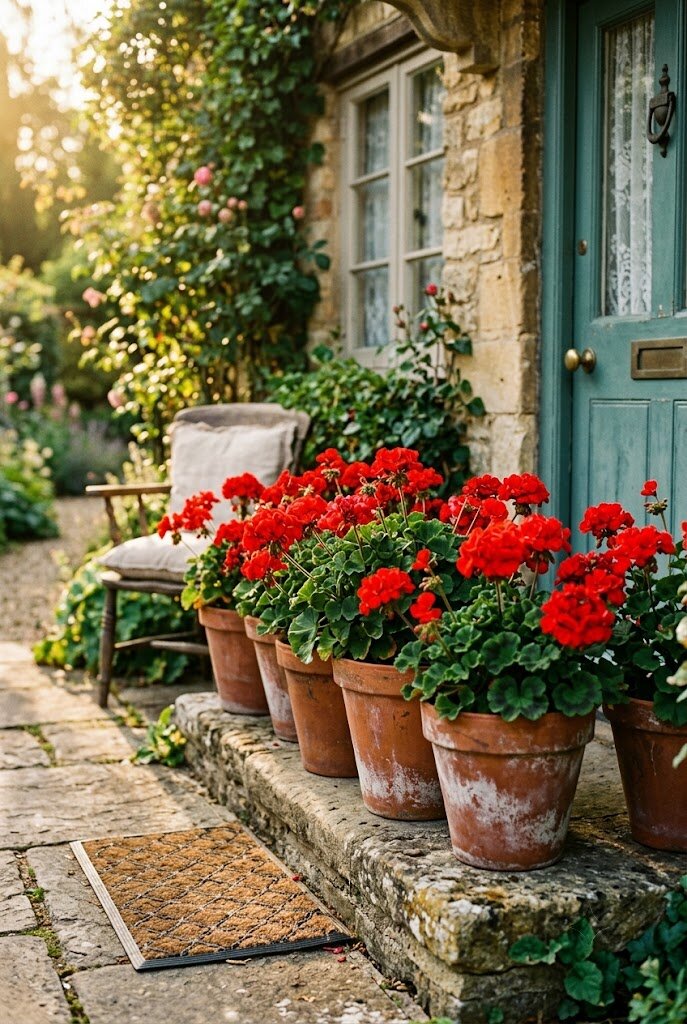
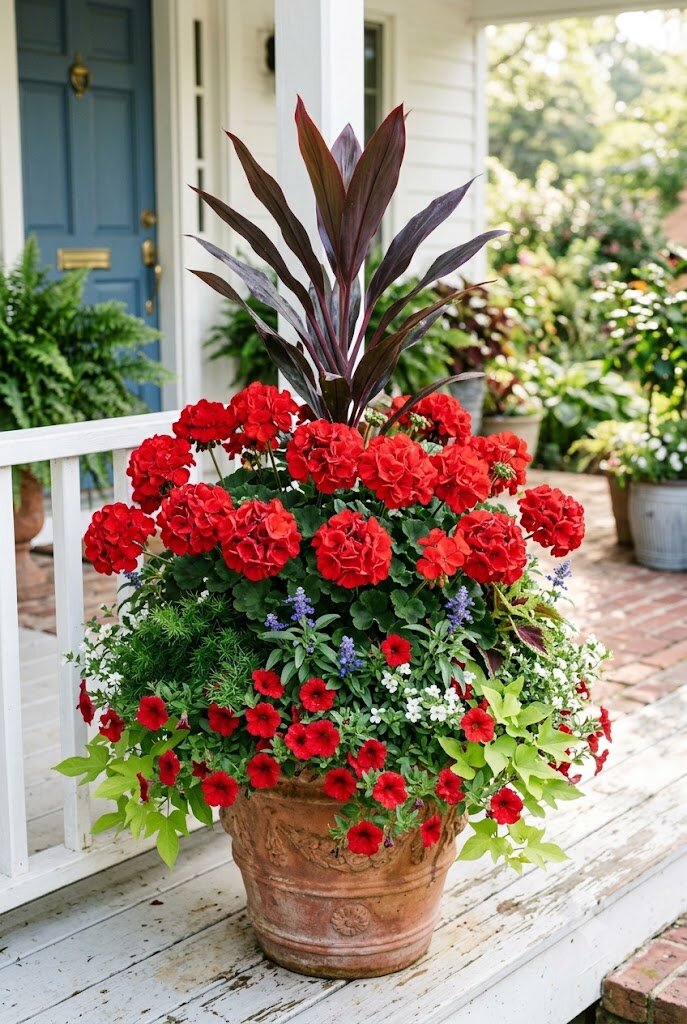
5. Geraniums in Terracotta Pots for Old-World Charm
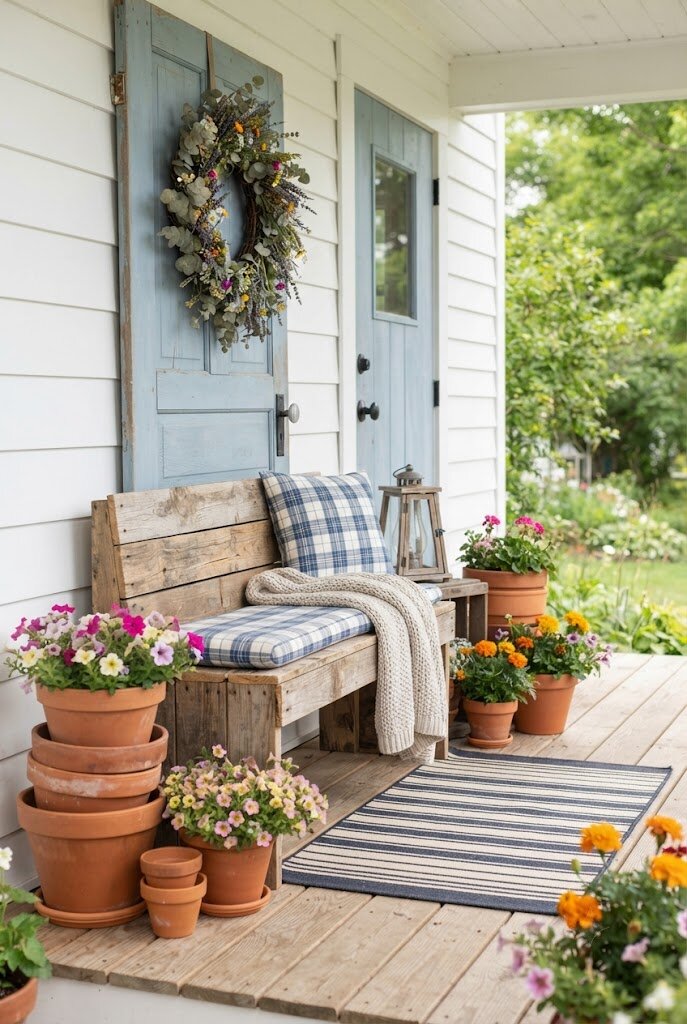
Geraniums are a front porch classic for good reason — their dense flower clusters in red, pink, salmon, and white bloom continuously through summer heat that would stress many other annuals. Terracotta pots suit geraniums particularly well, since the porous clay allows excess moisture to evaporate and helps prevent the root rot geraniums are prone to in soggy soil. Deadhead spent blooms regularly and pinch back leggy stems in midsummer to encourage fuller, bushier growth through fall.
Get this look 👇
Tall Fiberglass Cylinder Planters (Set of 2, 28-inch)
Check on Amazon
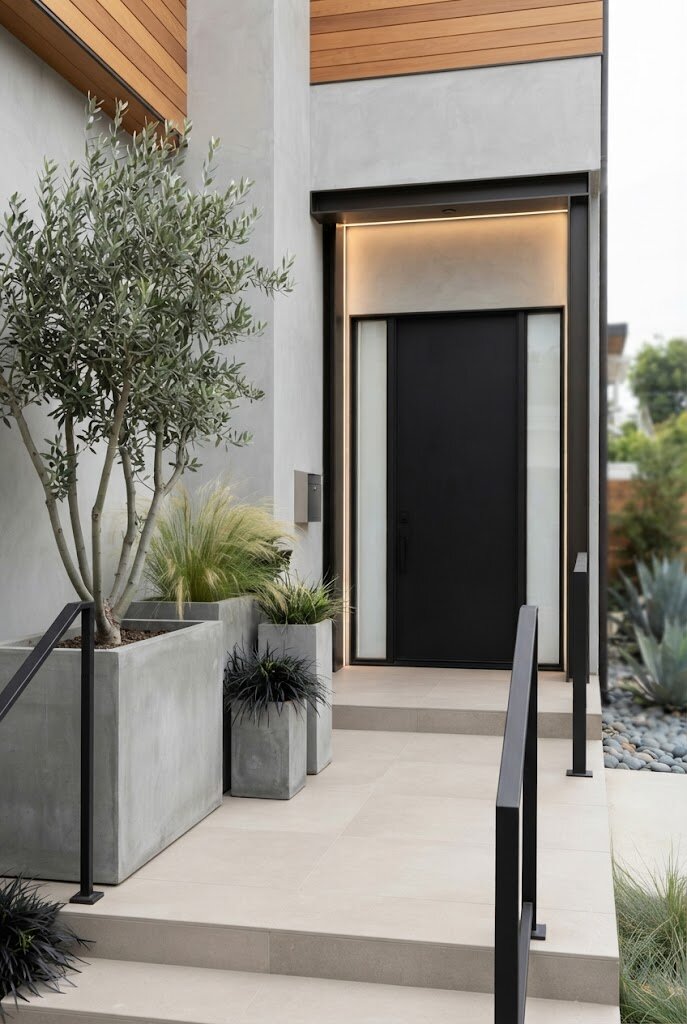
Lightweight fiberglass planters in a matte stone finish — the same tall cylinder silhouette used in upscale porch styling. Frost-resistant and far lighter than concrete, so two people can easily reposition them for seasonal changes.
This exact tall planter style →Get this look 👇
Wrought Iron 3-Tier Plant Stand (Curved Scroll Design)
Check on Amazon
A classic black wrought iron stand with three curved tiers, built to hold multiple potted plants at staggered heights on a porch corner or beside steps. Powder-coated finish resists rust through rain and humidity.
This exact tiered plant stand →6. Sweet Potato Vine for Cascading Color Without Flowers
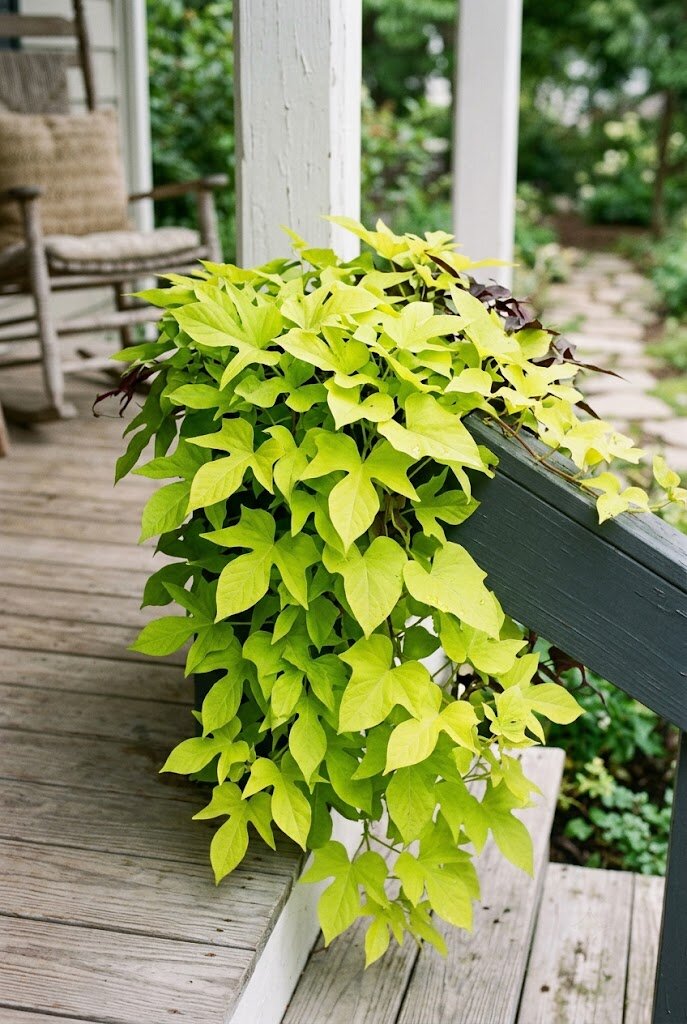
Sweet potato vine adds dramatic cascading foliage in chartreuse, deep purple, or variegated tones, spilling over the edges of pots and window boxes without needing a single flower to make an impact. It grows quickly and vigorously in full sun to partial shade, often needing occasional trimming by midsummer to keep it from overtaking neighboring plants in a mixed container. Because it's grown for foliage rather than blooms, sweet potato vine keeps a porch display looking lush even during the natural lull between spring and late-summer flowering cycles.
7. Boston Ivy or Climbing Hydrangea for a Living Porch Column
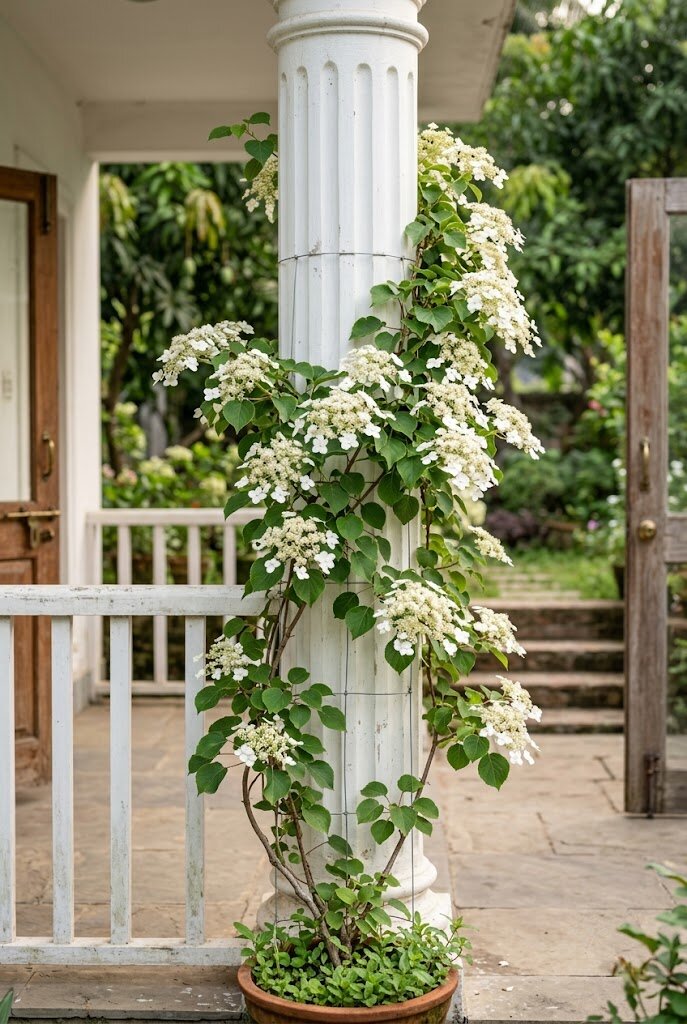
Training a climbing vine like Boston ivy or climbing hydrangea up a porch column or railing post creates a living architectural feature that develops more character every year. Climbing hydrangea is the slower-growing, more manageable option for a porch, producing lacy white flower clusters in early summer once established, while Boston ivy grows faster and turns brilliant red in fall. Provide a simple trellis or wire support against the column to guide growth, and prune back any stems that begin blocking the front door or walkway.
8. Marigolds for a Budget-Friendly Pop of Bold Color
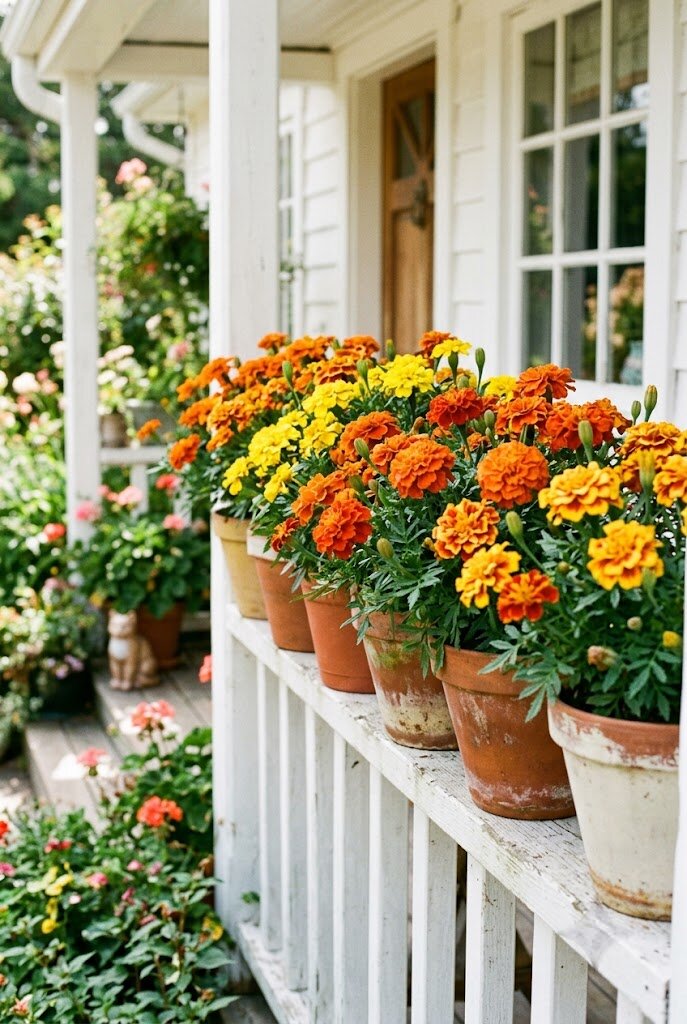
Marigolds are one of the most budget-friendly annual flowers for a front porch, available cheaply as seed or seedling and blooming reliably in bright orange, yellow, and red tones from early summer through frost. They tolerate heat, drought, and poor soil better than most flowering annuals, making them a forgiving choice for porches that get intense afternoon sun. Marigolds also have a natural pest-deterrent reputation, with their scent reportedly discouraging some common garden insects from nearby plantings.
9. Hostas for a Lush Look on a Shaded Porch
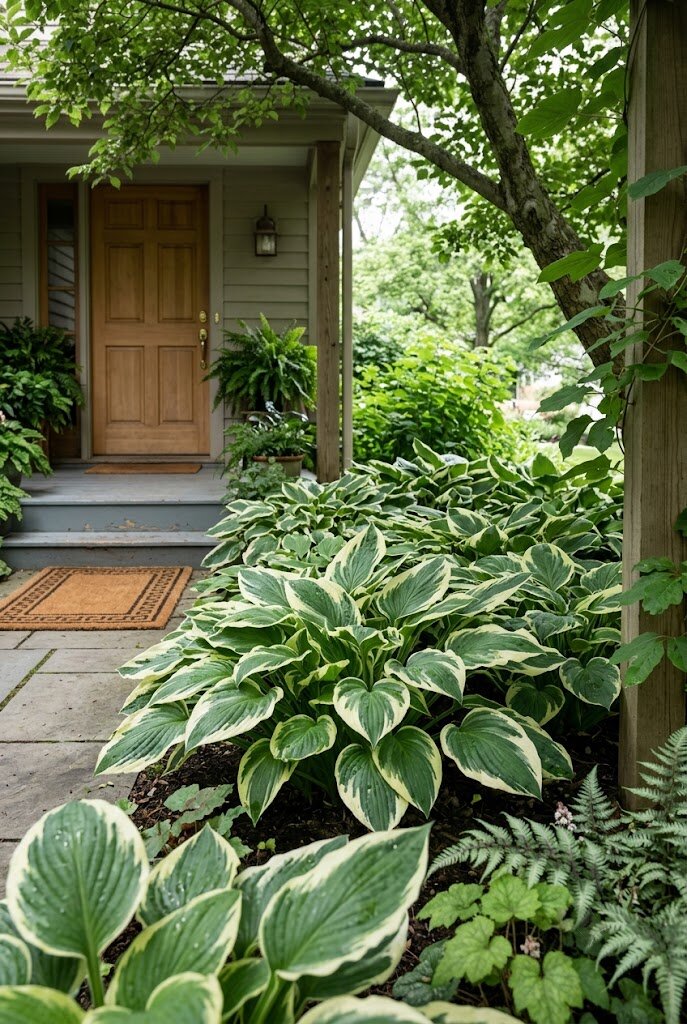
Hostas solve one of the biggest front porch planting challenges — deep shade — by thriving in exactly the low-light conditions where flowering annuals struggle. Their broad, often variegated leaves create a lush, full look in large containers or in-ground beds flanking a shaded entryway, and established hostas spread into impressively full clumps within two to three growing seasons. Water deeply but less frequently than sun-loving plants, since hostas in shade retain soil moisture longer and are prone to root rot if overwatered.
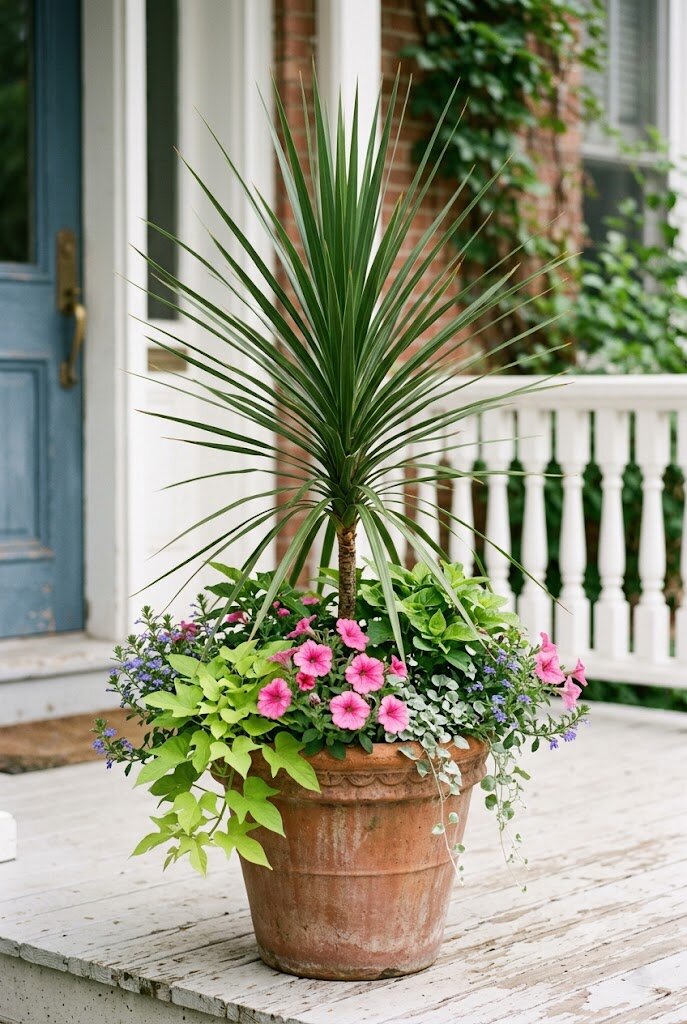
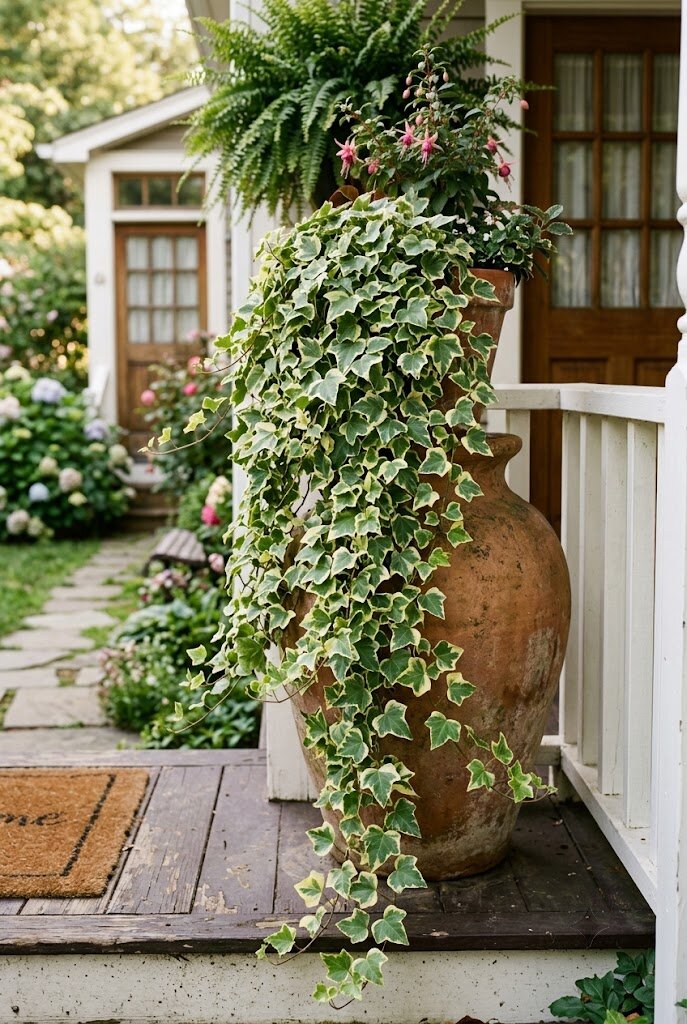
10. Mixed Container Recipe: Thriller, Filler, Spiller Formula
Professional container gardeners use a simple three-part formula for show-stopping porch pots: a tall "thriller" plant for height (like a dracaena spike or ornamental grass), a mid-height "filler" for fullness (like petunias or geraniums), and a trailing "spiller" that cascades over the pot's edge (like sweet potato vine or ivy). Following this formula guarantees a balanced, professional-looking arrangement in any size container, and the same three-part structure works whether the pot sits in full sun or partial shade as long as each plant's light needs are matched.
11. Caladiums for Colorful Foliage in Shaded Spots
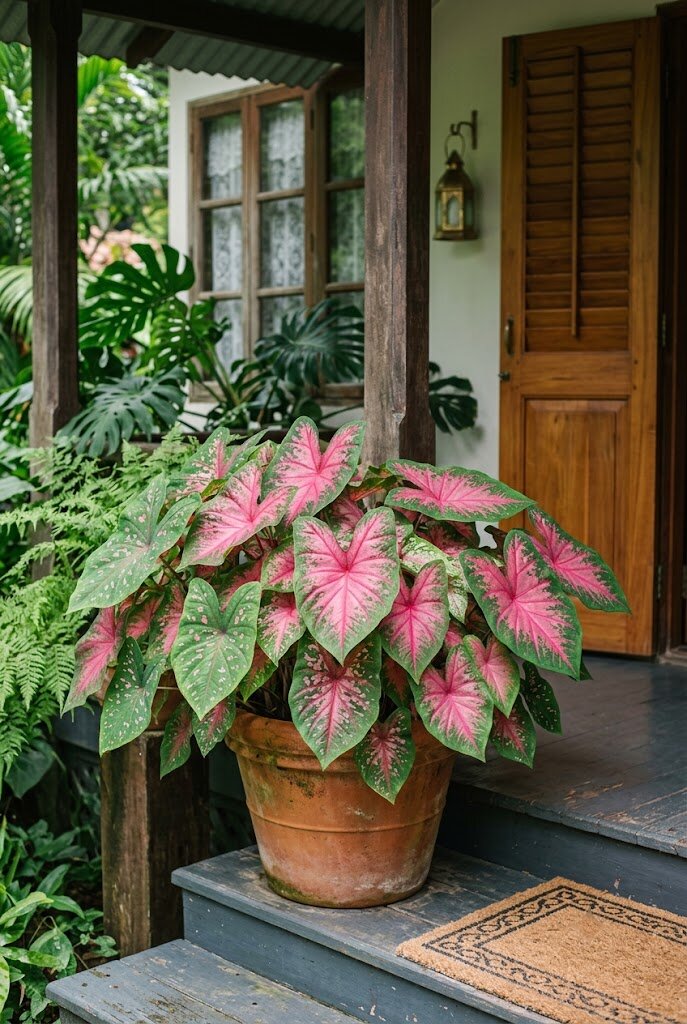
Caladiums bring bold, heart-shaped leaves in combinations of pink, white, red, and green to shaded porch containers where most flowering plants refuse to bloom well. They grow from tubers planted in spring once soil has warmed, and unlike many shade plants, caladiums offer genuinely vibrant, almost tropical color rather than just green foliage. Keep soil consistently moist and bring tubers indoors before the first frost in cooler climates, since caladiums are not frost-hardy and will not survive a freeze left in the ground or pot.
Get this look 👇
Galvanized Metal Window Box Planters (Set of 2, 24-inch)
Check on Amazon
Farmhouse-style galvanized steel window boxes with drainage holes and mounting brackets included, sized to fit standard porch railings and window ledges for a layered flower display.
Similar window box on Amazon →12. Rosemary as a Fragrant, Drought-Tolerant Porch Plant
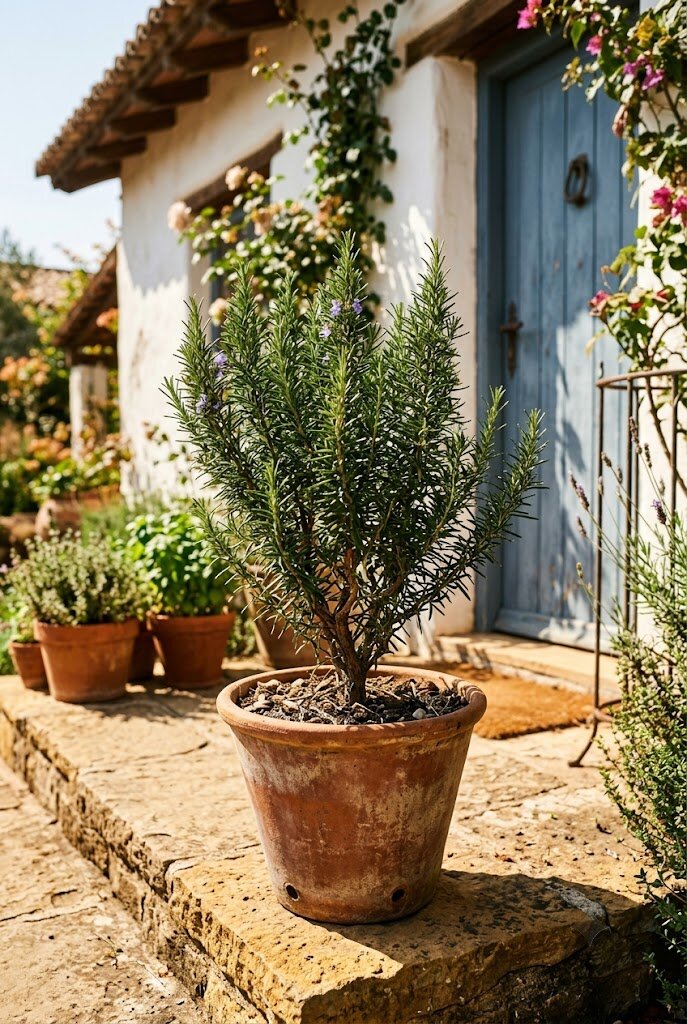
Rosemary doubles as both an attractive evergreen porch plant and a kitchen herb, with woody upright growth that holds its shape through multiple seasons in the right climate. It thrives in dry, sunny conditions and actually performs poorly in pots that retain too much moisture, so a fast-draining cactus or herb potting mix works better than standard potting soil. In colder zones, grow rosemary in a pot that can be moved indoors near a sunny window for winter, since it generally cannot survive hard freezes outdoors.
13. Begonias for Continuous Color in Partial Shade
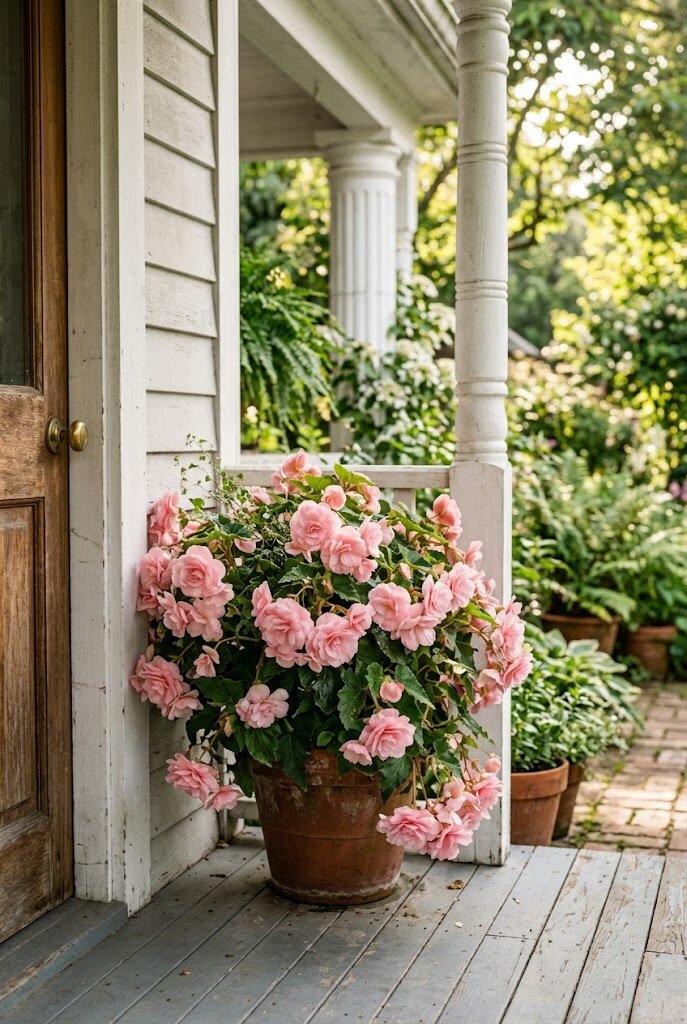
Begonias fill the tricky middle ground between full sun and deep shade, blooming steadily in the partial or dappled light common on many covered front porches. Wax begonias offer the most weather-resistant, low-maintenance option, shrugging off light rain and heat without dropping petals, while tuberous begonias provide larger, showier blooms for porches with slightly more protection. Avoid overwatering, since begonias are prone to stem rot in soil that stays soggy for extended periods.
14. Dwarf Citrus Tree in a Statement Planter
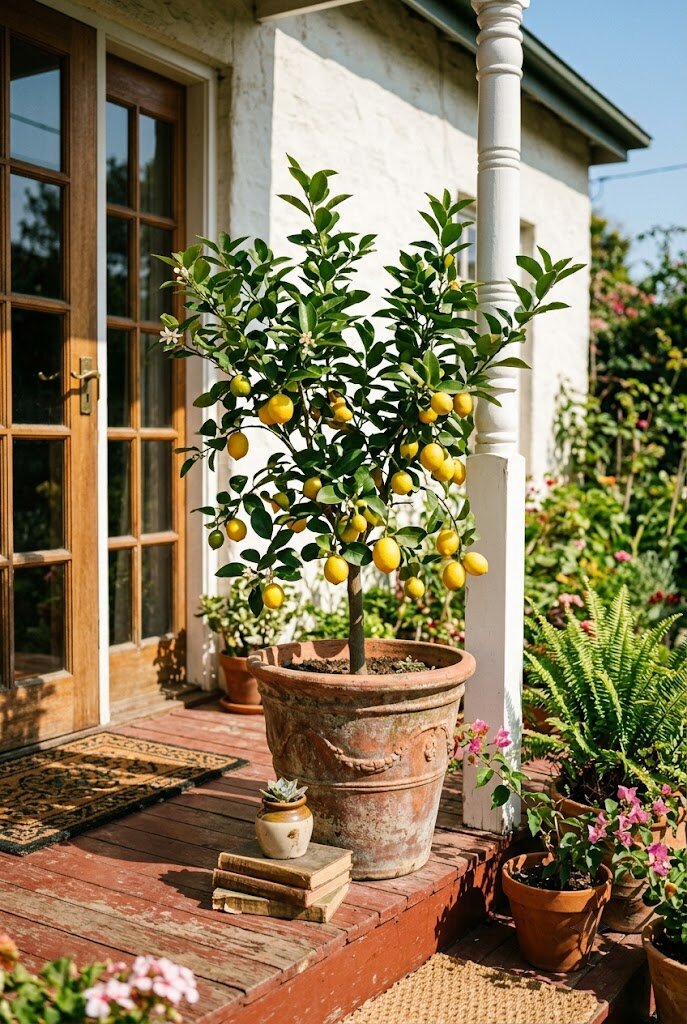
A dwarf citrus tree — Meyer lemon, calamondin orange, or kumquat — brings fragrant blossoms, glossy evergreen leaves, and eventually real fruit to a front porch, all in a single striking statement planter. Citrus trees need at least six hours of direct sun and well-draining citrus-specific potting soil, and in climates with hard frost, they must be moved indoors or into a greenhouse for winter. The fragrant spring blossoms alone make a dwarf citrus tree worth the extra care for porches in the right climate or with indoor wintering space available.
15. Sedum and Succulent Combo for Low-Maintenance Texture
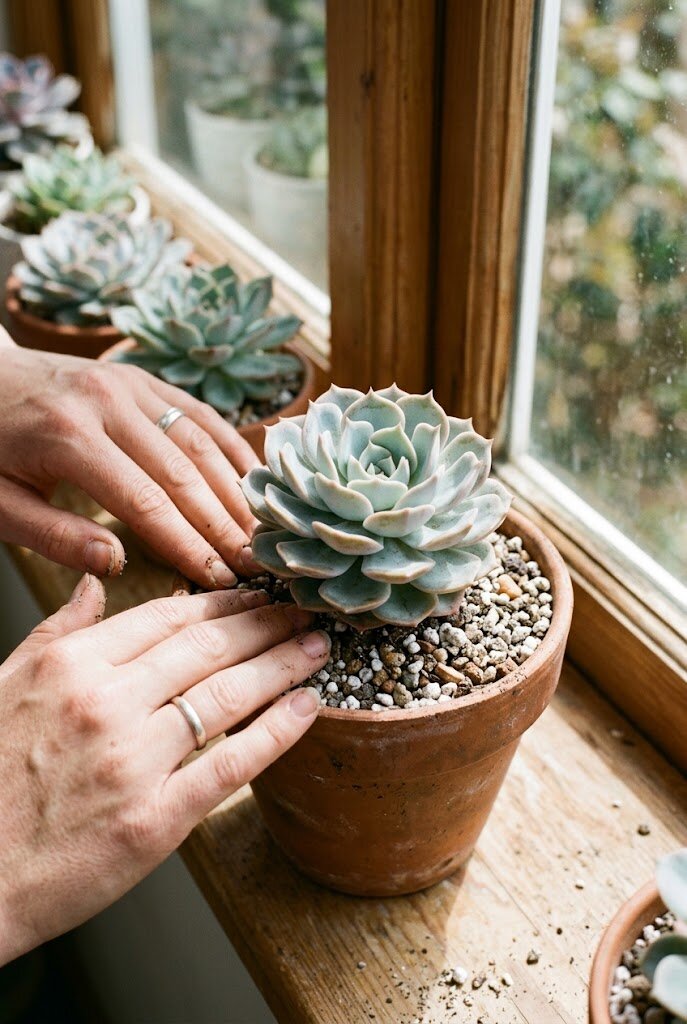
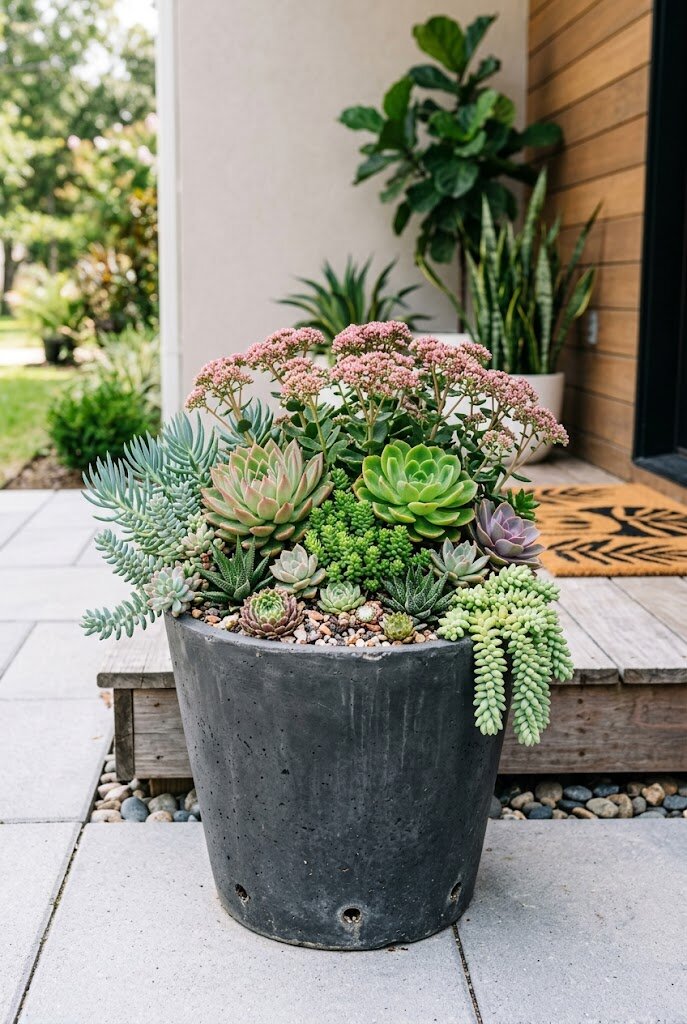
A mixed planting of hardy sedum and succulent varieties brings interesting texture and shape to a front porch with minimal watering or upkeep required, making it ideal for busy homeowners or porches with inconsistent sun exposure. Most hardy sedums tolerate light frost and can stay outdoors year-round in moderate climates, unlike tropical succulents that must come inside before winter. Plant in a fast-draining cactus mix and water only when the soil is completely dry to the touch, since overwatering is the most common cause of succulent failure.
16. Coleus for Vibrant Foliage Color Without Direct Sun
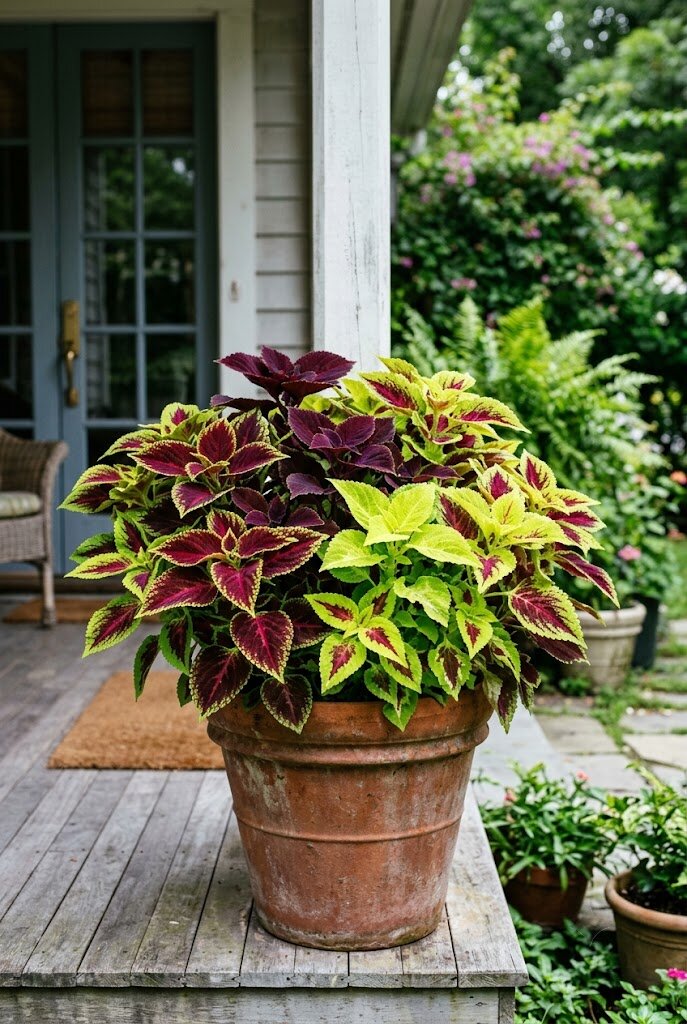
Coleus delivers some of the most vivid foliage color available for shaded front porches, with leaves in combinations of burgundy, lime green, pink, and near-black depending on variety. Modern sun-tolerant coleus varieties have expanded where this plant can thrive, but most still perform best with morning sun and afternoon shade rather than all-day direct light. Pinch off any flower spikes that form, since coleus is grown purely for its foliage and flowering tends to reduce leaf vigor and signal the plant winding down for the season.
17. Vinca (Annual Periwinkle) for Heat-Proof Summer Blooms
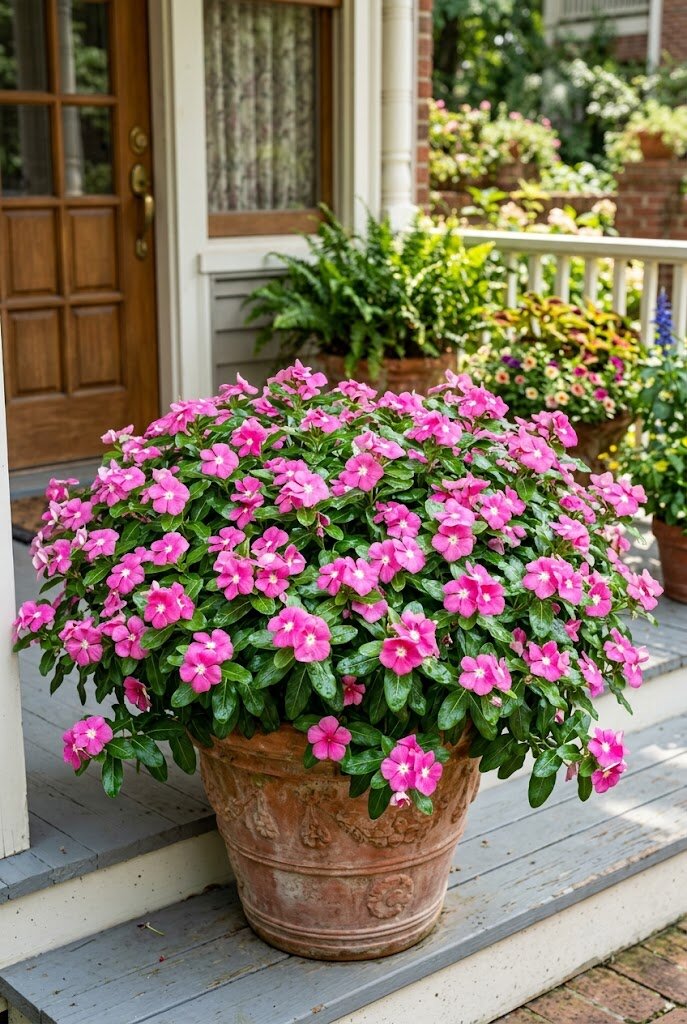
Annual vinca, sometimes called periwinkle, is one of the most heat- and drought-tolerant flowering plants available for a front porch that bakes in direct afternoon sun all summer. Its glossy leaves and five-petaled flowers in pink, white, or deep red continue blooming through conditions that would wilt petunias or impatiens, and it requires minimal deadheading to stay tidy. Avoid overwatering, since vinca is one of the few annuals more likely to suffer from too much water than too little.
Get this look 👇
Copper-Finish Watering Can (1.5 Gallon, Long Spout)
Check on Amazon
A long-spout watering can in a warm copper finish that reaches deep hanging baskets and tall urns without spilling — as much a porch decor piece as a tool.
This exact watering can →18. Ornamental Grasses for Movement and Year-Round Interest
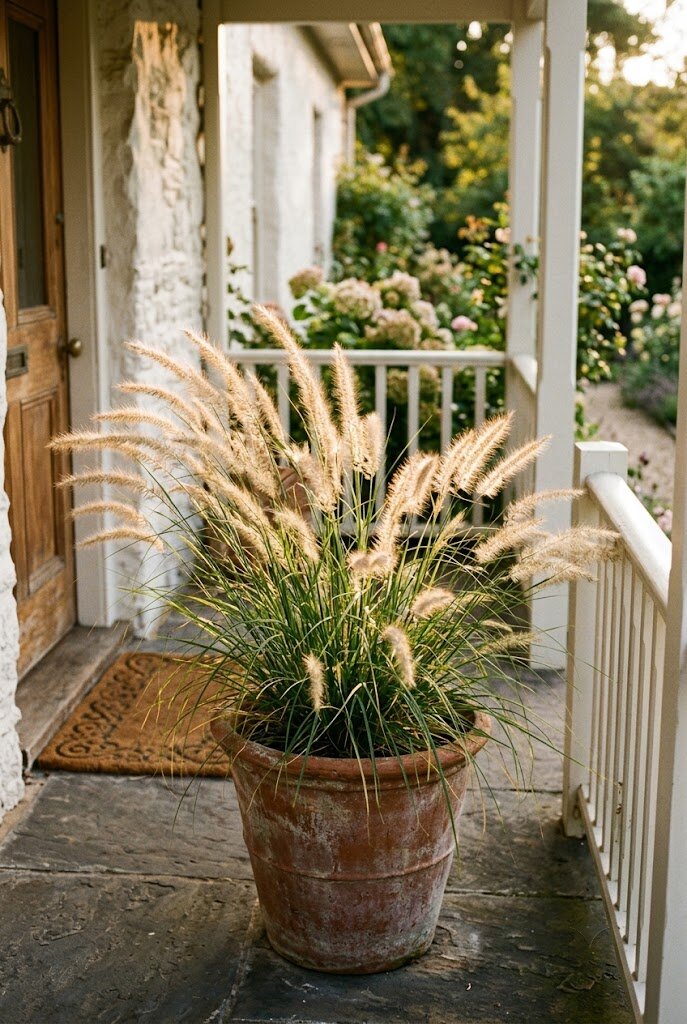
A clump of ornamental grass, such as dwarf fountain grass or blue fescue, in a porch container adds graceful movement whenever a breeze passes through, plus interesting texture that flowering annuals can't replicate. Many ornamental grasses hold their structure and color well into fall and winter, providing visual interest long after summer flowers have faded, and some varieties are perennial and can be left outdoors year-round in moderate climates. Position grasses where their movement is visible from the street for maximum curb-appeal impact.
19. Pansies and Violas for Cool-Season Color
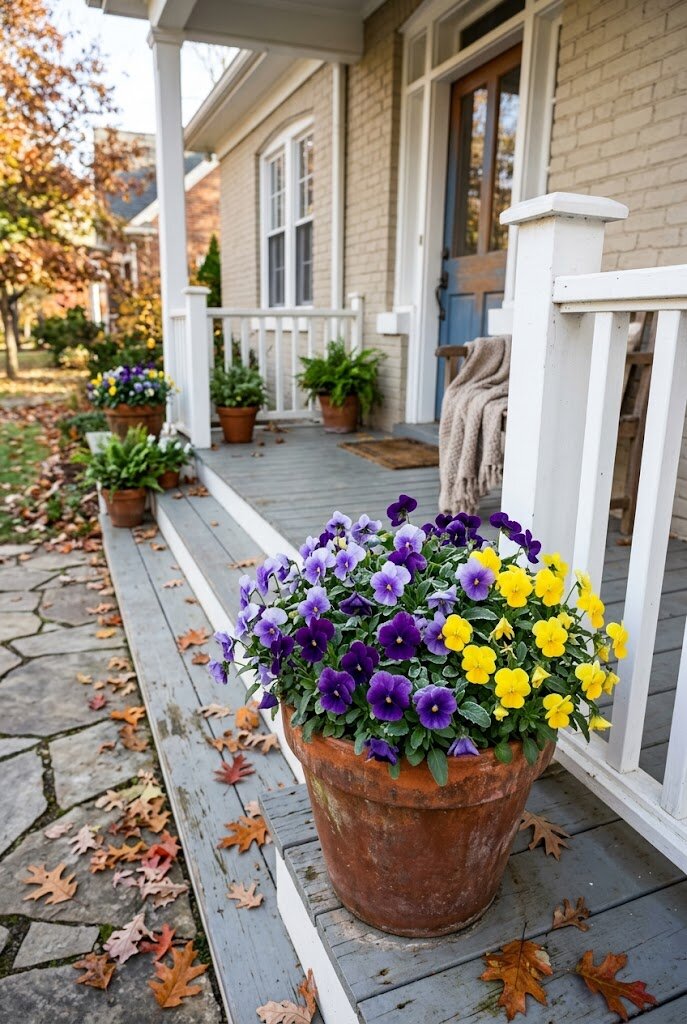
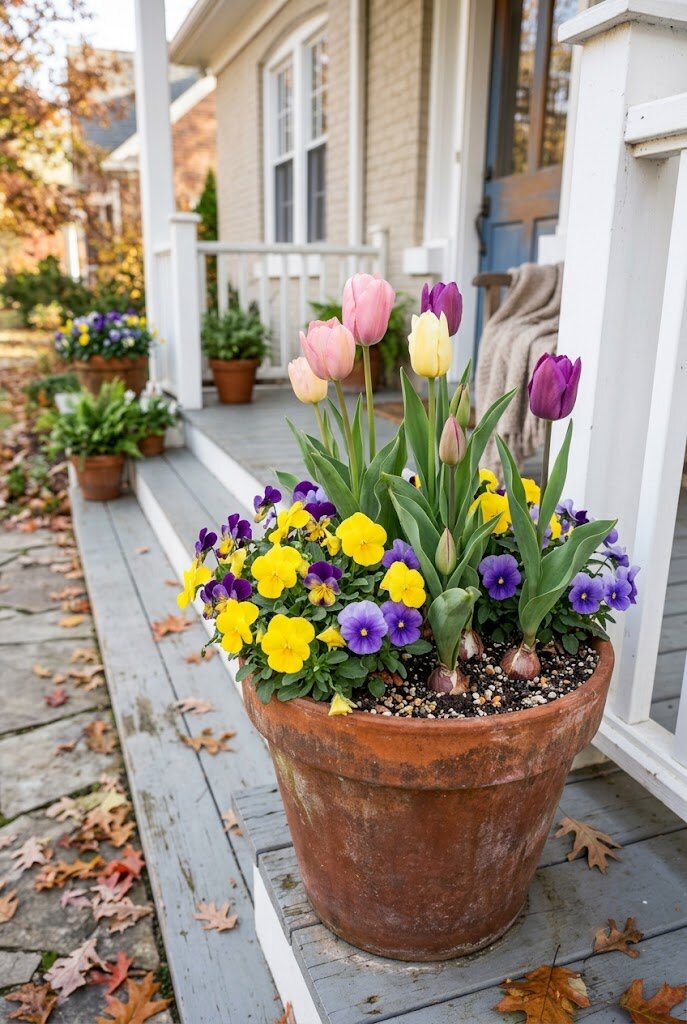
Pansies and their smaller cousin violas fill the color gap left by summer annuals, blooming reliably in the cooler temperatures of early spring and fall when most flowering plants are dormant. Both tolerate light frost without damage, making them ideal for extending a porch's colorful season on either end of summer. Plant in well-draining soil and deadhead spent blooms regularly, since pansies left to go to seed will slow their flower production considerably.
20. Seasonal Rotation: Swapping Plants Spring Through Winter
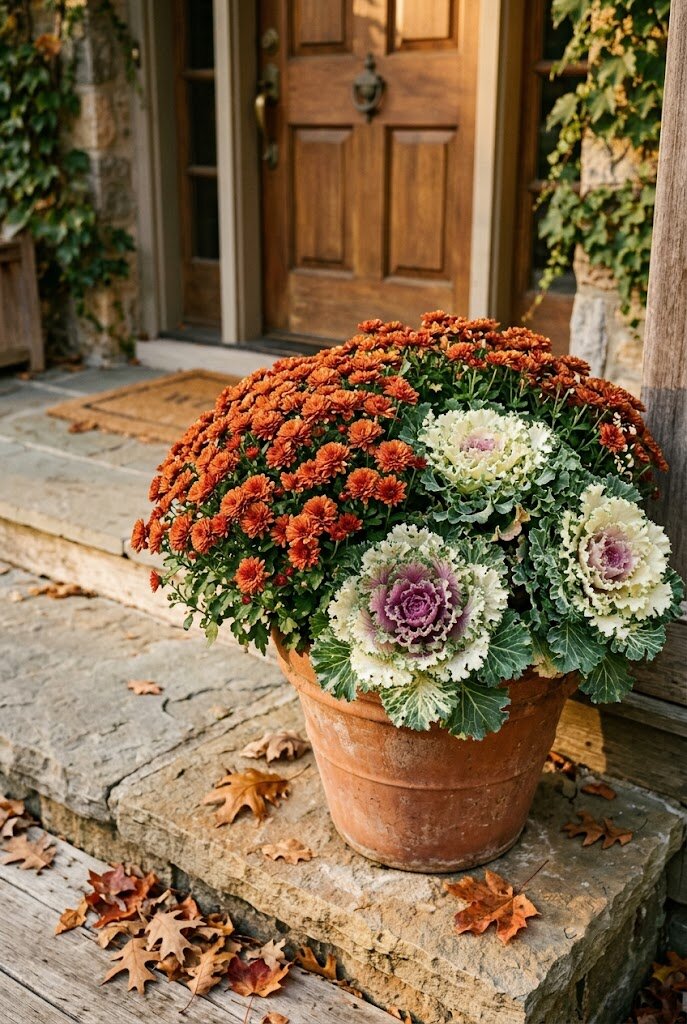
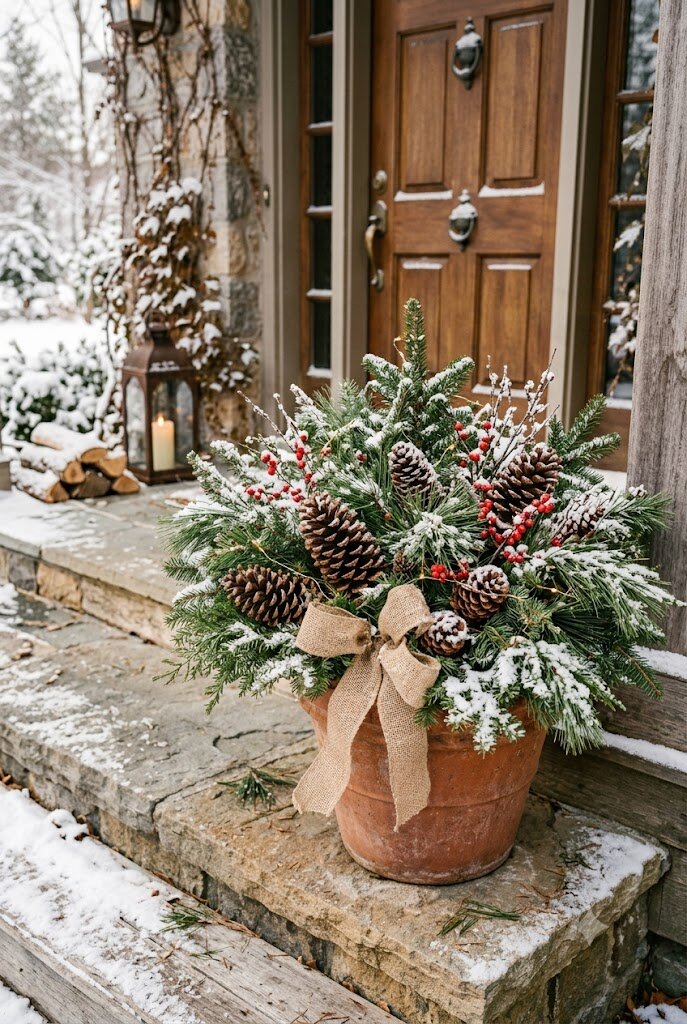
The most consistently beautiful front porches rotate their plantings through the year rather than relying on a single static arrangement — pansies and bulbs in early spring, sun-loving annuals through summer, mums and ornamental kale in fall, and evergreen boughs or a potted dwarf conifer through winter. Planning this rotation in advance, and keeping a few versatile large containers that simply get replanted each season, makes the switch far easier than starting from scratch every time. This approach also keeps a front porch from ever looking tired or seasonally out of place.
21. Sweet Alyssum for Fragrant Ground-Level Filler
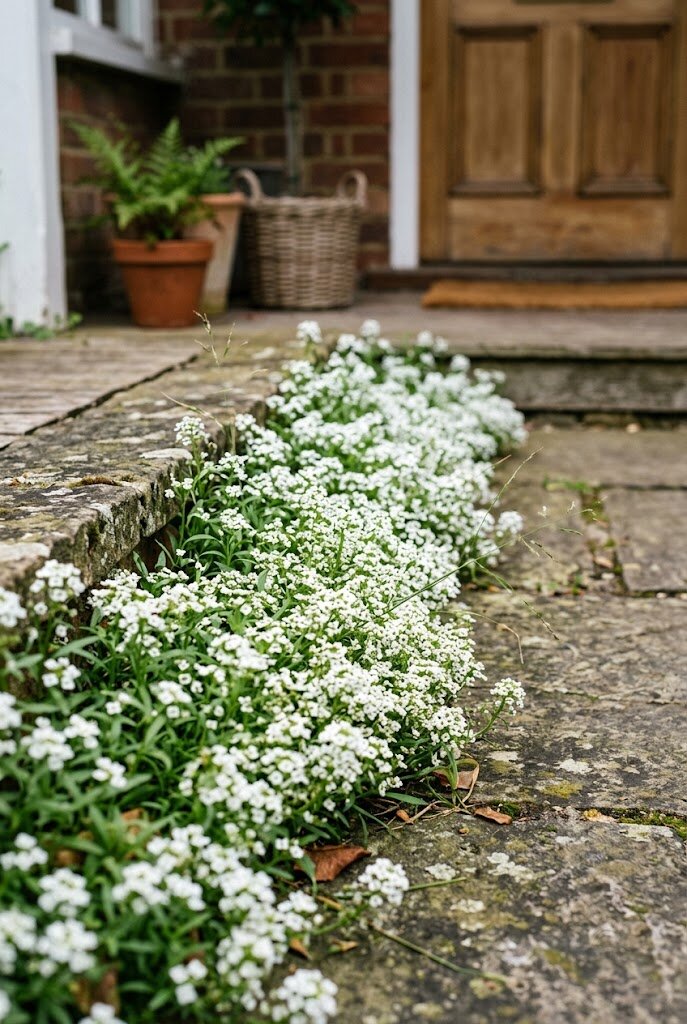
Sweet alyssum forms a low, dense carpet of tiny flowers in white, pink, or purple, releasing a sweet honey-like fragrance that's especially noticeable on warm evenings near a front door. It works beautifully as a filler plant tucked around the base of taller porch plants, where its trailing habit softens the hard edges of pots and steps. Sweet alyssum prefers cooler weather and may slow its blooming during peak summer heat, often rebounding again once temperatures drop in early fall.
22. Hydrangeas in Large Pots for Dramatic Blooms
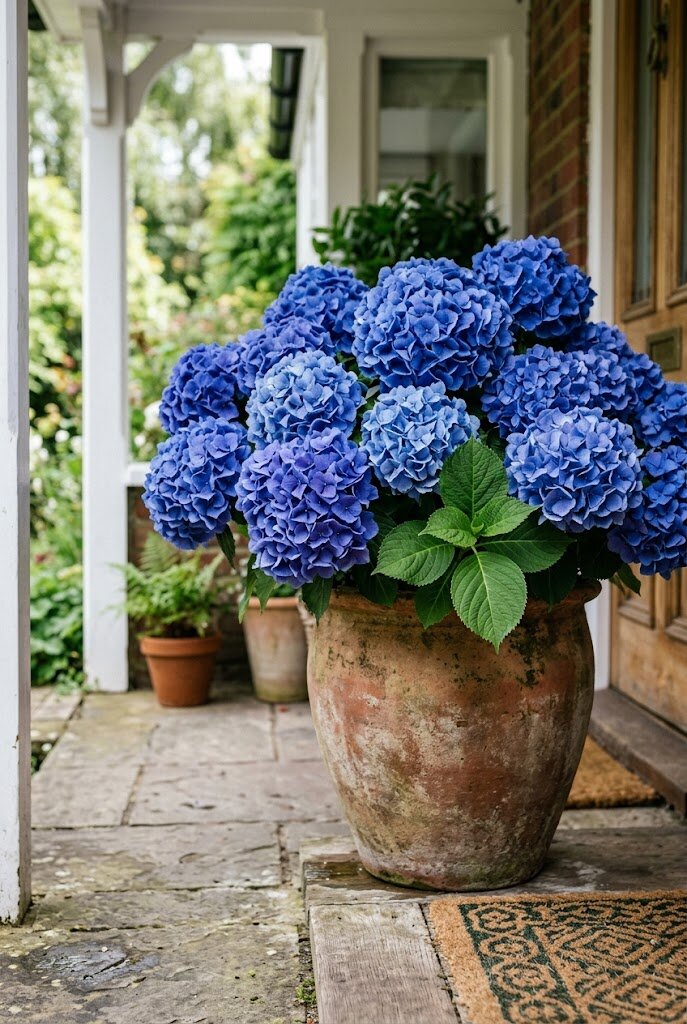
Hydrangeas bring some of the largest, most dramatic flower clusters available to a front porch, with mophead varieties producing blooms the size of dinner plates in shades of blue, pink, white, or purple depending on soil pH. Because hydrangeas have substantial root systems, choose the largest container reasonably possible and keep soil consistently moist, since hydrangeas wilt quickly and visibly when they dry out. In colder climates, protect potted hydrangeas over winter by moving them against a sheltered wall or into an unheated garage, since roots in pots are more exposed to freeze damage than those planted in the ground.
23. Creeping Jenny for a Golden Trailing Accent
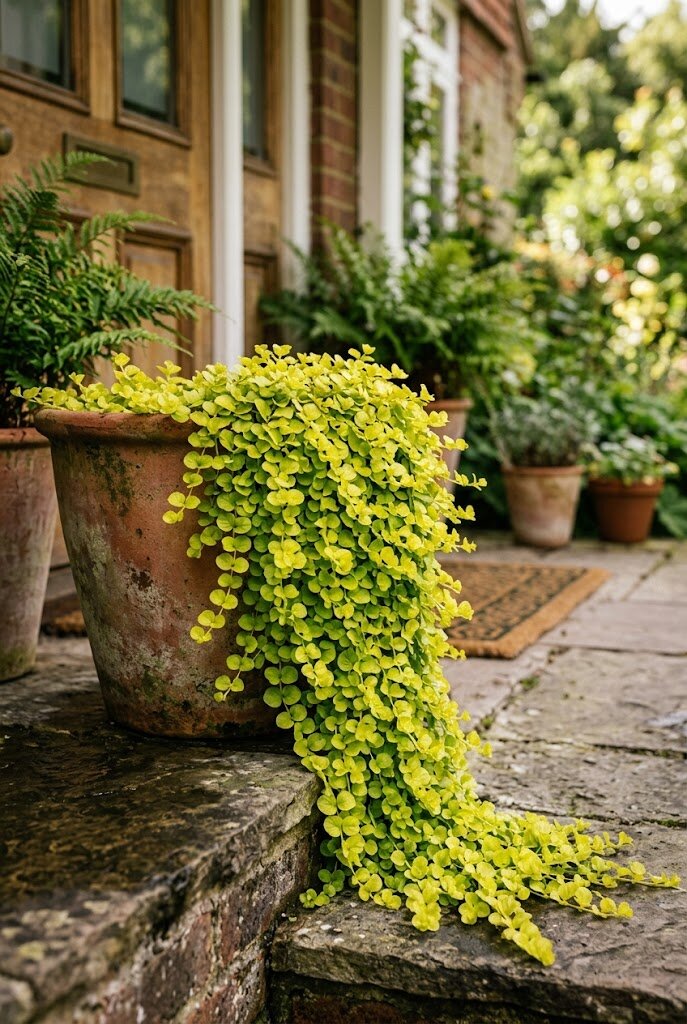
Creeping Jenny offers a bright chartreuse-gold trailing foliage that works as either a standalone ground cover in containers or a complementary spiller plant in mixed arrangements, adding color contrast without competing with flowering plants for attention. It tolerates both sun and partial shade and spreads vigorously, so it may need occasional trimming to prevent it from overtaking smaller companion plants in the same pot. Creeping Jenny also tolerates consistently moist soil better than most trailing plants, making it a good choice for porches in humid climates.
Get this look 👇
Boston Fern Hanging Basket With Coconut Coir Liner (16-inch)
Check on Amazon
A pre-lined 16-inch hanging basket with a natural coconut coir liner that retains moisture while letting roots breathe, sized for a full, trailing Boston fern or similar shade plant.
Get the exact look — link below →Get this look 👇
Adjustable S-Hook Plant Hangers (Set of 6, Heavy-Duty)
Check on Amazon
Rust-resistant heavy-duty S-hooks rated to hold up to 50 pounds each, used to hang multiple baskets from a porch beam or ceiling at varying heights without extra hardware.
Budget-friendly version here →24. Dusty Miller for Silvery Contrast Foliage
Dusty miller's soft, silvery-gray foliage acts as a natural color buffer in mixed porch containers, toning down bright or clashing flower combinations and adding a cool contrast next to deep purples, reds, and pinks. It tolerates both heat and light frost better than most foliage plants, often surviving as a short-lived perennial in milder climates rather than dying back as a typical annual would. Dusty miller also requires very little maintenance beyond occasional pinching to keep its growth compact and bushy.
25. Mandevilla Vine for Tropical Trumpet Flowers
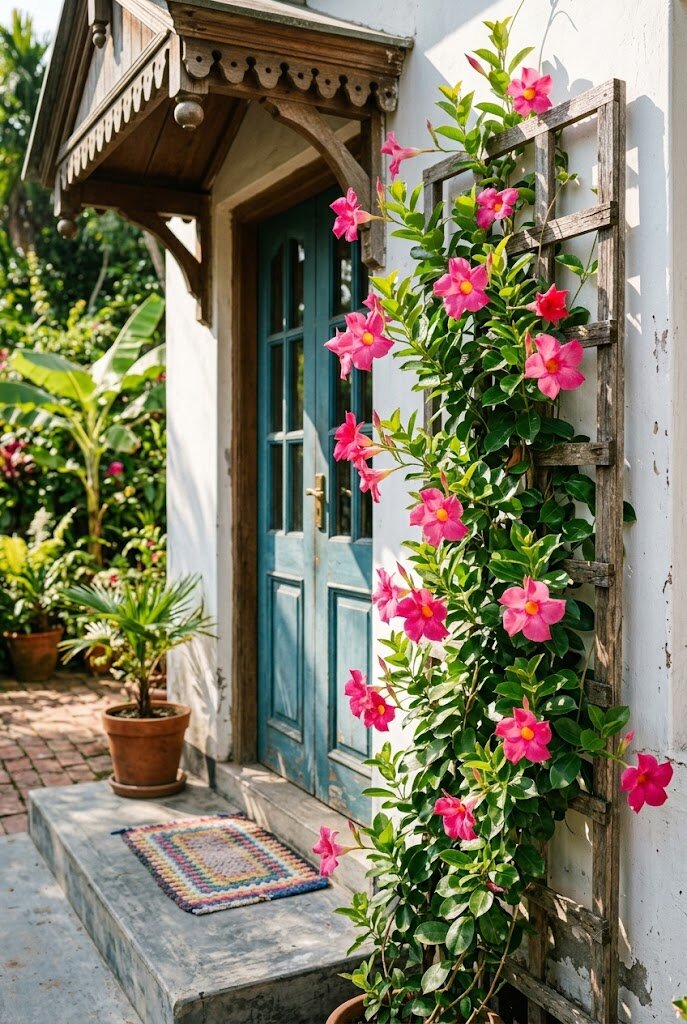
Mandevilla vine produces large, glossy trumpet-shaped flowers in vivid pink, red, or white, climbing a trellis or porch railing to bring a tropical, vacation-like feel to an entryway. It needs full sun and consistent watering to bloom at its best, and because mandevilla is frost-tender, gardeners in cooler climates typically grow it as a seasonal annual or bring the potted vine indoors before the first frost. Provide a sturdy support structure from the start, since mandevilla can grow several feet in a single season once established.
26. Heuchera (Coral Bells) for Year-Round Color in Shade
Heuchera, commonly called coral bells, offers some of the richest foliage color available for shaded front porches, with leaves ranging from deep burgundy and amber to lime green depending on variety, plus delicate bell-shaped flower spikes in late spring. As a perennial in most climates, heuchera maintains its colorful foliage through multiple seasons with minimal care, making it a long-term investment piece for a shaded porch corner rather than an annual replant. Divide overcrowded clumps every few years in early spring to keep plants vigorous and maintain their full, rounded shape.
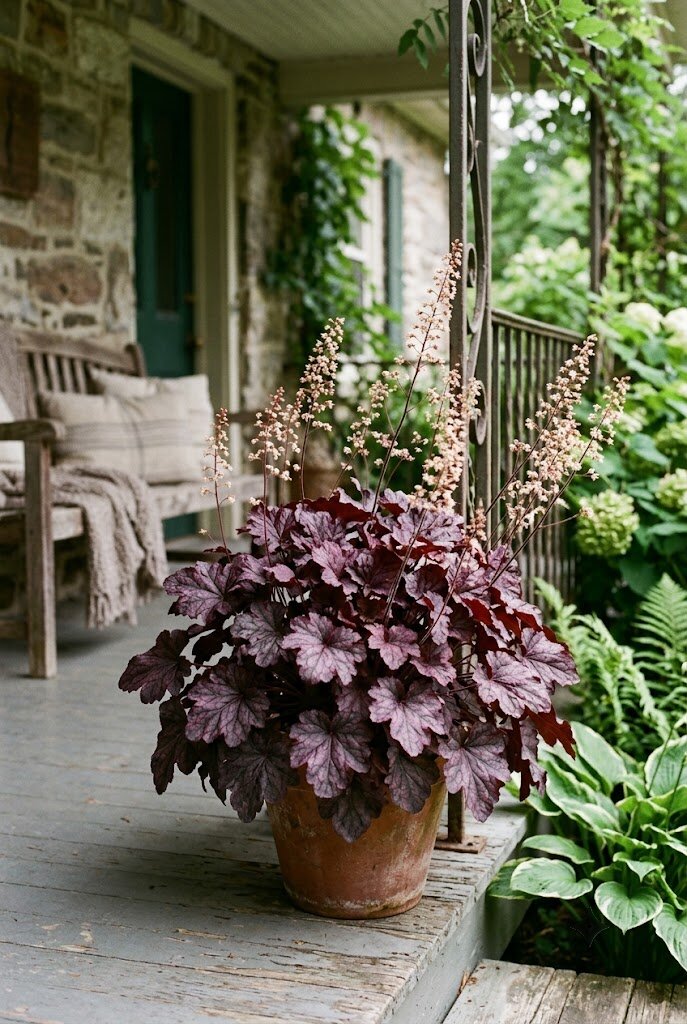
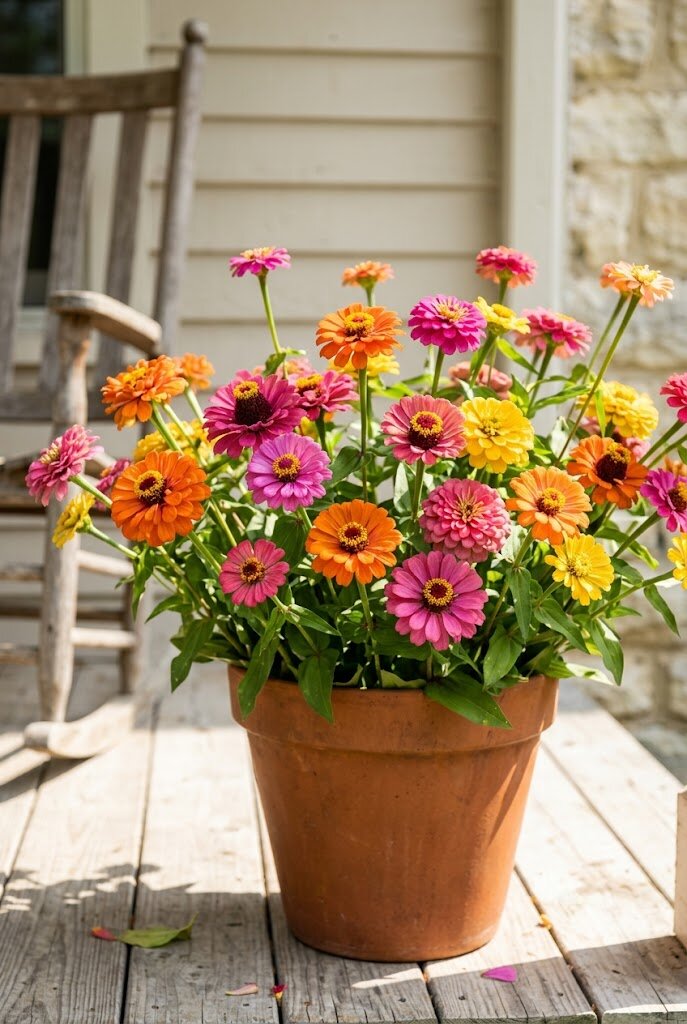
27. Zinnias for Cut-Flower-Worthy Porch Color
Zinnias bring bold, long-lasting blooms in nearly every warm color to a sunny front porch, and unlike many ornamental annuals, zinnias make excellent cut flowers, so a porch planting can double as a source for indoor bouquets all summer. They're remarkably easy to grow from seed directly in the container, germinating quickly in warm soil and blooming within about two months. Regular deadheading dramatically extends the blooming season, since zinnias that are cut for bouquets or trimmed of spent flowers redirect energy into producing new buds.
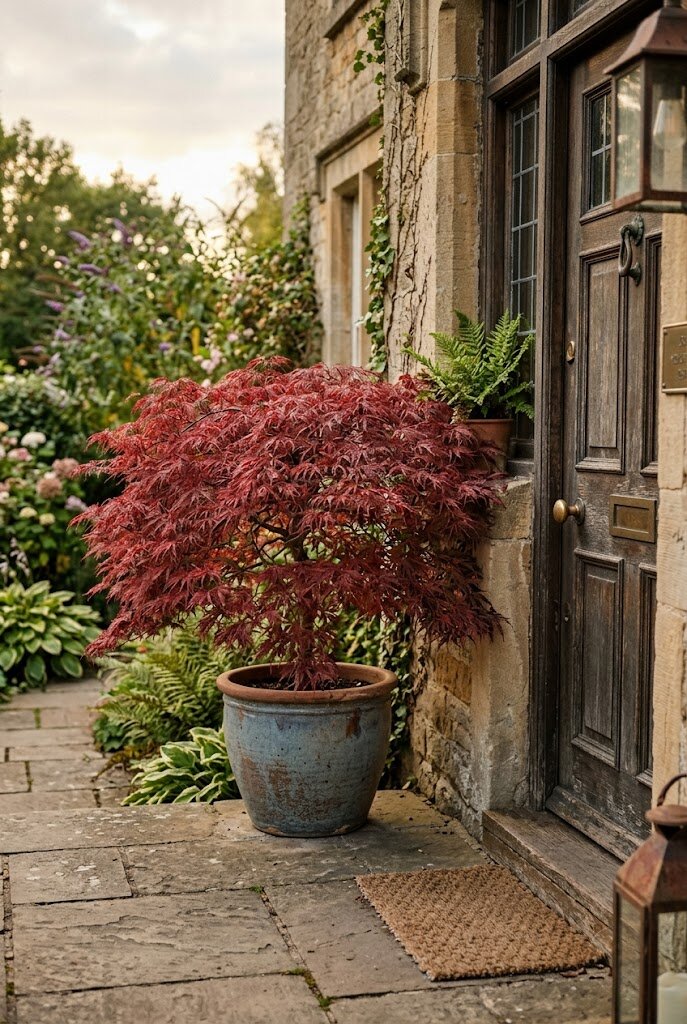
28. Japanese Maple in a Container for Elegant Front Door Framing
A dwarf or weeping Japanese maple grown in a large container brings elegant, sculptural structure to flank a front door, with delicate lacy foliage that turns brilliant red, orange, or gold in fall. Japanese maples in pots need more frequent watering than those planted in the ground, since container soil dries out faster, and they generally prefer some afternoon shade to prevent leaf scorch in hot climates. In regions with harsh winters, move potted Japanese maples to a sheltered spot against the house or insulate the pot, since roots above ground level are more vulnerable to freeze damage than in-ground roots.
Get this look 👇
Outdoor LED Uplighting Kit for Topiaries & Urns (4-Pack, Solar)
$275
A four-light solar uplighting kit designed to highlight topiaries, urns, and columns after dark, with adjustable ground stakes and a warm white color temperature that matches porch string lights.
Similar lighting setup on Amazon →Get this look 👇
5' Artificial Cypress Spiral Boxwood Topiaries Tree in Plastic Pot
$58
Wall or beam-mounted iron brackets paired with matching coco-lined baskets, sold as a coordinated set so every hanging plant on the porch shares the same finish and silhouette.
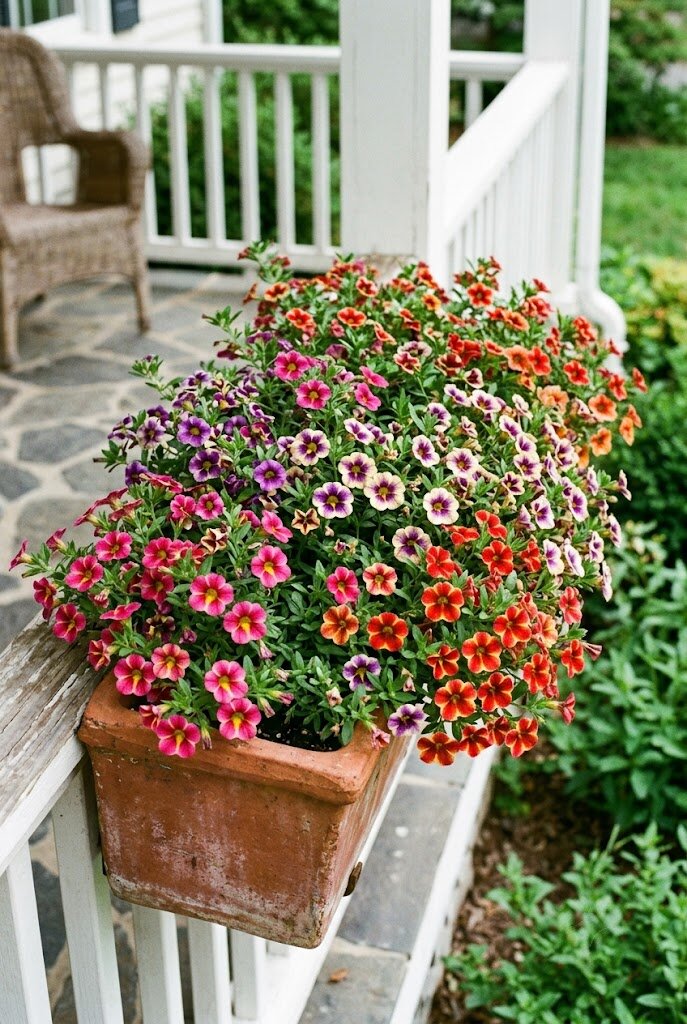
This exact hanging basket bracket →29. Calibrachoa for Petunia-Like Blooms in Smaller Scale
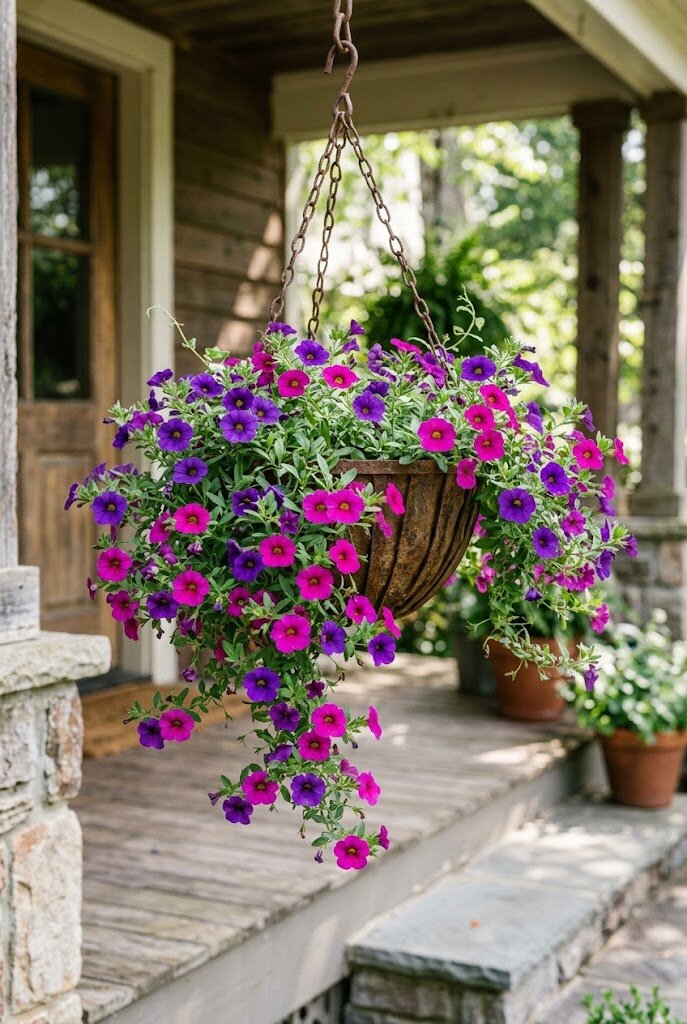
Calibrachoa, sometimes called million bells, produces masses of small petunia-like flowers in an especially wide range of colors and patterns, including bicolor and veined varieties not commonly found in regular petunias. Its more compact, mounding growth habit suits smaller pots and window boxes where larger petunias might look out of scale, and calibrachoa is naturally self-cleaning, dropping spent blooms without needing regular deadheading. Feed every two weeks with a balanced liquid fertilizer, since calibrachoa is a heavy bloomer that depletes potting soil nutrients faster than many other annuals.
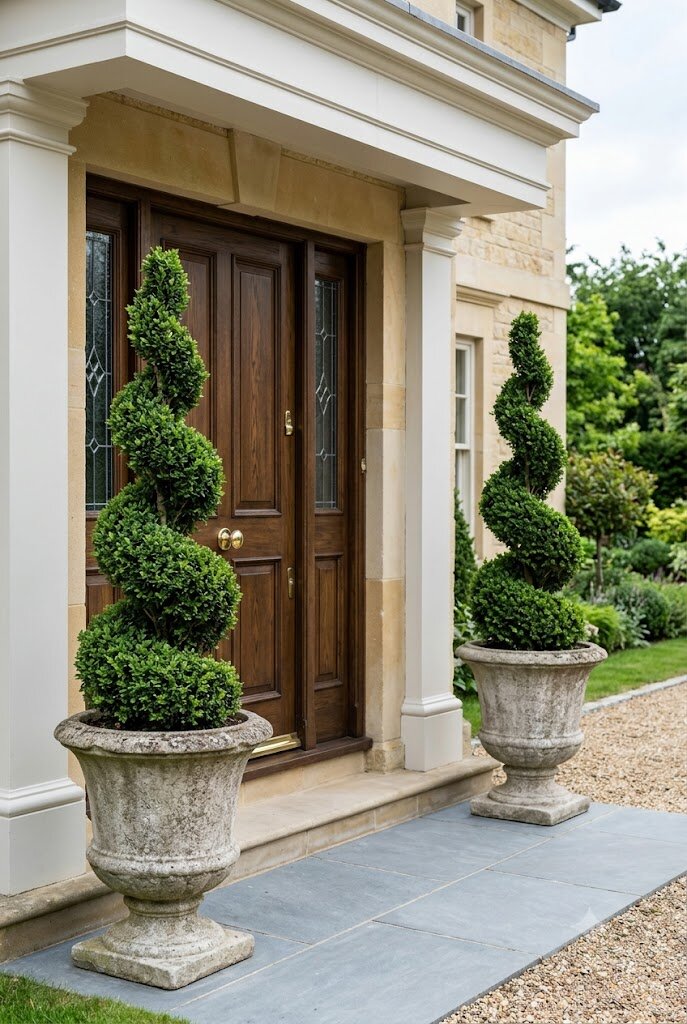
30. Potted Boxwood Spirals for Formal Topiary Style
A pair of spiral-trimmed boxwood topiaries brings a refined, formal look to a front porch entrance, with their precise geometric shape standing out year-round as a structural anchor among rotating seasonal flowers. Spiral topiaries require more frequent light trimming than simple rounded shapes to maintain crisp lines, ideally every six to eight weeks during the growing season using sharp, clean shears. Choose a heavy, wide-based planter for stability, since the top-heavy spiral shape can make a topiary prone to tipping in strong wind if the container is too light or narrow.
Step-by-Step: Planning Your Front Porch Plant Display
Follow these steps to build a cohesive, thriving front porch display:
- Track your light for one full day: Note exactly how many hours of direct sun your porch gets and at what time, before buying a single plant.
- Pick one or two evergreen anchor plants: Boxwood, heuchera, or a dwarf conifer gives the porch year-round structure even when seasonal flowers are not in bloom.
- Choose 2–3 seasonal flowering plants: Match these to your light level and the current season for the most reliable blooms.
- Select containers with proper drainage: Match container material to each plant's watering needs — terracotta for drought-tolerant plants, glazed or resin for moisture-lovers.
- Apply the thriller-filler-spiller formula: In larger pots, combine a tall plant, a mid-height flowering plant, and a trailing plant for a balanced look.
- Set a watering and feeding routine: Check soil daily in summer heat and feed flowering annuals every two to three weeks.
- Plan your seasonal swap in advance: Know which plants will replace your summer annuals in fall and which will go dormant or move indoors for winter.
7 Common Front Porch Plant Mistakes to Avoid
- Choosing plants by looks alone: A gorgeous photo means nothing if the plant's light needs don't match your actual porch conditions.
- Skipping drainage holes: Containers without drainage are the single most common cause of root rot and porch plant failure.
- Overwatering drought-tolerant plants: Lavender, rosemary, and succulents fail far more often from too much water than too little.
- Underwatering hanging baskets: Elevated baskets dry out fastest of all porch containers and often need daily summer watering.
- Ignoring seasonal transitions: A porch that only gets planted once in spring looks tired by late summer without a planned refresh.
- Mixing too many colors and styles: Repeating one or two plant varieties across multiple pots looks more intentional than a random mix.
- Forgetting frost-tender plants in fall: Mandevilla, caladiums, and dwarf citrus need to come indoors before the first freeze, not after.
Group three to five pots of varying heights together rather than spacing single pots evenly across the porch — clustering creates a fuller, more designed look with the exact same number of plants. When buying nursery starts, gently slide one plant out of its pot before purchasing to check that roots are white and firm rather than brown, mushy, or tightly circling the pot, which signals a stressed or root-bound plant that will struggle after transplanting.
Frequently Asked Questions About Front Porch Plants
Conclusion: Building a Porch That Looks Good Every Season
The secret to a front porch that looks beautiful year-round is not finding one perfect plant — it's building a small system: a couple of evergreen anchors for structure, a rotating cast of seasonal flowers matched to your porch's actual light, and containers chosen to match each plant's watering needs. Get those fundamentals right, and the rest becomes a matter of personal taste rather than guesswork.
Start small if you're just beginning — one or two containers with plants suited to your porch's light level will teach you more about what thrives in your specific spot than any guide can. From there, expand gradually, repeating the styles and plants that work best, and your porch will become a year-round source of color and curb appeal rather than a one-season project.
As an Amazon Associate, Gardenidea may earn from qualifying purchases made through links on this page, at no extra cost to you.