Modern Front Porch Design Ideas For Every Home Style
By Gardenidea · Updated June 2026 · 10 min read
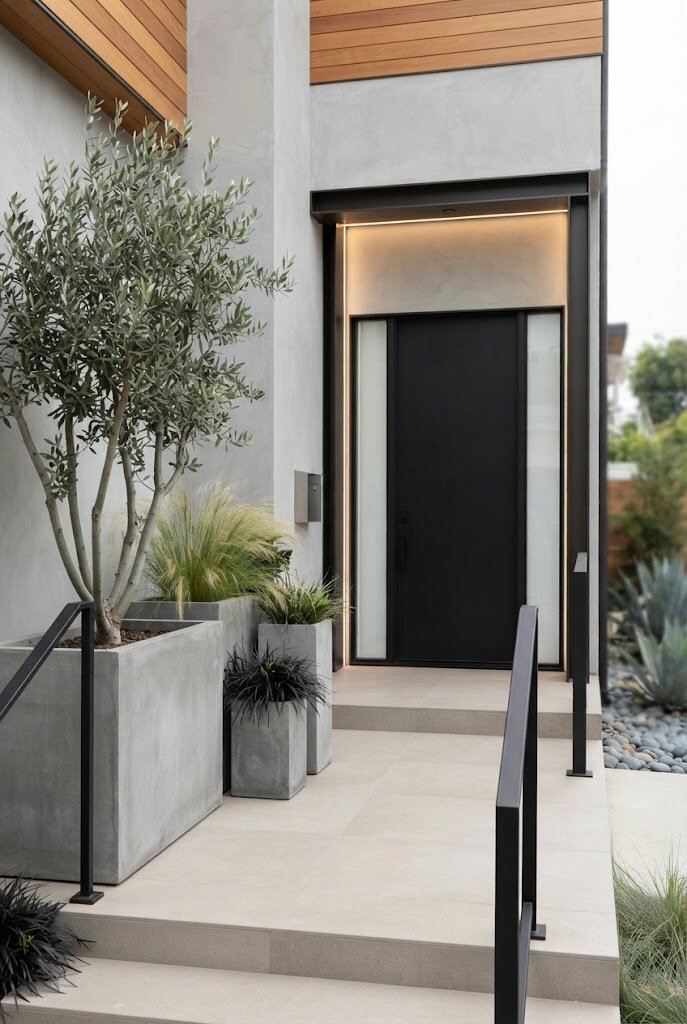
A modern front porch is built on clean lines, a disciplined neutral color palette, geometric light fixtures, and architectural plants in matching concrete or matte-finish pots. The key principle is intentional editing — every element earns its place. Start with a matte black door, replace carriage sconces with geometric LED fixtures, and swap mixed planters for one or two bold architectural plants. That alone transforms curb appeal dramatically.
Key Takeaways
- A matte black or deep navy front door is the single most effective modern curb appeal upgrade
- Geometric wall sconces in matte black or brushed brass replace traditional carriage lanterns
- Concrete, matte fiberglass, or corten steel planters replace terracotta and wicker
- Architectural plants — agave, ornamental grass, boxwood sphere — replace mixed floral arrangements
- Cable railings, horizontal cladding, and large-format tile signal contemporary design instantly
- A maximum of three colors in the palette is the core modern design rule
The modern front porch is defined as much by what is removed as by what is added. Clean material choices, strong geometric forms, and a disciplined color palette replace traditional ornament. Whether your home is a new build, a renovated craftsman, or a colonial, the 30 ideas below give you specific, actionable design moves to create a front porch that reads as unmistakably contemporary.
| Modern Porch Style | Door Color | Fixture Finish | Best Plants | Key Detail |
|---|---|---|---|---|
| Industrial Modern | Matte Black | Matte Black | Agave or ornamental grass | Concrete planters |
| Contemporary | Deep Navy | Brushed Brass | Boxwood spheres | Cable railings |
| Mid-Century Modern | Slate Gray | Satin Nickel | Japanese maple | Globe pendant light |
| Modern Farmhouse | Forest Green | Oil-Rubbed Bronze | Ornamental kale + grass | Horizontal cedar cladding |
| Minimalist | Crisp White | Matte Black | Single tall cordyline | Built-in bench, no arms |
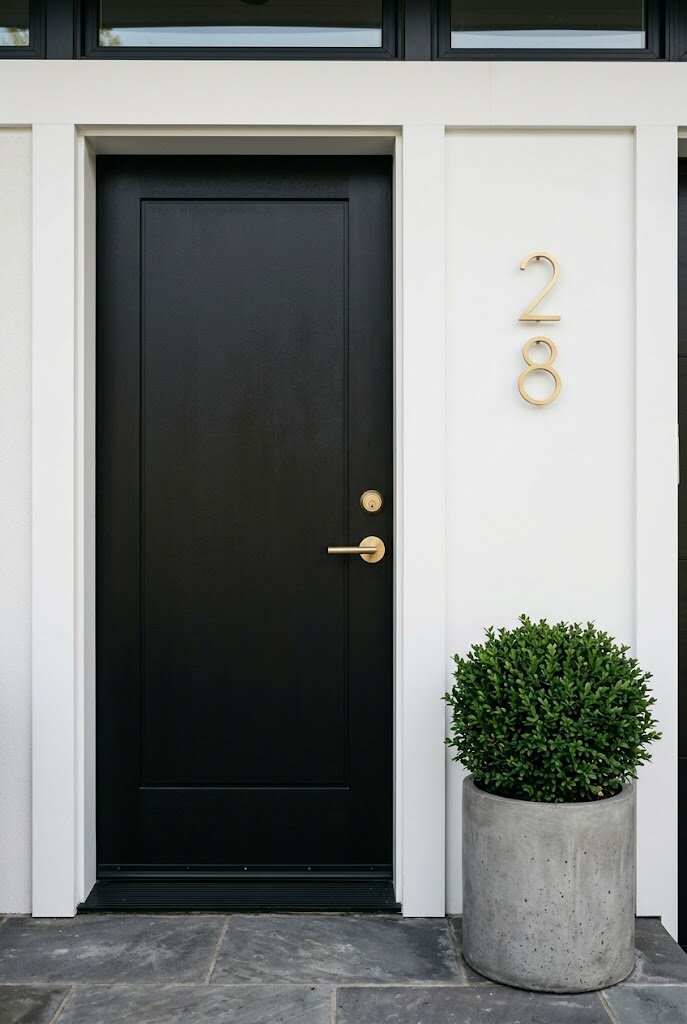
1. Choose a Matte Black or Deep Navy Front Door
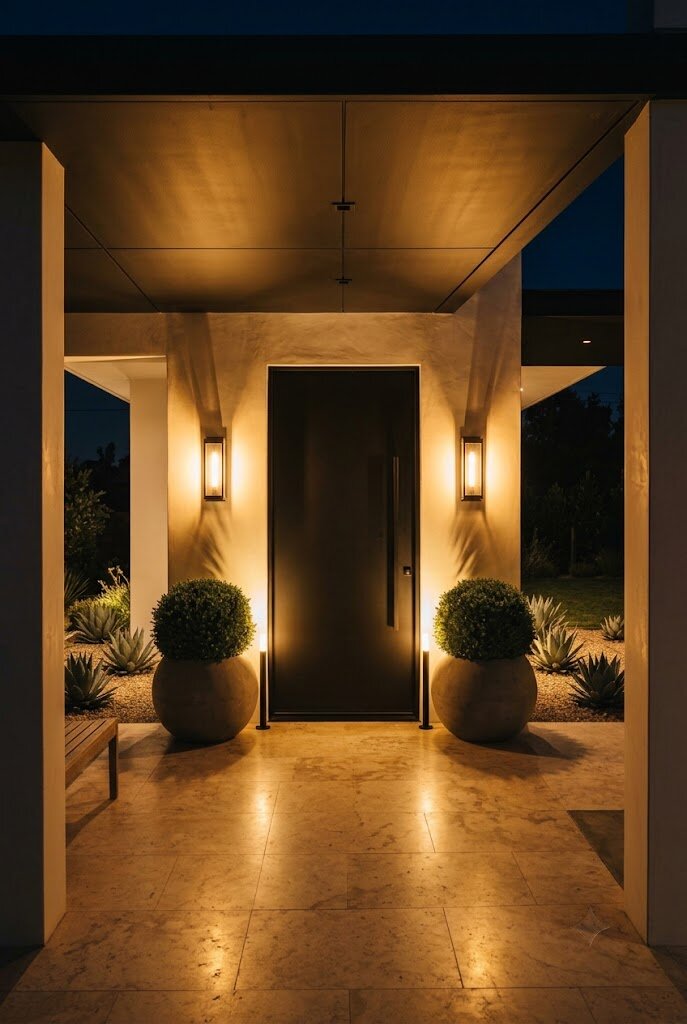
The front door is the anchor of any modern porch design and the single upgrade that changes everything. Matte black is the definitive choice — bold, timeless, and deeply architectural. Deep navy creates a more considered, maritime feel. Slate gray reads as quietly sophisticated for homes with lighter facades. Pair with brushed brass hardware and clean sans-serif house numbers. This single change transforms a porch's modernity more than any other upgrade, often for under $50 in paint alone.
2. Install Geometric Wall Sconces
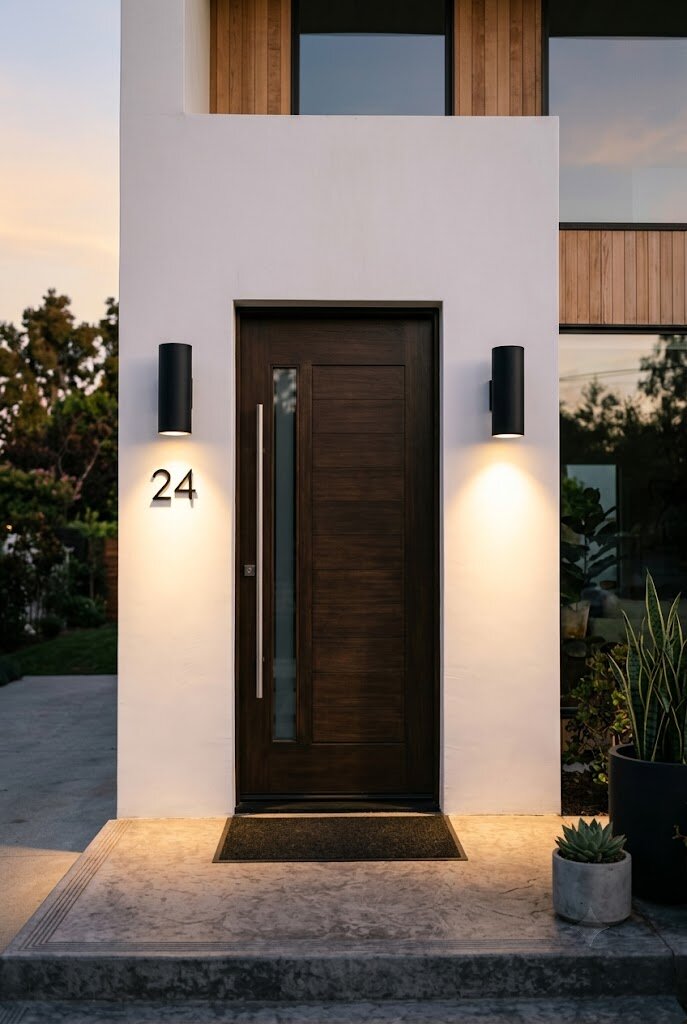
Replace traditional carriage lanterns with clean-lined geometric sconces. Look for cylindrical, rectangular, or cage-style designs in matte black or brushed brass finish. Mount two matching sconces at the same height flanking the door for symmetry. LED versions save energy and last years without bulb changes. This is the lighting equivalent of painting the door — high visual impact for a relatively modest investment of $60 to $120 per pair.
3. Use Concrete or Matte-Finish Planters
Abandon terracotta and wicker for the modern porch. Concrete planters, matte black fiberglass pots, or brushed steel cylinders create an instantly contemporary look. Choose containers within the same material family — all concrete, or all matte black — for visual cohesion. Pair with a single architectural plant per pot: one agave, one ornamental grass, or one boxwood sphere. Matching pots and single-species planting is what separates a designed modern porch from a casual one.
4. Install Horizontal Cedar or Composite Cladding
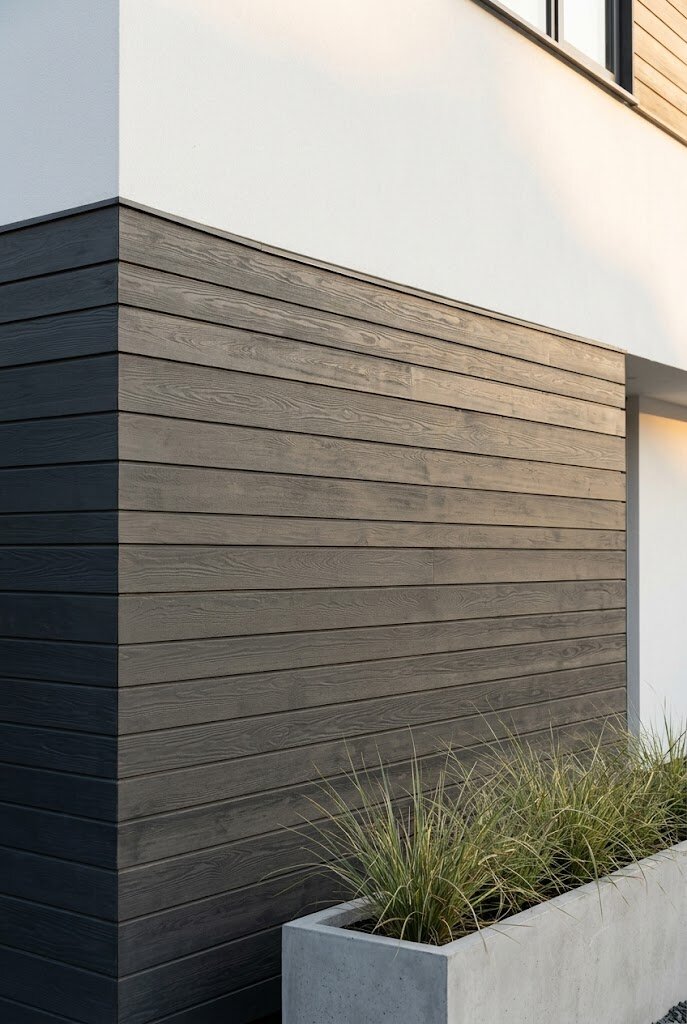
Adding horizontal board-and-batten or shiplap cladding to the porch wall or lower facade signals a contemporary design sensibility instantly. Cedar stained in charcoal or natural gray, or composite boards that resist weathering, are both excellent choices. This architectural detail transforms a generic porch into one that clearly belongs to an era of intentional design. Even cladding just the lower third of the front wall creates a dramatic modern effect.
5. Replace Spindle Railings With Cable or Glass
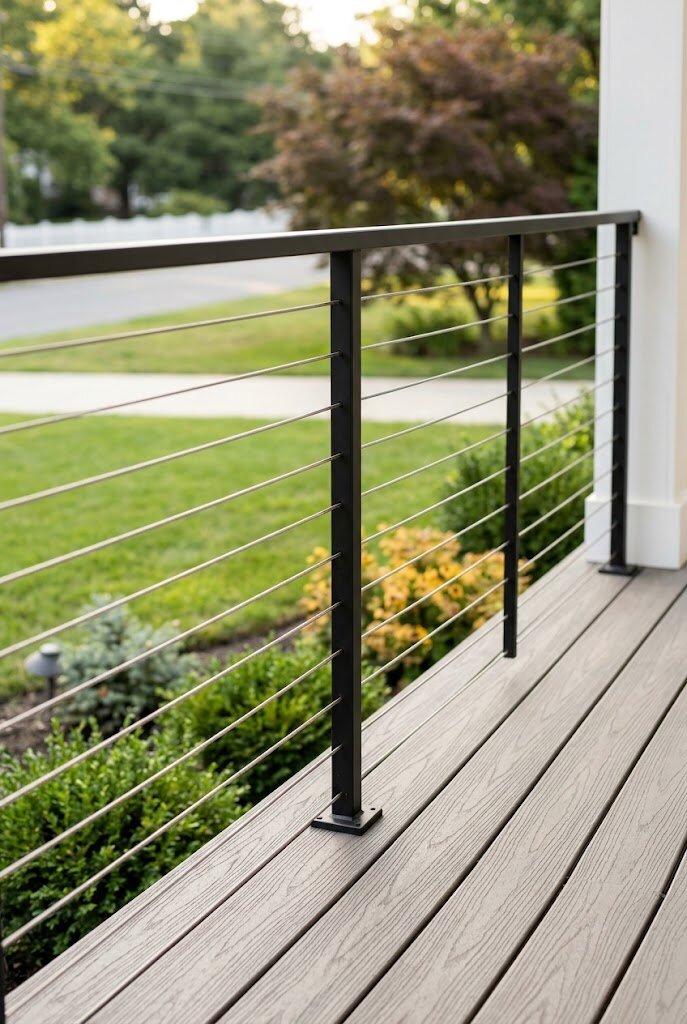
Cable railings — stainless steel cables strung horizontally between simple posts — are the single most effective structural upgrade for a modern front porch. They preserve sightlines, look unmistakably contemporary, and last for decades with minimal maintenance. Frameless glass panels are an alternative for maximum transparency. Both options make a porch feel more open and connected to the landscape. Cost runs $80 to $150 per linear foot installed.
6. Add Agave or Architectural Succulents in Large Pots
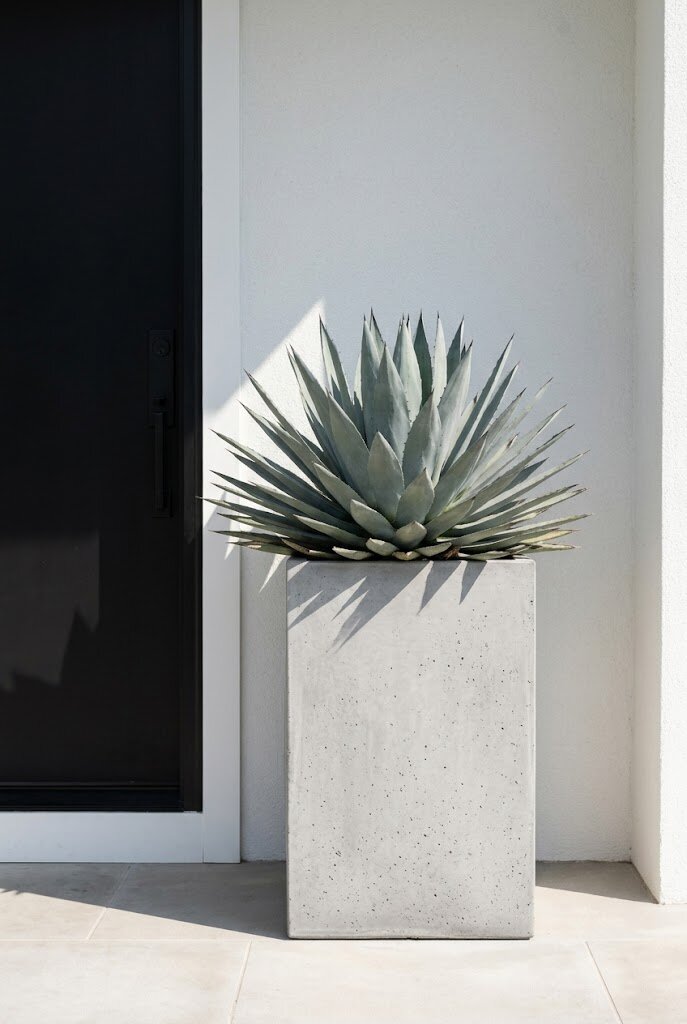
Agave americana, agave attenuata, and blue agave are the quintessential modern porch plants. Their bold, symmetrical rosettes and structural silhouettes photograph beautifully and require almost no maintenance once established. In cold climates, use large aloe vera, euphorbia, or a single dramatic sanseveria as a season-long container specimen. One large agave in a concrete cylinder pot flanking the door is worth more to modern curb appeal than a dozen mixed flower pots.
7. Install a Floating Steel Canopy or Pergola
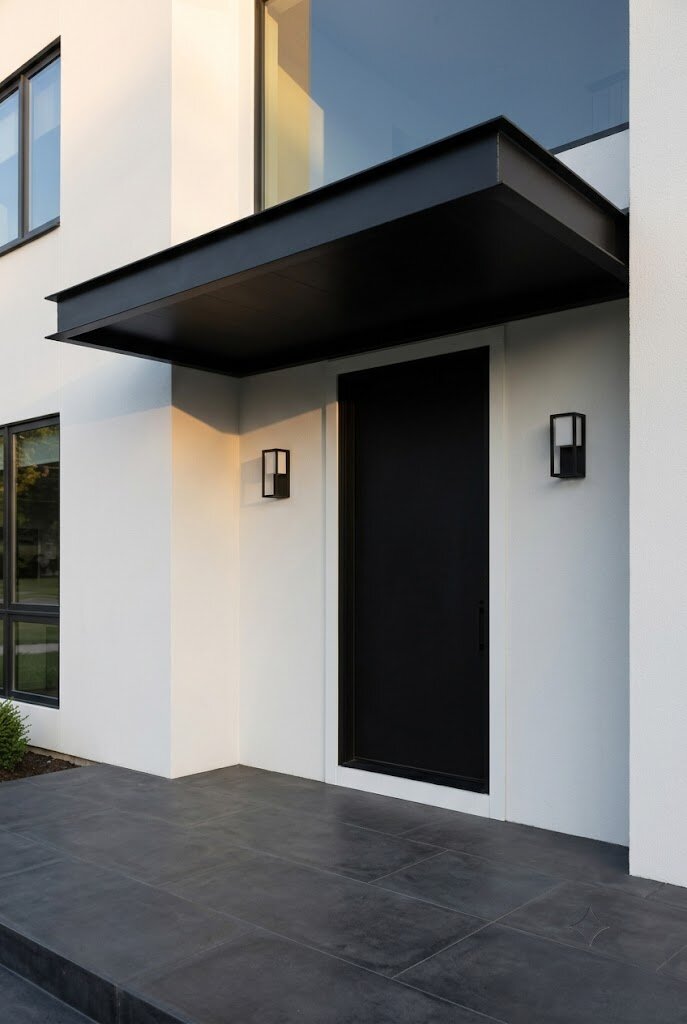
A powder-coated steel canopy or minimal pergola over a front porch entry creates an architectural frame that makes the entire facade look designed rather than incidental. Choose a flat or single-pitch canopy in matte black or dark bronze. Add outdoor fabric panels or a louvered roof for shade control. This structure-first thinking — overhead plane before furnishings — is how architects approach modern residential exteriors.
8. Commit to a Monochromatic Color Scheme
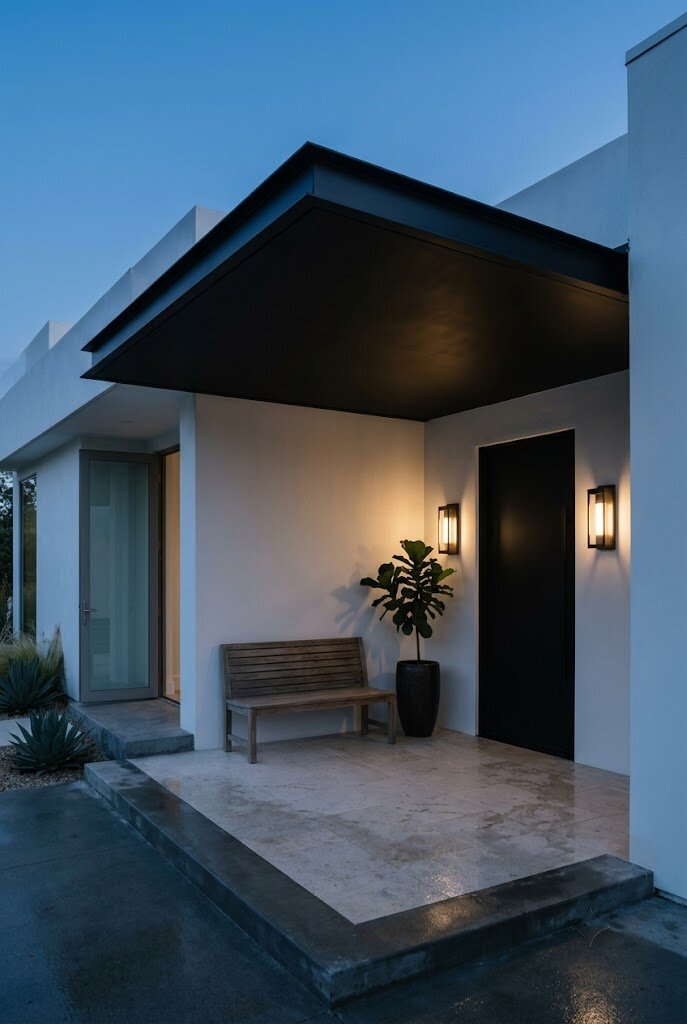
The fastest path to a modern front porch is committing to a palette of three colors maximum. The most successful modern palettes: white house with black door and natural wood accents; gray house with navy door and black fixtures; or charcoal board-and-batten with white trim and brass hardware. High contrast between main elements is the rule. Blending or matching everything is classic, not modern. Contrast is what gives a porch visual energy and authority.
9. Install Large-Format Porcelain or Concrete Tile Flooring
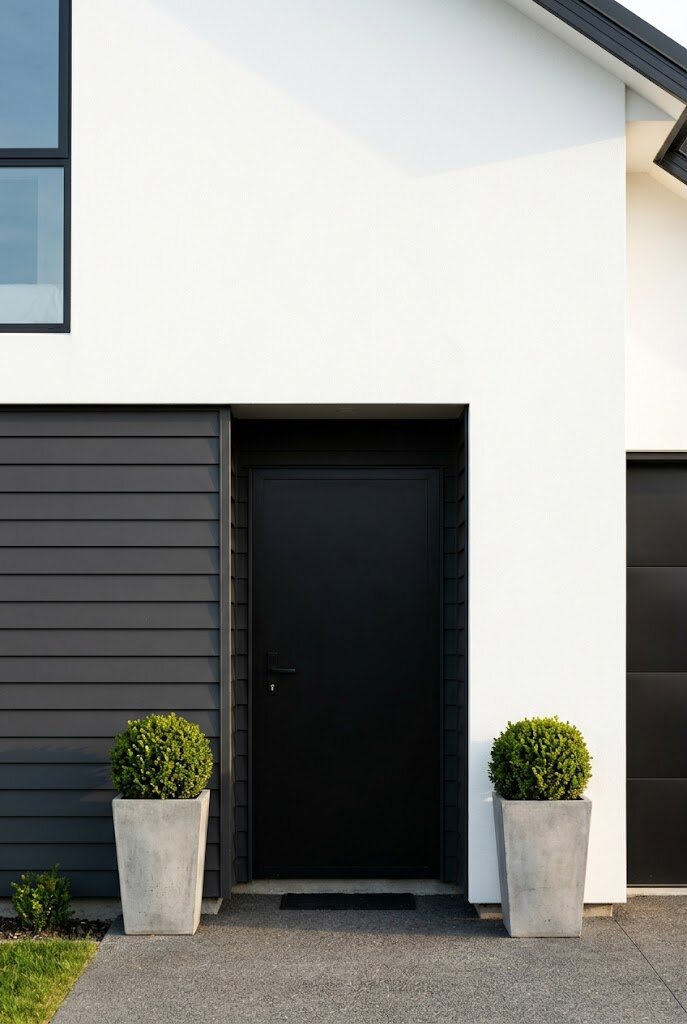
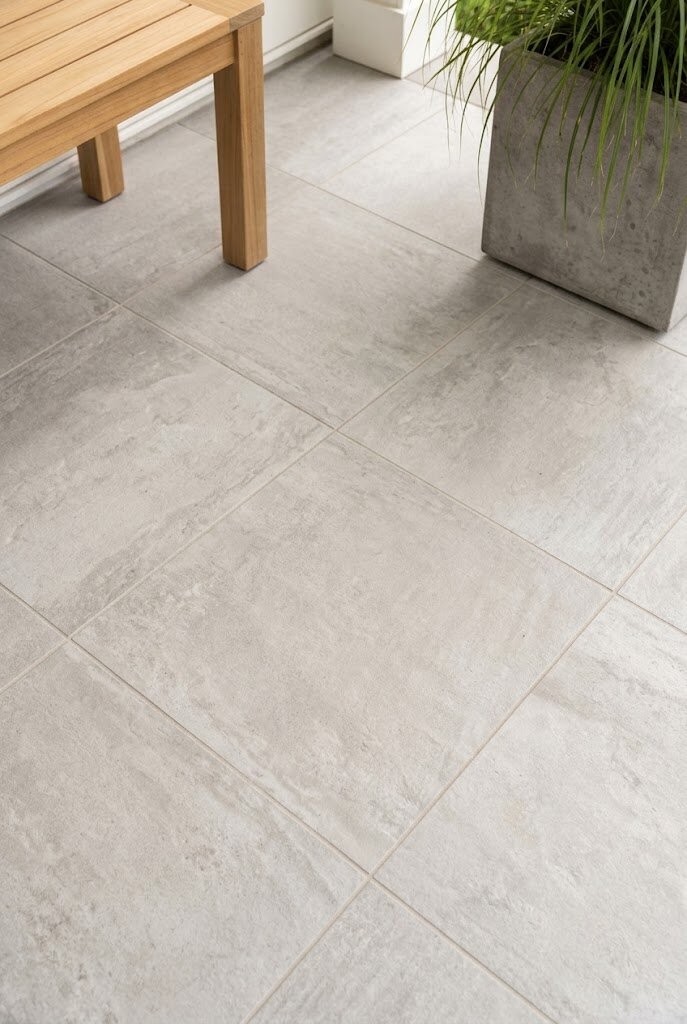
Nothing modernizes a porch floor faster than large-format concrete-look porcelain tile or poured concrete. Replace old painted wood floors with 24×24 inch outdoor porcelain in a concrete-effect finish. Large tiles with minimal grout lines read as clean and contemporary. Budget alternative: use exterior concrete floor paint in a medium gray for a similar visual effect. The floor is the foundation of the entire design — getting it right sets everything above it.
10. Add a Simple Teak or Ipe Wood Bench
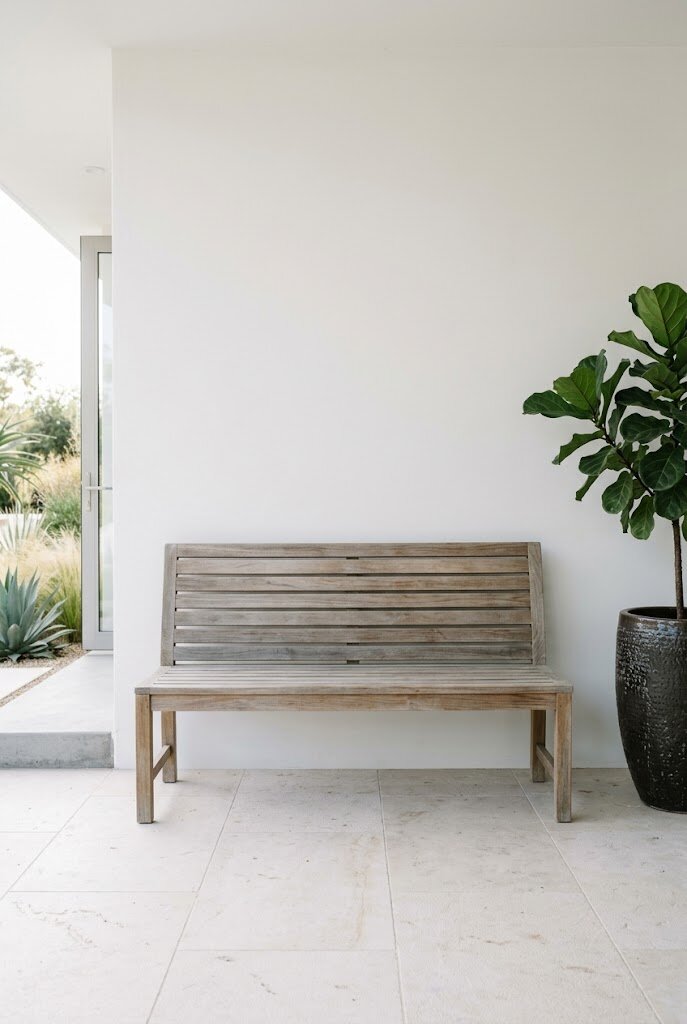
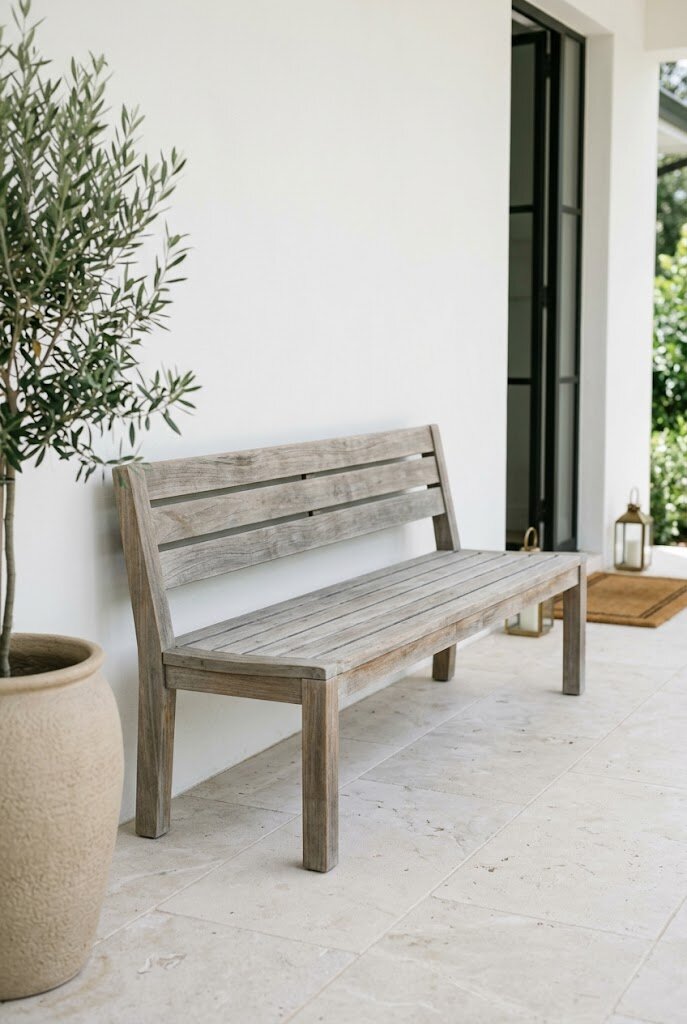
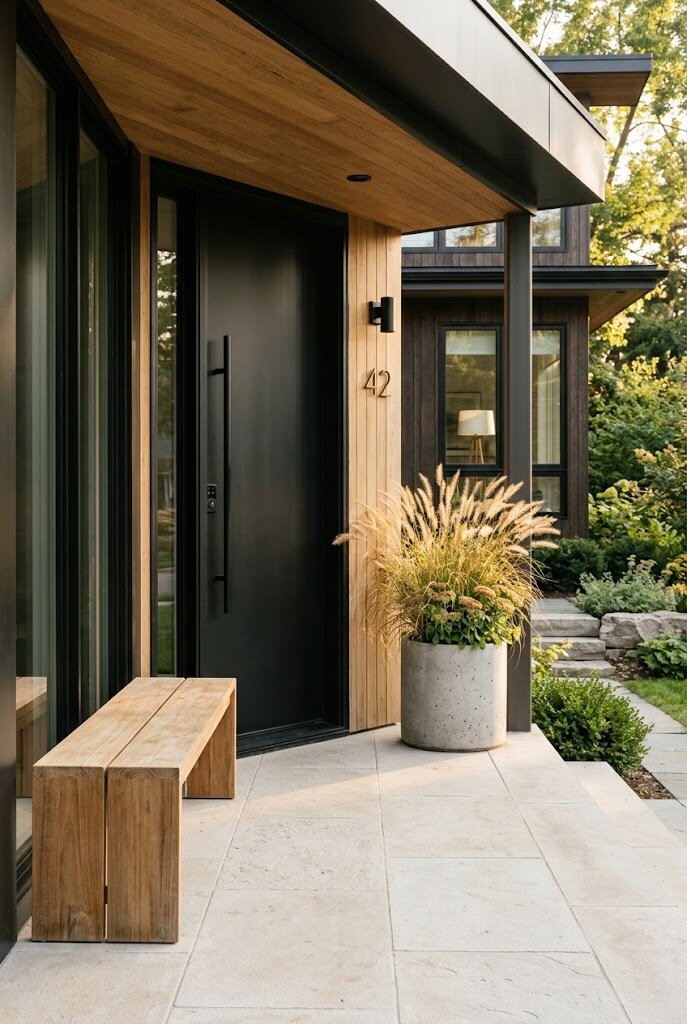
A simple teak bench — no arms, no carved details, just clean horizontal lines — beside the front door adds warmth and natural texture to an otherwise spare modern porch. Teak weathers beautifully to a silver-gray without any maintenance, or can be oiled annually to maintain golden-brown color. It provides the one organic element that prevents a modern porch from feeling cold and institutional. Position against the wall to keep the entry circulation clear.
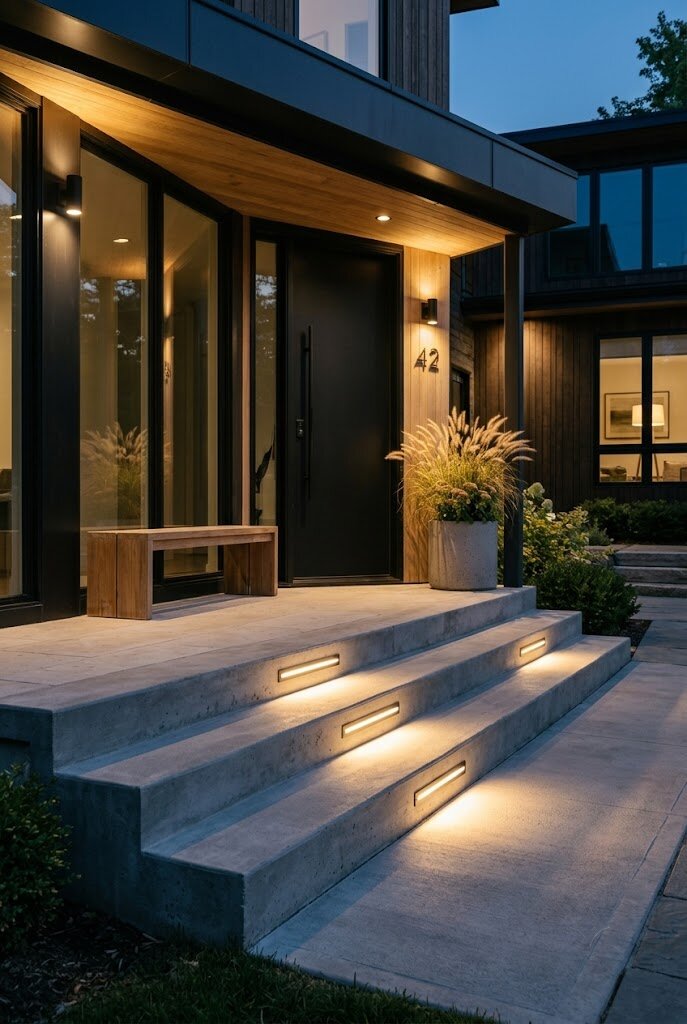
11. Install Recessed LED Step Lighting
Low-voltage LED recessed lights built into porch steps or risers create dramatic downlighting at night and eliminate trip hazards. They run on a simple 12V transformer and require minimal wiring — a skilled DIYer can install a 4-step system in an afternoon. This feature, more than almost any other decorative choice, marks a porch as professionally designed. Choose warm white (2700K) LEDs to maintain the welcoming glow that modern porches require.
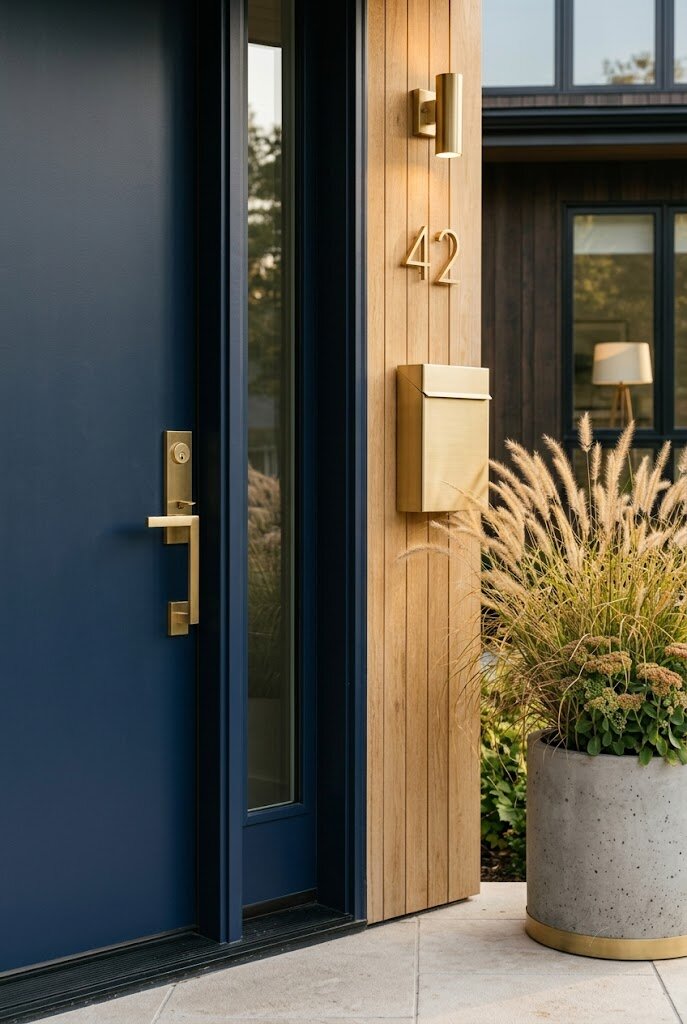
12. Coordinate All Hardware in One Finish
Every piece of hardware on a modern porch should share the same finish: door handle, deadbolt, house numbers, mailbox, and light fixtures. Mixed metals signal a lack of intentional design. Matte black and brushed brass are the two most universally modern finishes. Replacing all hardware to match costs $60 to $120 and makes an enormous visual difference — the porch suddenly reads as designed, not assembled over time from different eras.
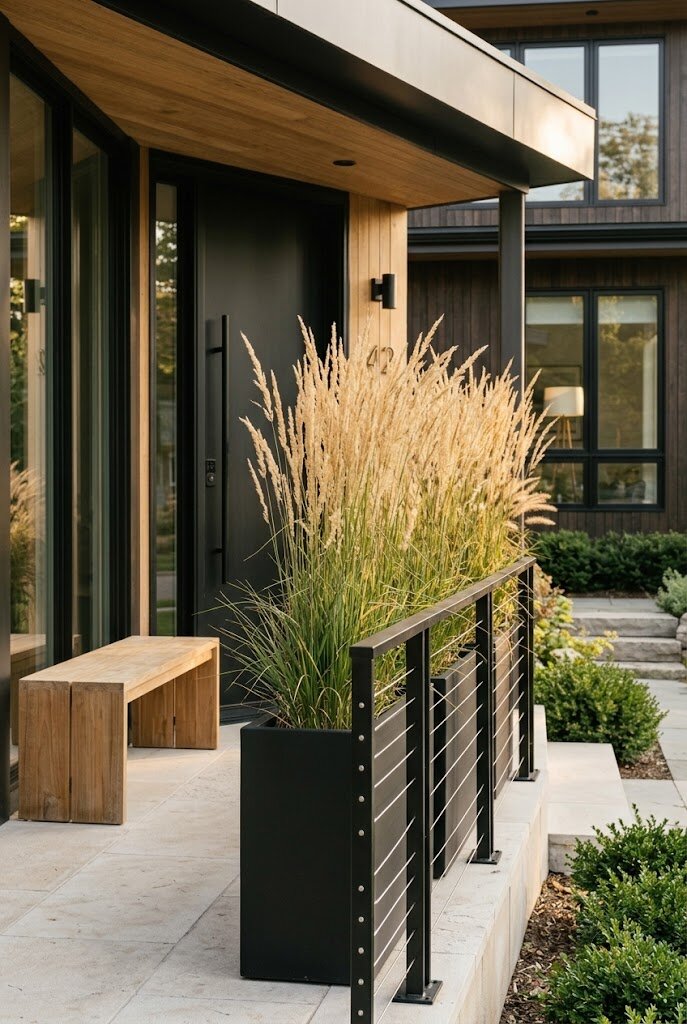
13. Use Tall Grasses or Clumping Bamboo for Privacy Screening
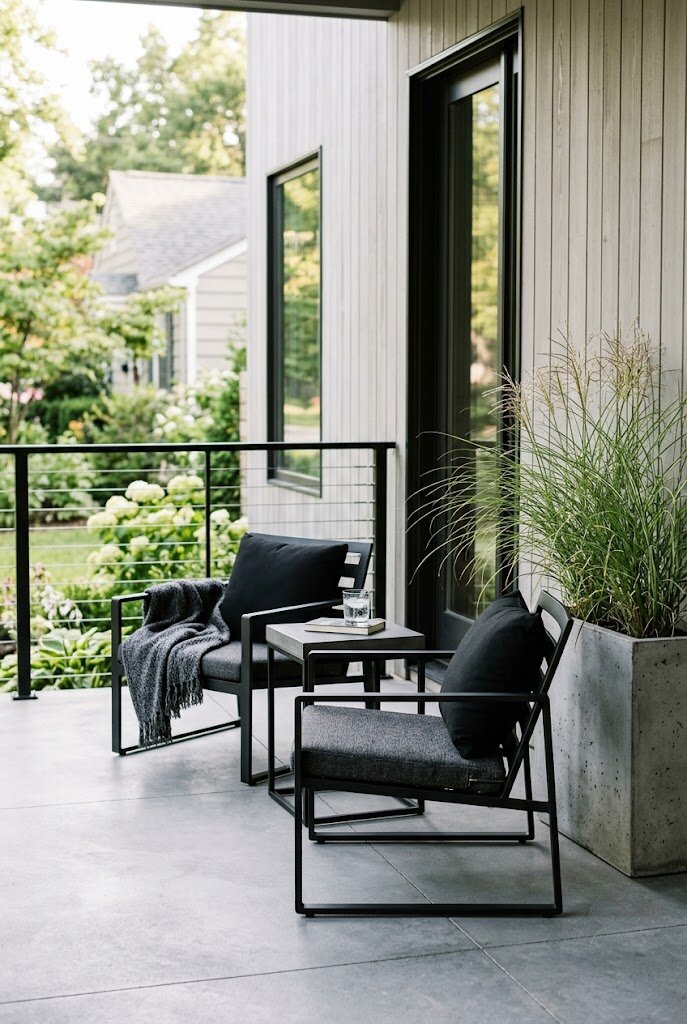
Karl Foerster feather reed grass, miscanthus, or clumping bamboo in large rectangular planters create a natural privacy screen that suits modern landscape design perfectly. The vertical lines of ornamental grasses echo the clean verticals of contemporary architecture. Space three identical containers evenly along the porch rail for maximum effect. This combination of living material and geometric repetition is a hallmark of modern residential landscape design.
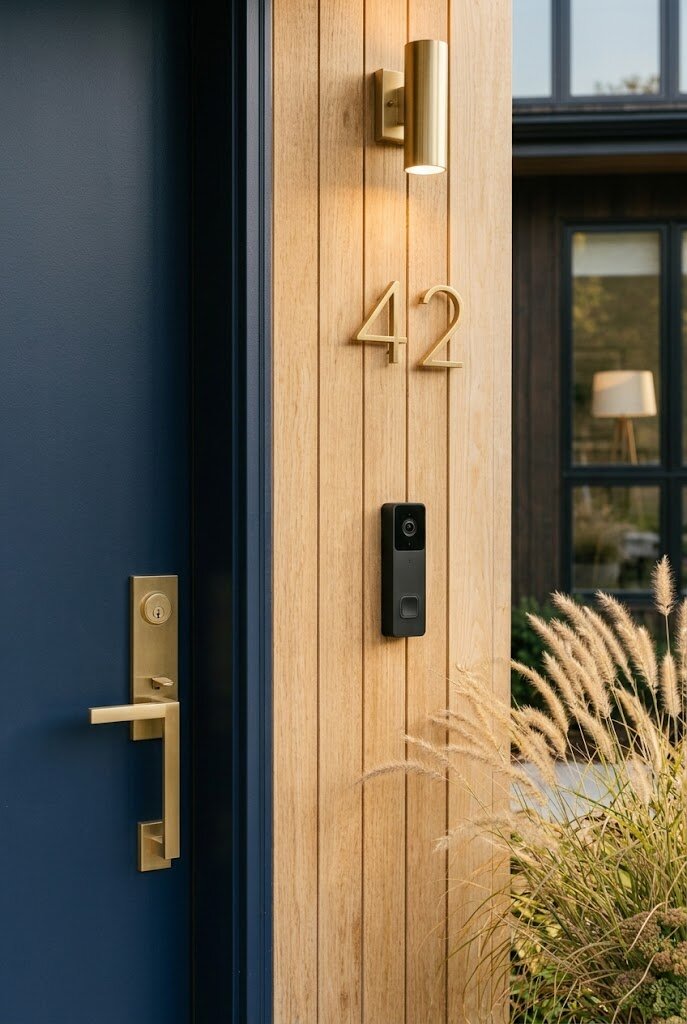
14. Add a Sleek Smart Video Doorbell
A matte black or satin nickel video doorbell (Ring, Nest, or Eufy) adds security while maintaining a clean modern look. Choose a model whose design complements your door hardware finish. Mount at eye level — about 48 inches from the ground. The technology-forward element suits a modern aesthetic perfectly: this is a home that functions as intelligently as it looks. Avoid models with decorative housing or faux-traditional styling.
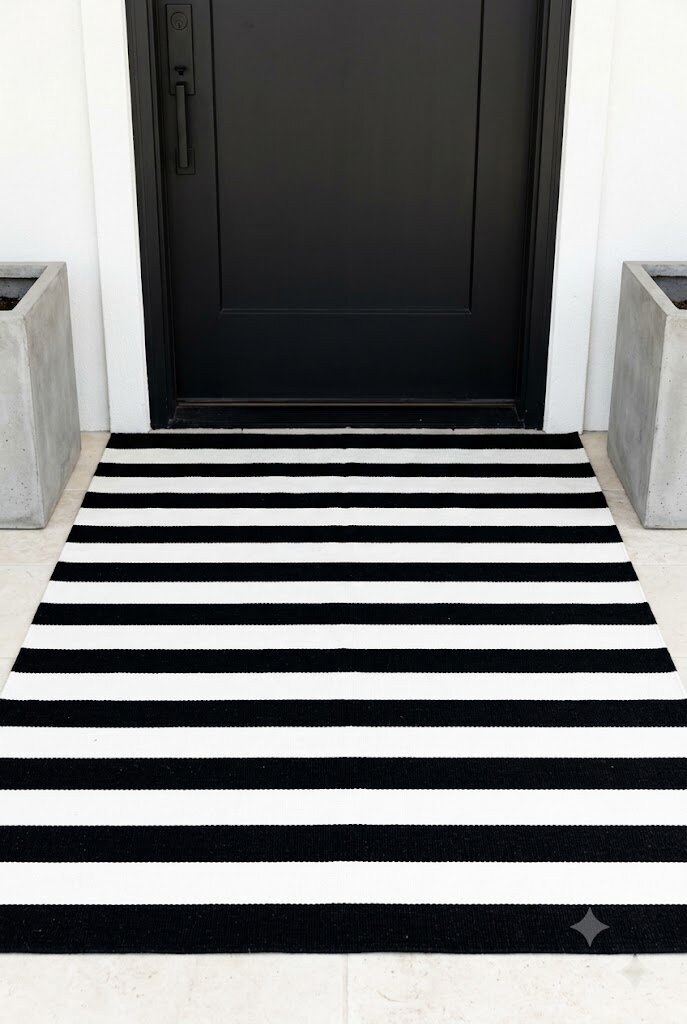
15. Lay a Linear Outdoor Rug in a Neutral Tone
A flatweave outdoor rug in charcoal, warm gray, or a bold black-and-white stripe grounds the modern porch and defines the entry zone. Choose a simple stripe, subtle geometric, or solid color — avoid florals, medallions, or Moroccan patterns, all of which undercut modern styling. Polypropylene material handles all weather without fading. Place the rug to align with the door and extend to the railing edge for a proportioned, intentional look.
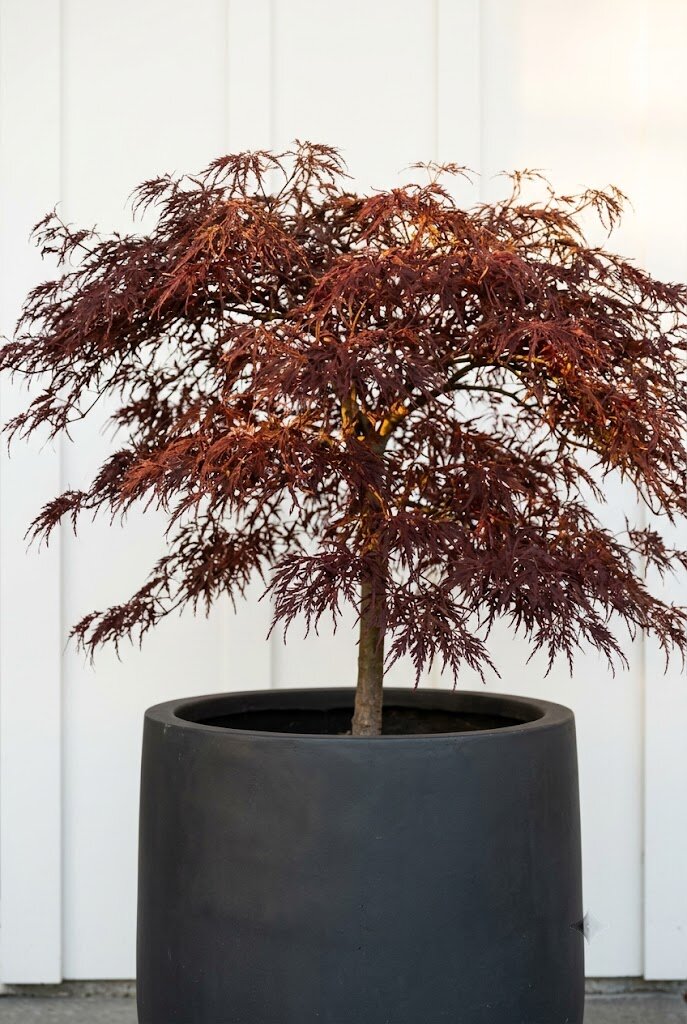
16. Plant a Japanese Maple as a Container Focal Point
A Japanese maple (Acer palmatum) in a large container is one of the most architecturally striking plants for a modern porch. Its delicate, lacy foliage in deep burgundy or bright chartreuse creates a dramatic seasonal focal point. In spring the leaves emerge fresh and new; in autumn they ignite in orange and crimson before dropping cleanly for winter. Choose dwarf varieties for containers — 'Crimson Queen' or 'Tamukeyama' for weeping form, 'Katsura' for golden-green foliage.
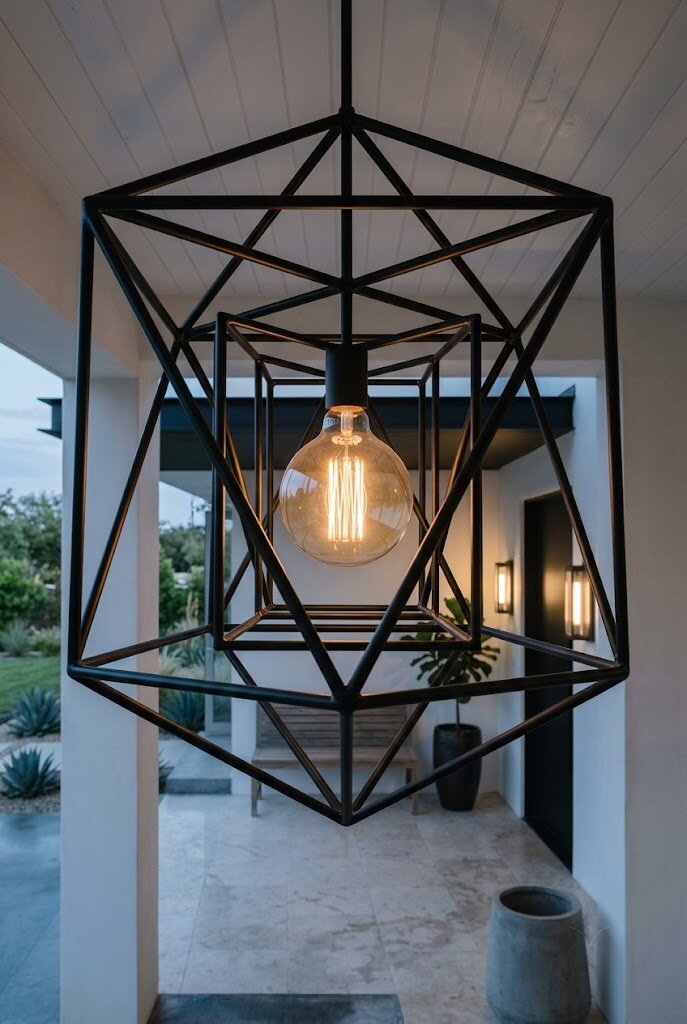
17. Hang an Oversized Pendant Light From the Ceiling
If your porch has an overhead ceiling, a single oversized pendant creates a strong architectural statement. Choose a simple geometric cage, ribbed metal cylinder, or sculptural globe in matte black. The scale matters — a pendant that seems too large inside reads perfectly in an outdoor space with more surrounding volume. Use an outdoor-rated fixture. A single dramatic overhead pendant does the visual work of three smaller fixtures while keeping the ceiling clean and uncluttered.
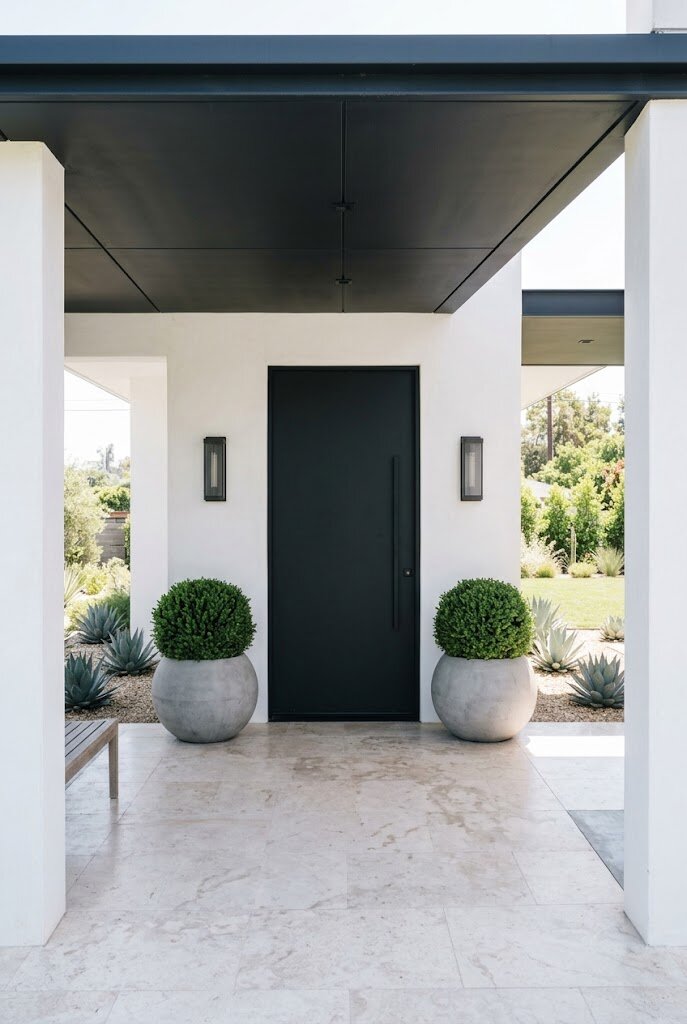
18. Design Perfect Symmetry With Matching Planters
Nothing communicates intentional modern design as clearly as perfect bilateral symmetry: two identical planters, identical plants, identical height, flanking the front door. Choose matching concrete spheres, identical boxwood balls, or paired ornamental grasses. Symmetry is the visual shorthand for order and control — the defining emotional quality of the modern aesthetic. The planting must be identical, not just similar; even small differences in height or density disrupt the effect.
19. Frame the Entry With Uplighting
Ground-level uplighting on either side of the front door creates dramatic architectural shadows after dark and highlights the door's color and texture. Use slim LED ground spikes with a warm (2700K) beam angle directed up the facade. This lighting technique is standard in luxury residential design and available at any home improvement store for under $60 per pair. The effect transforms an ordinary porch facade into something hotel-worthy after sunset.
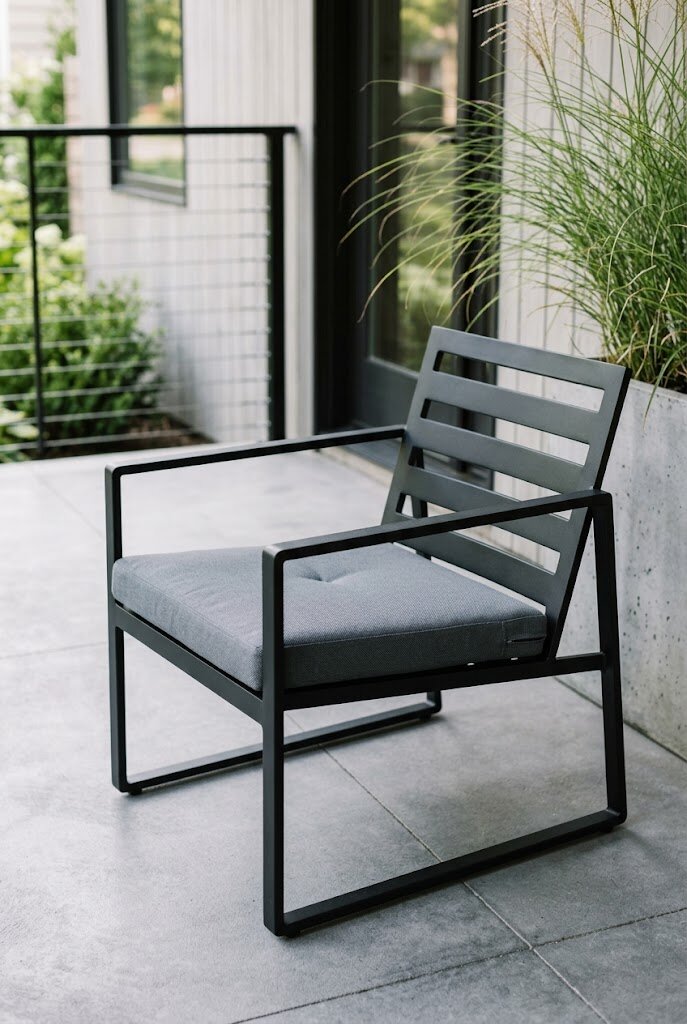
20. Install Powder-Coated Aluminum Outdoor Chairs
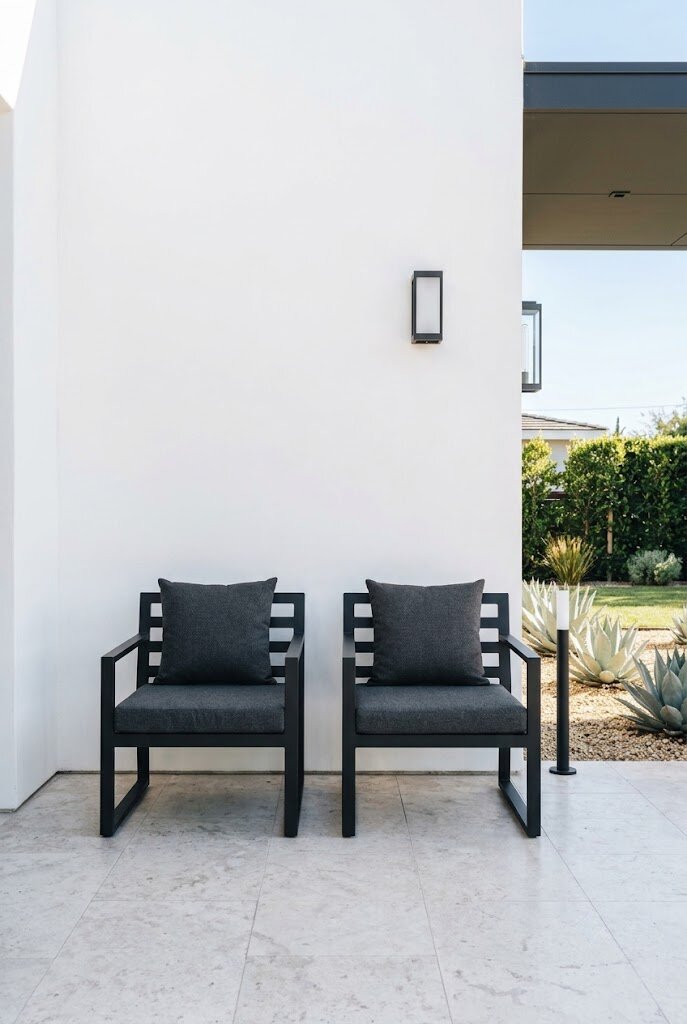
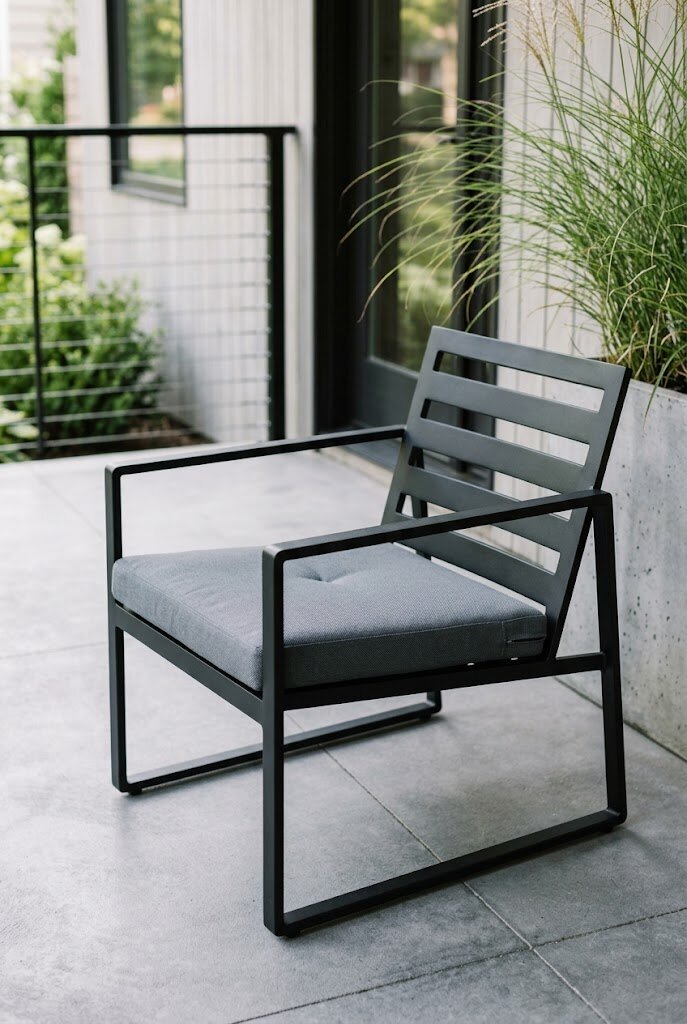
Powder-coated aluminum chairs in matte black, charcoal, or warm white are the definitive modern outdoor seating choice. They are lightweight, rust-proof, and available in many clean geometric forms. Pair with solid-color cushions in a neutral or muted tone — no patterns, no florals. Two chairs with a concrete-top side table between them creates a conversation area that reads as effortlessly designed rather than assembled from catalog pieces.
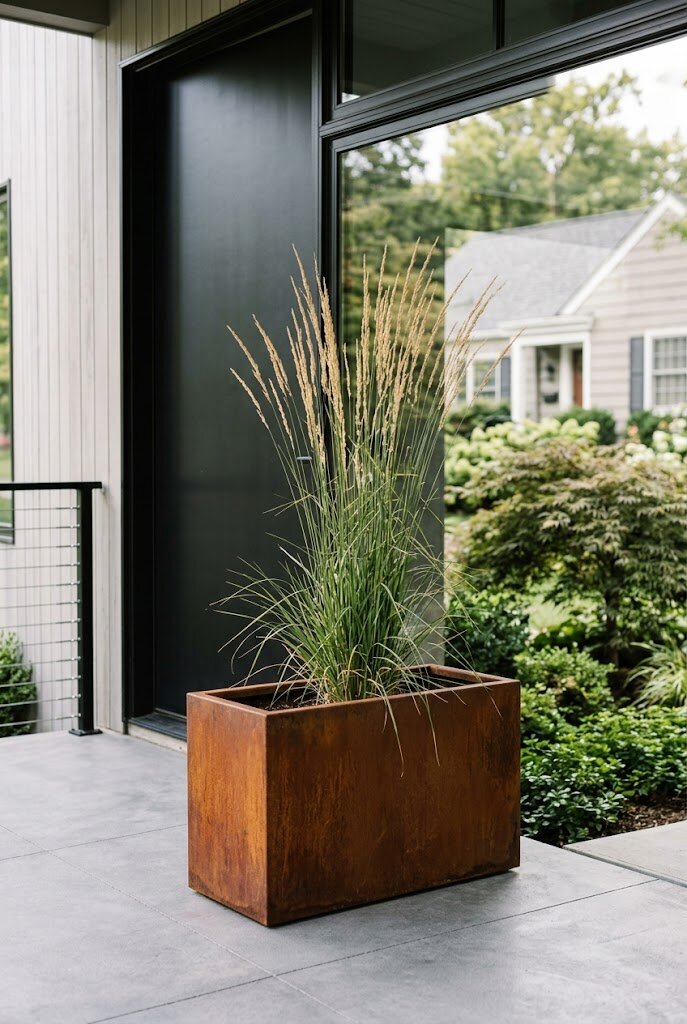
21. Add a Corten Steel Planter or Water Feature
Corten (weathering) steel develops a rich, warm rust-orange patina over 6 to 18 months and then stabilizes. Corten planters, wall panels, or small water features bring an industrial-organic warmth that complements matte black and concrete beautifully. A simple corten trough planter with a single ornamental grass, or a shallow corten bowl with a recirculating water jet, adds an element of material sophistication few other design choices can match.
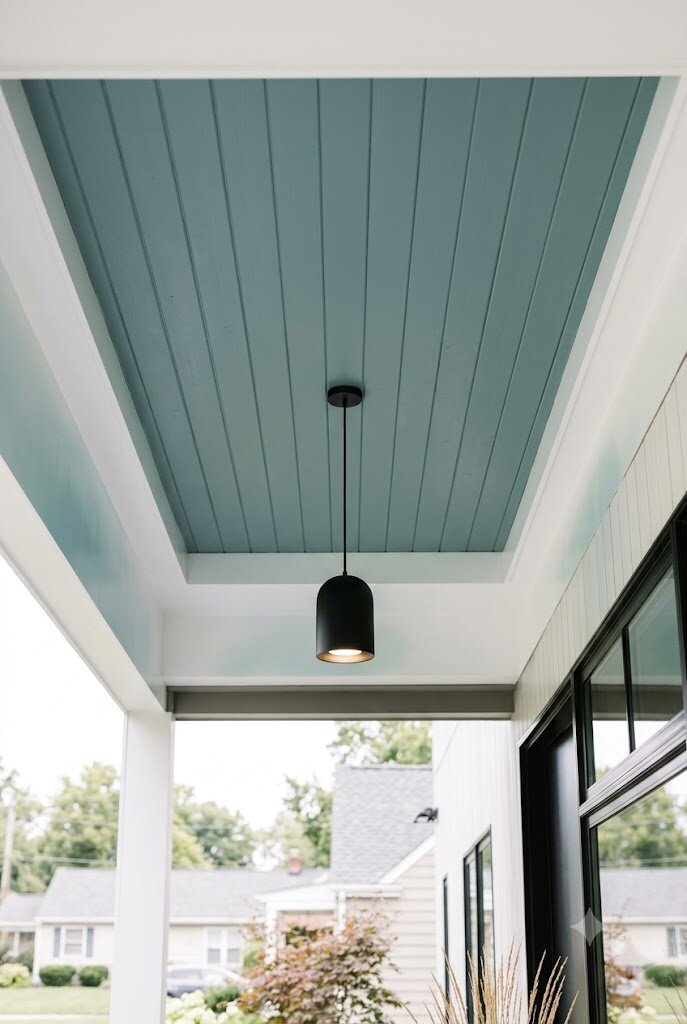
22. Paint or Stain the Porch Ceiling Haint Blue
Haint blue — a soft blue-green ceiling paint traditionally used in Southern porches — reads as a sophisticated modern sky blue from below. The color creates visual expansion, reflects light softly onto faces below, and looks beautiful at any time of day. Choose a muted, desaturated blue-green (Benjamin Moore's 'Palladian Blue' or Sherwin-Williams' 'Tidewater') rather than a primary blue. The contrast with a matte black door and white trim is a classic modern combination.
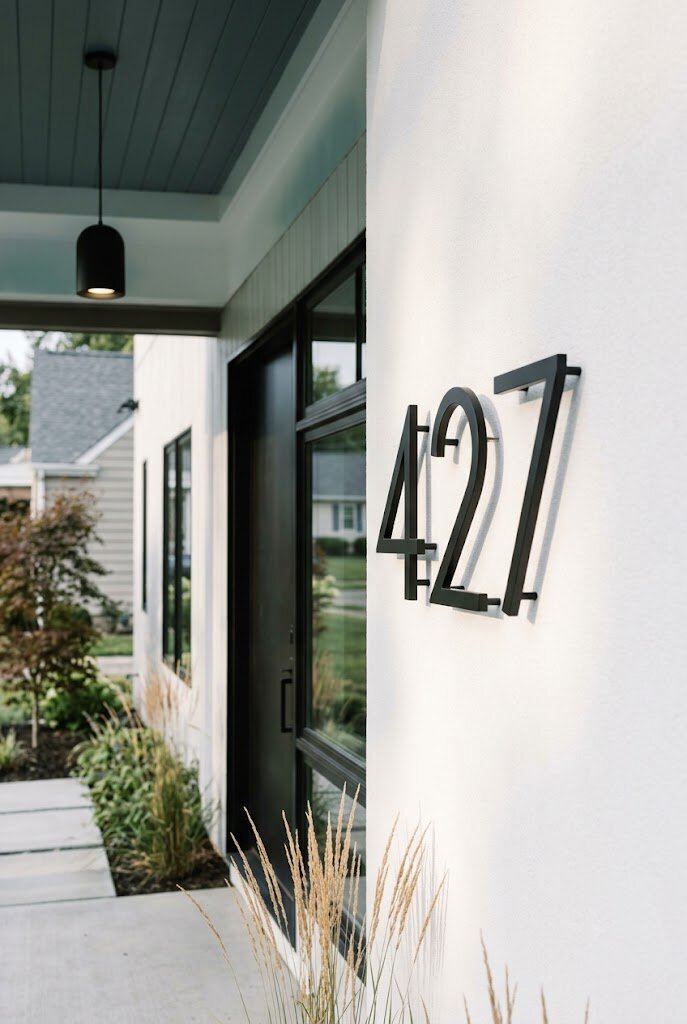
23. Use Clean-Lined House Numbers as a Design Statement
Modern address numbers in a clean sans-serif font — mounted with standoffs so they float slightly from the wall — are a detail that design-conscious visitors notice immediately. Choose numbers in a finish that coordinates with your door hardware: matte black with black hardware, brushed brass with brass hardware. Avoid script fonts, decorative borders, or plaques. The numbers themselves, set in the right typeface, become an architectural detail as considered as any other element.
24. Introduce a Single Focal-Point Sculpture or Ceramic
One well-chosen sculptural object — a large ceramic vessel, an abstract bronze figure, or a minimal stone sphere — placed deliberately on the porch gives the space a gallery-like quality. Choose something with weight and presence rather than decorative-crafts aesthetic. The object replaces a second planter and signals that this is a designed space, not just a place to put things. One is always enough; two becomes clutter.
25. Add a Slim Rectangular Planter Box at the Railing
A long, narrow planter box running the length of the porch railing or below the front windows brings the modern design principle of horizontal linearity to planting. Fill with a single species in a single color: all white petunias, all dark burgundy coleus, or all chartreuse sweet potato vine. The repetition and restraint reads as high design. Avoid mixed plantings — the thriller-filler-spiller approach is charming but traditional, not modern.
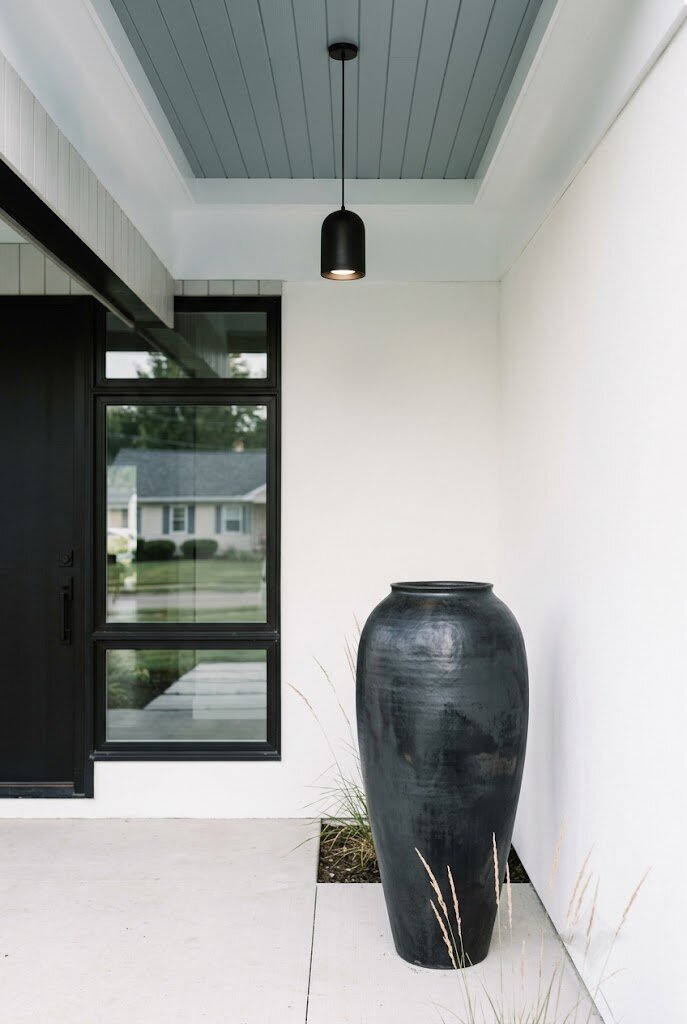
26. Create a Minimalist Entryway With a Doormat and Nothing Else
Sometimes the most modern statement is restraint. A single high-quality doormat — a simple coir mat with a clean-edge border, or a stone-effect rubber mat — on an otherwise empty porch is braver and more sophisticated than a cluttered collection of seasonal decor. If your porch is small (under 50 square feet), one bold mat, one perfect plant, and a clean door is genuinely all you need. Restraint is a design choice, not an absence of design.
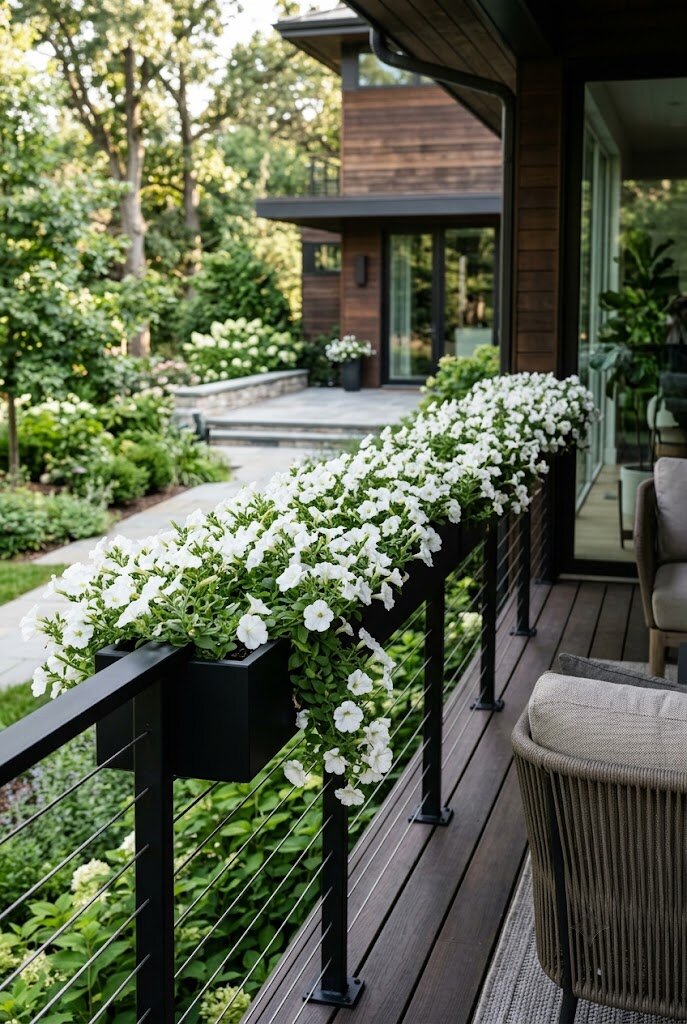
27. Add Motion-Activated Smart Pathway Lighting
Low solar pathway lights along the front walkway leading to the porch create a welcoming, hotel-lobby effect at dusk. Choose slim cylindrical or spike-style lights in matte black or brushed stainless. Avoid solar lanterns in decorative housing — these undercut the modern aesthetic immediately. Space lights evenly at 24 to 36 inches apart for a clean, intentional rhythm along the path. Motion-activated models add security alongside ambiance.
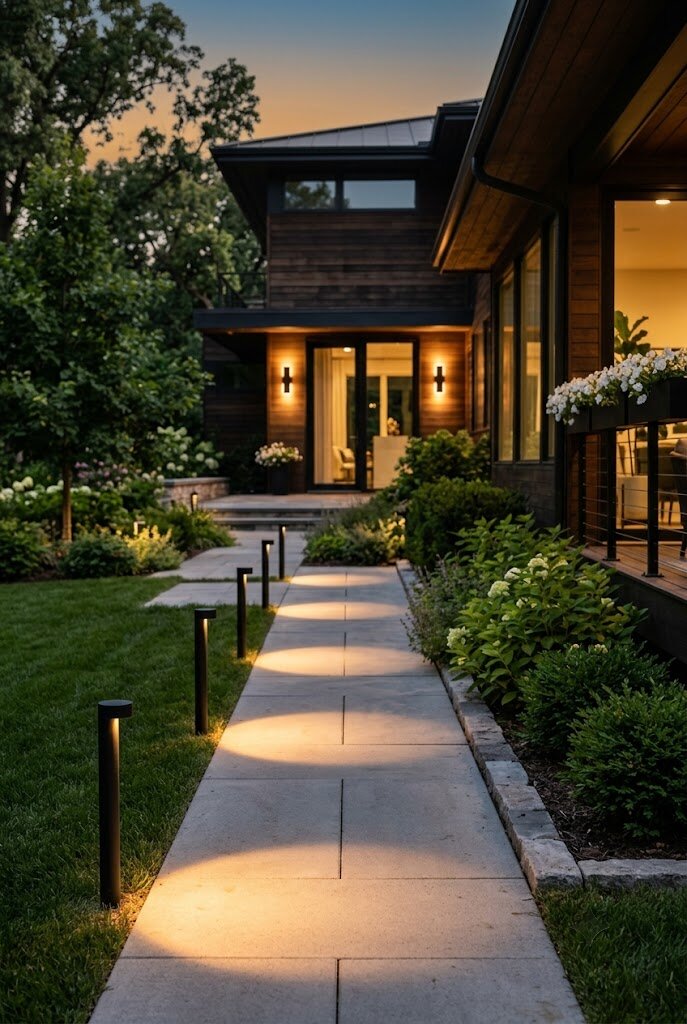
28. Install a Built-In Bench With Hidden Storage
A custom-built bench along one porch wall — with a hinged lid revealing hidden storage underneath — is one of the most space-efficient and architecturally satisfying elements a modern porch can have. Build from exterior-grade cedar with a clean slab top and no decorative trim. Paint to match the siding or stain to match the teak furniture. The result looks architectural rather than added, and provides practical storage for shoes, cushions, or outdoor supplies.
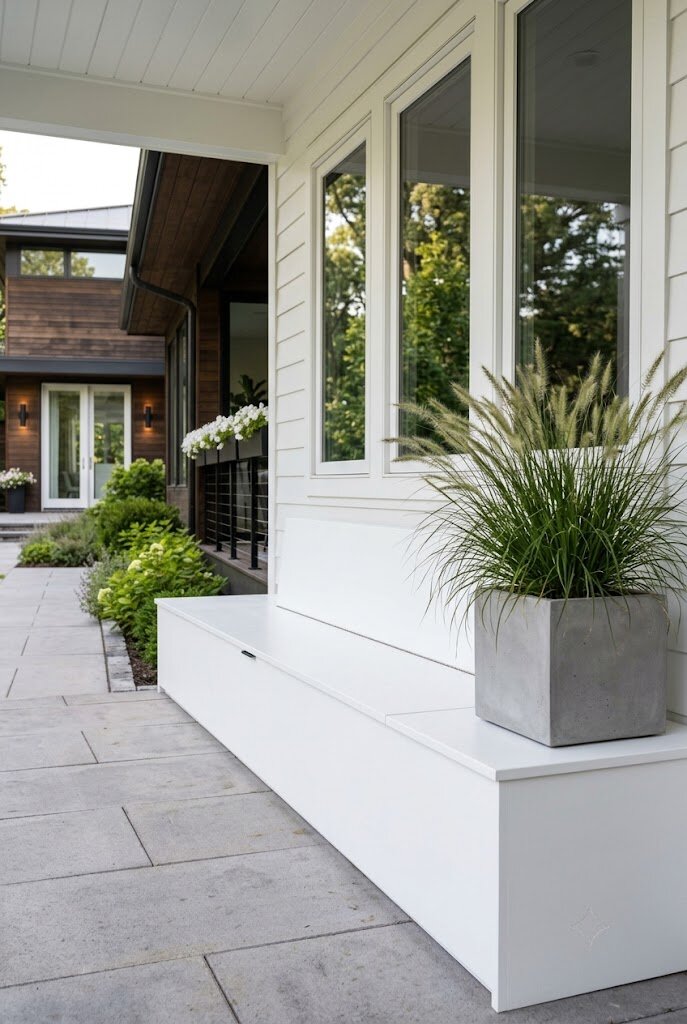
29. Mount a Floating Cedar Shelf for Plants and Lanterns
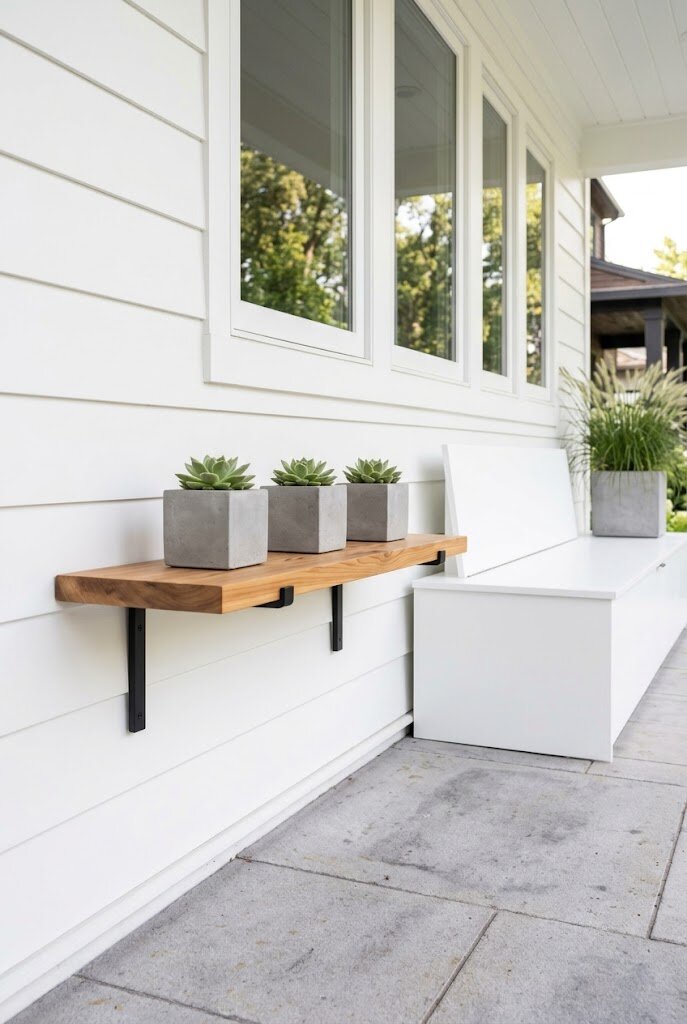
A single floating shelf mounted on the porch wall — exterior-grade hardware, cedar or composite board — provides a display surface for a row of identical small concrete pots, a single lantern, or a line of succulents. The horizontal line echoes the clean horizontals of modern design. Keep the arrangement spare: three identical pots maximum. Negative space on the shelf is part of the design. A cluttered shelf is a traditional shelf.
30. Use All-LED Warm-White Lighting Throughout
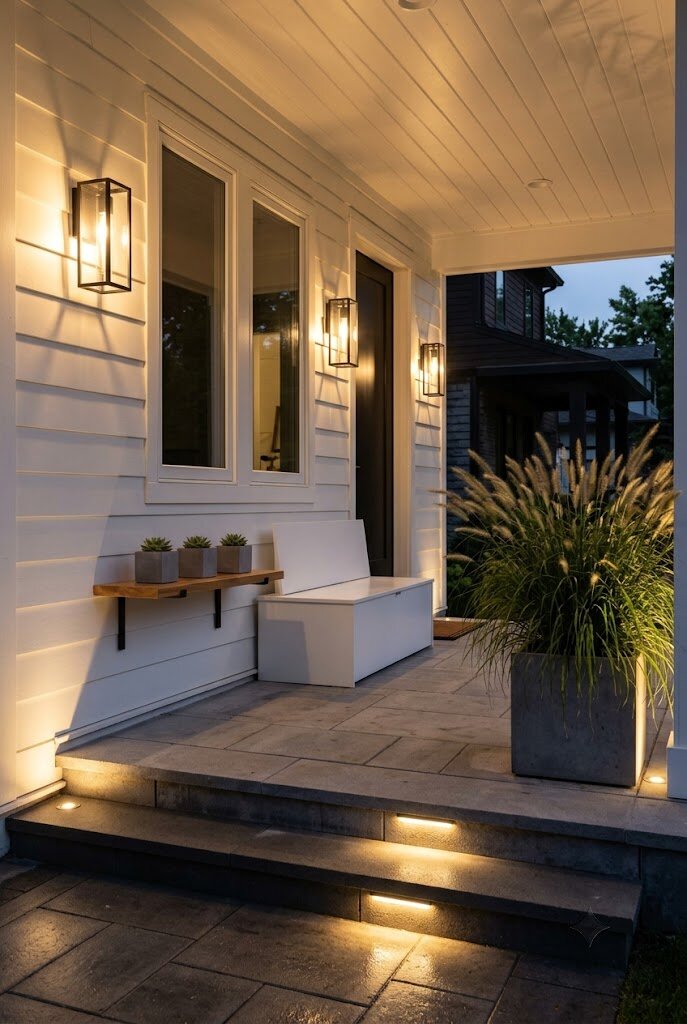
Modern porch lighting uses LED throughout, but the critical design choice is color temperature. 2700K to 3000K is warm white — it flatters the home's exterior, enhances material textures, and feels welcoming. Anything above 4000K is cool or daylight white, which makes exteriors look clinical and commercial regardless of fixture quality. Replace every bulb and fixture with warm-white LED. Consistent color temperature across all light sources is the invisible detail that makes a porch look professionally designed.
Frequently Asked Questions
Conclusion
A modern front porch is built on consistent, disciplined choices: one material palette, one color palette, geometric forms, and architectural plants. You do not need to implement all 30 ideas at once. Start with the front door and the light fixtures — those two changes alone will transform your home's exterior more dramatically than almost anything else you can do. Build the rest over time as budget allows. The modern porch rewards patience and editing, not spending.
Ready for more? Browse our Front Porch gallery or follow Pinterest @10MinuteFacts for daily design inspiration.