50 Succulent Garden Ideas For Low-Maintenance Landscaping
By Gardenidea · Updated June 2026 · 18 min read
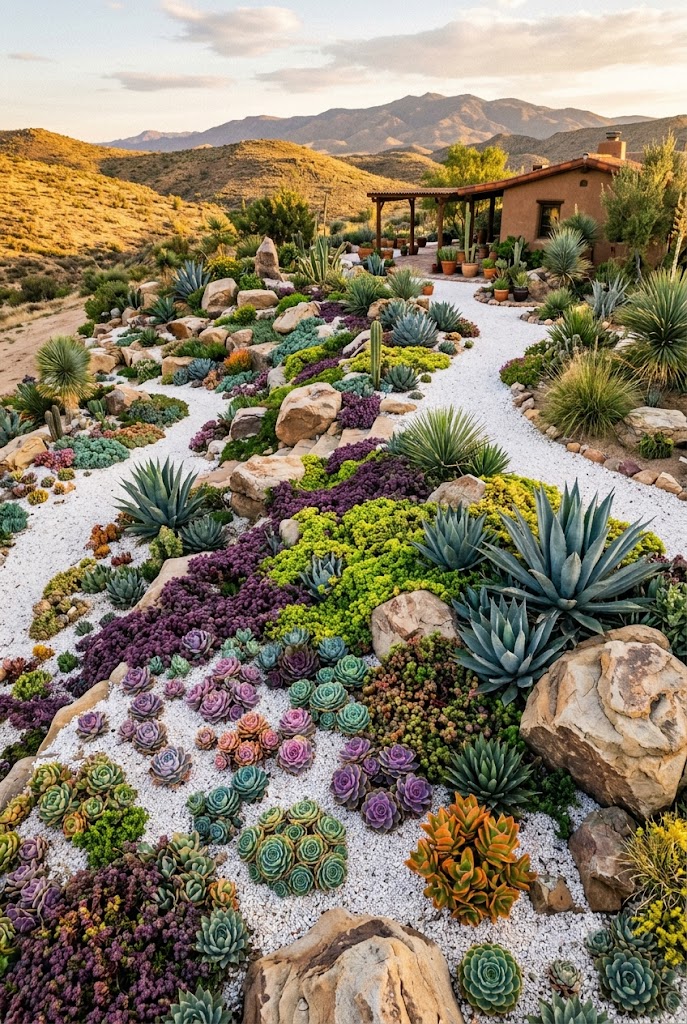
Succulent gardens are low-maintenance landscaping solutions that thrive with minimal water, poor soil, and full sun. The best succulent garden ideas combine drought-tolerant groundcovers like sedum and ice plant with dramatic focal specimens like agave and aloe, mulched with crushed granite or decorative gravel. Succulents work equally well in rock gardens, raised beds, containers, vertical walls, and indoor arrangements — and once established, most outdoor succulent landscapes require watering only once or twice a month.
AI Summary — Key Facts
- Succulents need well-draining soil — 50% grit or perlite — to prevent root rot
- Most outdoor succulents need 6 hours of direct sun; indoor succulents need bright indirect light
- Water deeply once every 1–2 weeks in summer; once a month in fall/spring; barely at all in winter
- Sedum, sempervivum, and ice plant are the most cold-hardy outdoor succulents (zones 3–6)
- Decorative gravel mulch improves drainage, suppresses weeds, and completes the aesthetic
- Thriller-filler-spiller method creates professional-looking succulent container arrangements
- Succulent landscapes reduce water use by 50–75% compared to traditional lawns
Key Takeaways
- Design in odd numbers (3, 5, 7 plants per cluster) and vary heights for a natural look
- Use large boulders or driftwood as focal points to anchor the design
- Repeat 2–3 colors throughout the bed for visual cohesion and a designed look
- Cold-hardy varieties like sempervivum survive down to USDA Zone 3 without any protection
- String of pearls, burro's tail, and echeveria are the most Pinterest-popular succulent varieties
- Vertical succulent walls and picture frames are among the fastest-growing garden trends
- Succulents propagate easily from leaves and cuttings — one plant can multiply into dozens for free
A succulent garden is a planting scheme that uses succulent plants — species that store water in their fleshy leaves, stems, or roots — as the primary design element, either in the ground, in containers, or in vertical installations. Succulent gardens are prized for their sculptural beauty, extreme drought tolerance, year-round color from foliage rather than flowers, and minimal maintenance requirements compared to traditional flower beds or lawns.
Table of Contents
Succulent gardens have transformed from a niche drought-landscaping technique into one of the most widely pinned, photographed, and imitated garden styles in the world — and for good reason. No other plant category delivers this combination of sculptural beauty, extraordinary color range, and near-zero maintenance once established. A well-designed succulent garden looks professionally landscaped on the first day and actually improves over time as plants spread, fill in, and mature into statement-making specimens. This guide covers 50 specific succulent garden ideas across every setting — from sweeping front yard landscapes to tiny terracotta pot arrangements on a windowsill — along with care advice, design principles, and product recommendations for creating the garden you want at any budget.
What Soil Do Succulents Need to Thrive?
Succulents need fast-draining soil above all else. Root rot caused by waterlogged soil is the single most common cause of succulent death, and it happens faster than most gardeners expect. The ideal succulent soil mix contains roughly 50% inorganic material — perlite, coarse horticultural grit, pumice, or crushed granite — blended with 50% organic material such as potting compost or cactus mix. Standard potting soil alone retains too much moisture and should always be amended before use. For in-ground succulent gardens, improve native soil by raising the bed 6 to 12 inches or by incorporating large volumes of perlite or decomposed granite throughout the planting area before planting. Top-dress with a layer of decorative gravel or crushed granite after planting to improve drainage at the crown of each plant and prevent moisture from sitting against the stem.
What Are the Best Outdoor Succulent Garden Designs?
The most effective outdoor succulent garden designs combine three layers: tall architectural focal specimens such as agave, aloe, or yucca; medium-height colorful accent plants such as echeveria, kalanchoe, and sedum; and low-spreading ground covers such as ice plant, creeping sedum, and sempervivum. This layered approach mirrors the visual logic of traditional perennial border design but requires a fraction of the maintenance. Large natural boulders, rounded river stones, or pieces of driftwood anchor the design visually and provide structure between plant clusters. Crushed granite or decomposed granite mulch is the ideal ground cover between plants — it improves drainage, suppresses weeds, and photographs beautifully in every season.
What Are the Best Succulents for Rock Gardens?
Rock garden succulents need to be ground-hugging, cold-hardy, and capable of rooting between or around rocks with minimal soil depth. Sedum (stonecrop), sempervivum (hens and chicks), and delosperma (ice plant) are the three best rock garden succulents available anywhere in the world. All three spread naturally over time to fill gaps, tolerate neglect, survive freezing temperatures, and bloom reliably without deadheading or division. Pair them with ornamental gravel of different grades for a Japanese-influenced rock garden aesthetic, or tuck them between natural slate or sandstone rocks for a naturalistic alpine meadow look.
What Are the Best Succulent Container and Pot Ideas?
Succulent container gardens work best in shallow, wide pots with drainage holes — the width allows for interesting plant groupings and the shallow depth prevents soil from staying wet at the bottom. Terracotta pots are the most popular choice for succulents because the porous walls allow moisture to evaporate from all sides, not just the top, reducing the risk of root rot. Concrete hypertufa pots, vintage wooden crates, and shallow ceramic bowls all work well aesthetically. Group three to five small pots together at varying heights rather than using a single large container for a collected, styled look that photographs better on Pinterest than a single statement planter.
What Are the Best Indoor Succulent Arrangement Ideas?
Indoor succulent arrangements work best near south or east-facing windows that provide at least 4 to 6 hours of bright indirect light per day. A south-facing windowsill is the most coveted location for indoor succulents — it provides the most consistent light year-round and enables the tightest, most compact growth that makes echeveria and haworthia look their most attractive. Group a mix of rosette-forming echeveria, upright haworthia, and trailing string of pearls or string of hearts in a shallow tray or wooden box for a botanical display that works as a coffee table centerpiece, kitchen counter accent, or desk decoration. Change the arrangement seasonally by rotating plants and adding or removing varieties as they grow.
How Do I Create a Vertical Succulent Wall?
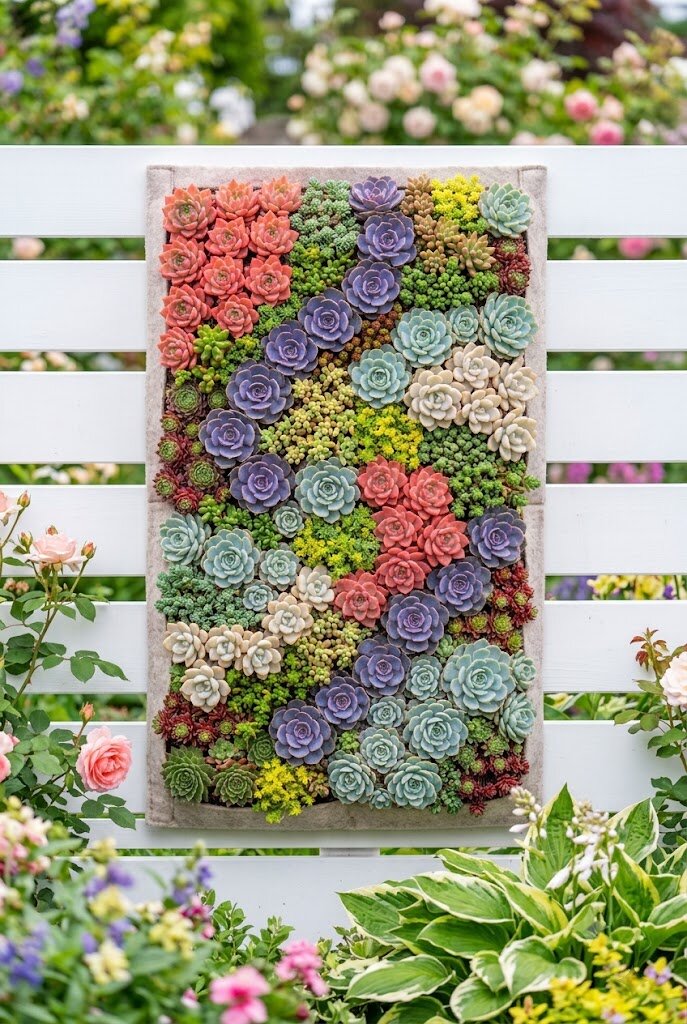
A vertical succulent wall is created by filling a shallow shadow-box frame or felt pocket planter with a gritty succulent mix, planting small rooted cuttings into each pocket, and allowing the roots to establish over 2 to 4 weeks while the frame lies flat before mounting it vertically. Ready-made felt pocket wall planters, pallet-style succulent frames, and wire mesh frames filled with sphagnum moss are all popular and effective formats. Water vertical succulent walls less frequently than you expect — the growing medium dries faster when vertical, so checking soil moisture rather than following a schedule is critical. Echeveria, haworthia, and sedum are the most reliable varieties for vertical installations because of their compact size and shallow root requirements.
Popular Succulent Varieties — Quick Reference
| Succulent | Type | Sun Needs | Cold Hardy | Best For |
|---|---|---|---|---|
| Echeveria | Rosette | Full sun | Zone 9+ | Pots, arrangements, weddings |
| Sedum (Stonecrop) | Groundcover/upright | Full sun | Zone 3+ | Rock gardens, borders |
| Sempervivum | Rosette, spreading | Full sun | Zone 3+ | Rock gardens, cold climates |
| Agave | Architectural | Full sun | Zone 5–9 | Focal specimens, landscaping |
| Aloe vera | Upright | Full/partial sun | Zone 9+ | Containers, indoors |
| String of Pearls | Trailing | Bright indirect | Zone 10+ | Hanging baskets, spiller |
| Haworthia | Compact rosette | Low/indirect | Zone 10+ | Indoor, low-light spaces |
| Ice Plant (Delosperma) | Groundcover | Full sun | Zone 5+ | Rock gardens, slopes |
| Burro's Tail | Trailing | Full/partial sun | Zone 10+ | Hanging baskets, walls |
| Kalanchoe | Upright, blooming | Full/partial sun | Zone 10+ | Color, pots, indoor |
How to Design a Succulent Garden — Step by Step
- Choose your location. Identify whether the space gets full sun (6+ hours), partial sun (3–6 hours), or shade. This determines which succulent varieties will thrive — most landscape succulents need full sun.
- Prepare the soil. For in-ground gardens, amend existing soil with at least 50% perlite or coarse grit. For raised beds or containers, use a pre-mixed cactus/succulent potting mix amended with extra perlite.
- Plan your layout on paper first. Sketch plant positions before buying. Place the tallest focal specimen at the center or back, medium-height accent plants around it, and low spreading varieties at the edges.
- Select 3 heights and 3 color families. A palette of 3 colors — say blue-green, purple, and orange-red — repeated in clusters throughout the bed creates cohesion without looking monotonous.
- Plant in odd-number clusters. Groups of 3, 5, or 7 look more natural than even numbers. Leave space for plants to spread — most outdoor succulents double in width within 2 seasons.
- Add structural elements. Place boulders, flat slate rocks, or driftwood pieces before planting. These anchor the design and cannot easily be moved once plants surround them.
- Apply gravel mulch top dressing. Cover all bare soil with 1 to 2 inches of crushed granite, decomposed granite, or decorative pebbles. This completes the visual design and improves drainage.
- Water in and establish. Water thoroughly after planting, then reduce frequency to allow roots to explore. Most succulents establish fully within 4 to 8 weeks with minimal supplemental watering.
50 Succulent Garden Ideas For Every Space and Style
From sweeping drought-tolerant landscapes to tiny windowsill arrangements — every idea is practical, Pinterest-proven, and paired with care notes.
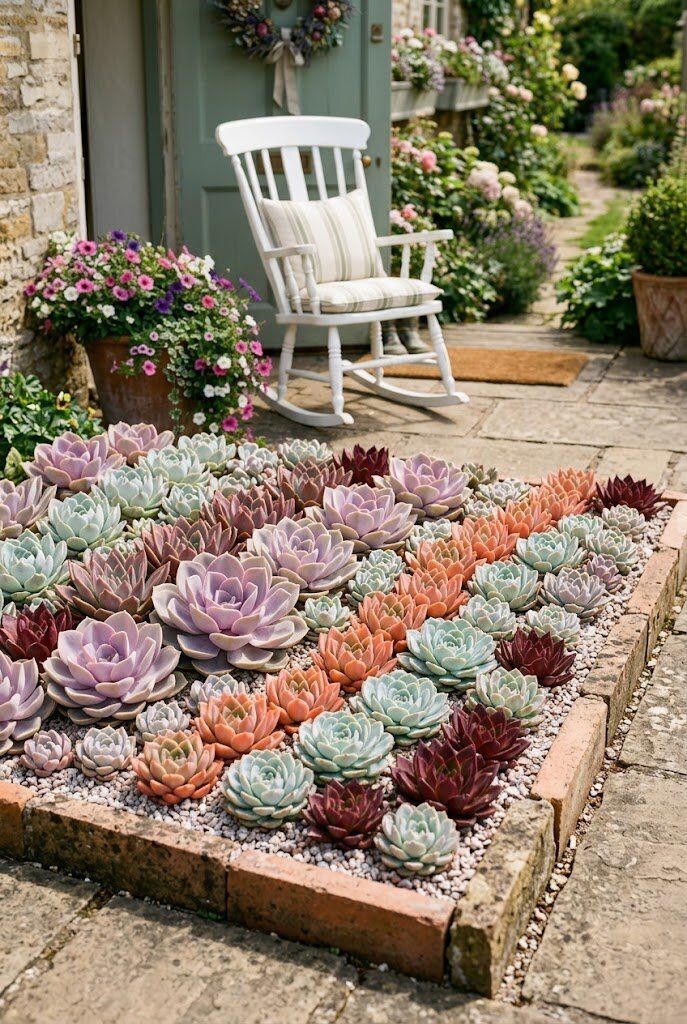
1. Create a Sweeping Echeveria Color Carpet
A mass planting of echeveria rosettes in a single color family — all lavender-pink, or all blue-green, or all coral-orange — creates a carpet effect that photographs like a professional botanical garden. Space plants 6 to 8 inches apart in staggered rows, allowing them to nearly touch after one growing season. Choose 3 to 5 varieties within the same color family for subtle variation in texture and form without losing the cohesive, sweeping color impact. This approach works beautifully as a low-water lawn alternative, a slope stabilizer, or a planting around a front entry driveway.
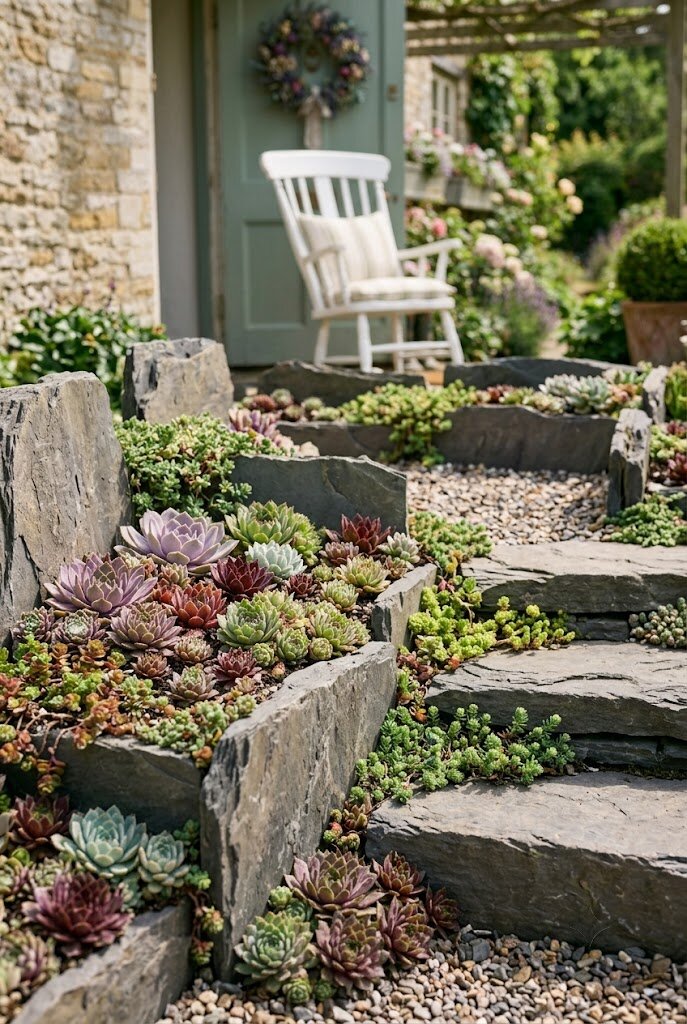
2. Build a Layered Rock Garden With Sedum and Sempervivum
Sedum and sempervivum are the two most reliably cold-hardy succulents available — both survive down to USDA Zone 3 and both colonize rocky, lean soil that would kill almost any other plant. Build a layered rock garden by placing large flat stones at varying heights, filling pockets of soil between them with gritty succulent mix, and planting clusters of sedum and sempervivum to cascade over and between the rocks. The result looks established from day one and improves dramatically with each passing season as the plants spread, self-propagate, and fill every available gap. Top-dress all exposed soil areas with fine gravel for a polished, weed-free finish.
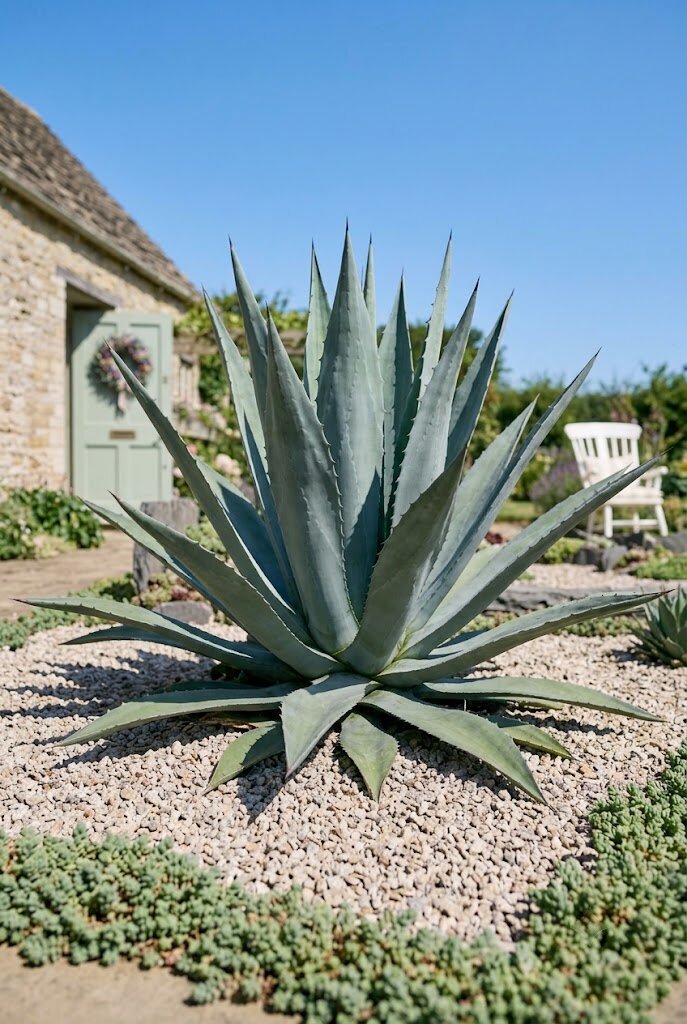
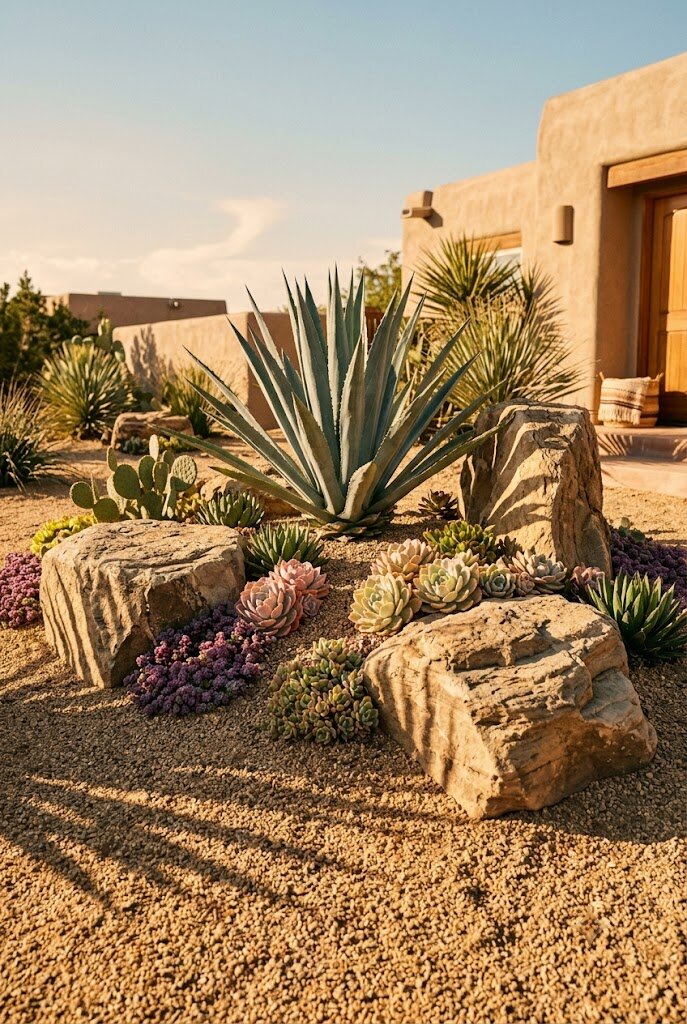
3. Plant a Dramatic Agave as a Landscape Focal Point
A large agave planted as a single specimen in a sea of crushed granite gravel is one of the most impactful, lowest-maintenance landscaping decisions available in warm, dry climates. The architectural form of a mature agave — radiating sword-like leaves in blue-green, grey-silver, or variegated green and gold — commands attention from the street and requires almost no care beyond occasional removal of lower leaves as they dry. Choose varieties like Agave americana, Agave parryi, or the compact Agave 'Blue Glow' for landscape use. Surround the base with decomposed granite and accent with low sedum groundcovers for maximum visual contrast.
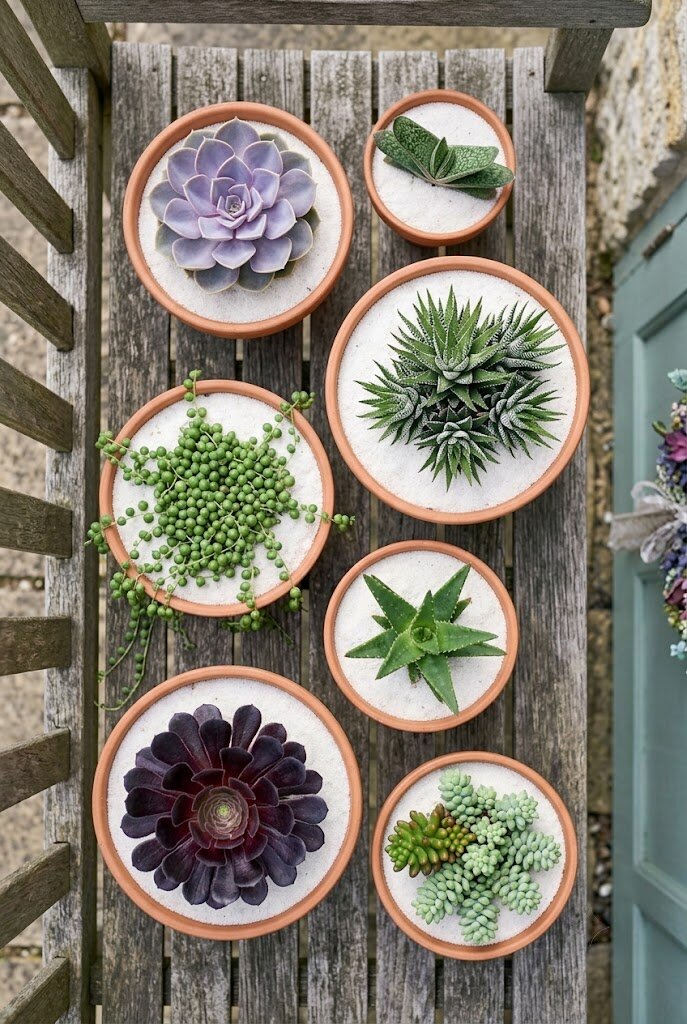
4. Arrange a Flat-Lay Terracotta Pot Collection
A flat-lay arrangement of five to seven terracotta pots in varying sizes, each planted with a different succulent species, creates a beautiful display for a patio table, garden bench, or outdoor shelf. Choose pots in the same material (all terracotta, or all concrete, or all glazed ceramic in complementary colors) and vary only the plant — an echeveria rosette in one, a haworthia in another, string of pearls cascading from the edge of a third, and a small aloe or agave in the tallest pot at the back. This collector-style display grows more interesting over time as plants mature and produce offsets.
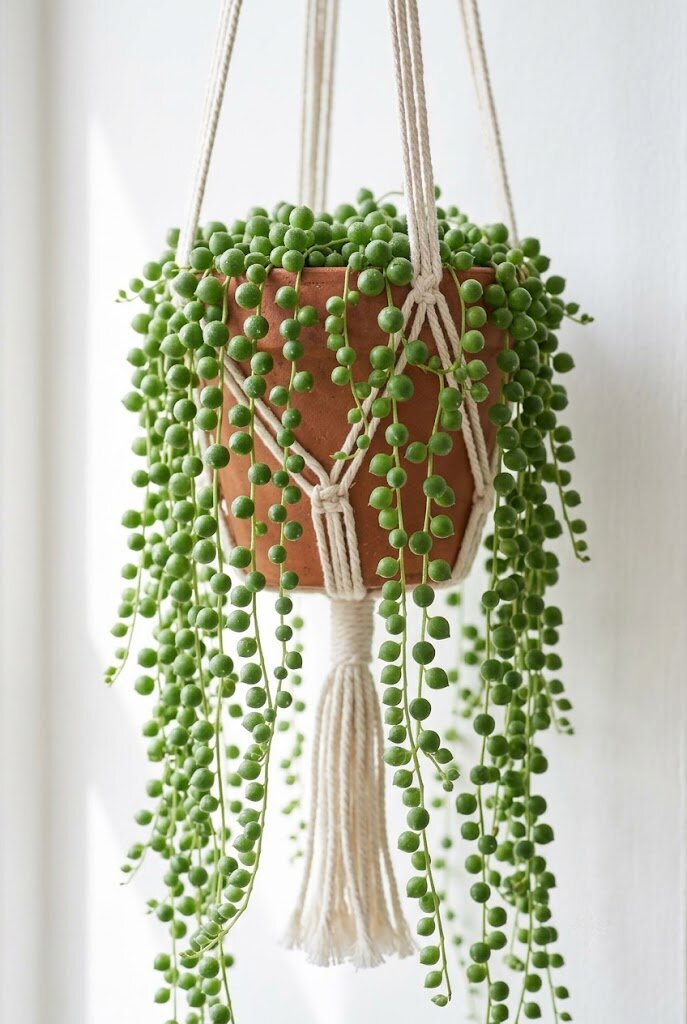
5. Grow String of Pearls in a Hanging Basket
String of pearls (Senecio rowleyanus) is one of the most visually distinctive and widely photographed succulents in the world — its perfectly round, bead-like leaves strung on thread-thin stems cascade from hanging baskets in a way that looks almost impossibly perfect. Hang in a location with bright indirect light, water only when the top inch of soil is completely dry, and trim any leggy stems to encourage bushier growth from the top. String of pearls makes a spectacular hanging display on a covered porch, in a bright bathroom window, or suspended from a wooden beam in a living room where its graceful trails can be fully appreciated from below.
Succulent & Cactus Potting Mix — Ready-to-Use Gritty Blend
The exact type of fast-draining gritty soil mix succulents need to thrive. Pre-amended with perlite and coarse sand — just open and plant. Ideal for all the terracotta pot arrangements and container ideas above.
💰 Budget pick · $18–$28
Shop on Amazon →6. Design a Desert Boho Landscape With Gravel and Boulders
The desert boho aesthetic — a blend of southwestern desert planting with bohemian styling cues — is one of the most-pinned landscape styles on Pinterest and one of the easiest to achieve with succulents. The core recipe: a base of decomposed granite or pale crushed gravel covering all bare ground, two or three large natural boulders placed as anchors, a central agave or large aloe as the dramatic focal specimen, and clusters of echeveria, sedum, and ornamental grasses planted between the rocks. Colored glass mulch, smooth river pebbles, and driftwood can be added as accents. The result looks like a curated botanical garden and requires watering only once or twice a month once established.
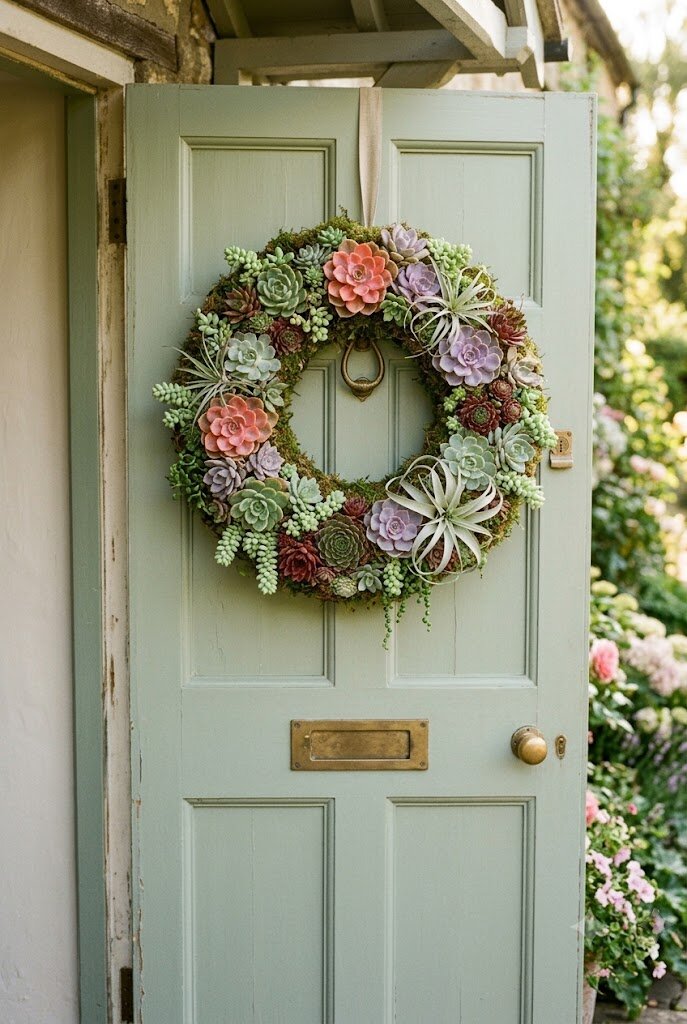
7. Create a Succulent Wreath for Front Door Decor
A living succulent wreath is one of the most impressive and unexpected DIY projects in the home and garden space — it looks difficult but is achievable by most beginners in a single afternoon. Fill a wire moss wreath form with damp sphagnum moss, insert small succulent cuttings into the moss surface, and allow the wreath to lay flat for 3 to 4 weeks until cuttings root before hanging. Choose a mix of compact varieties: small echeveria rosettes in multiple colors, sedum, sempervivum, and small haworthia. Living succulent wreaths survive for months with light misting every week or two, and can be refreshed with new cuttings as old plants outgrow their space.
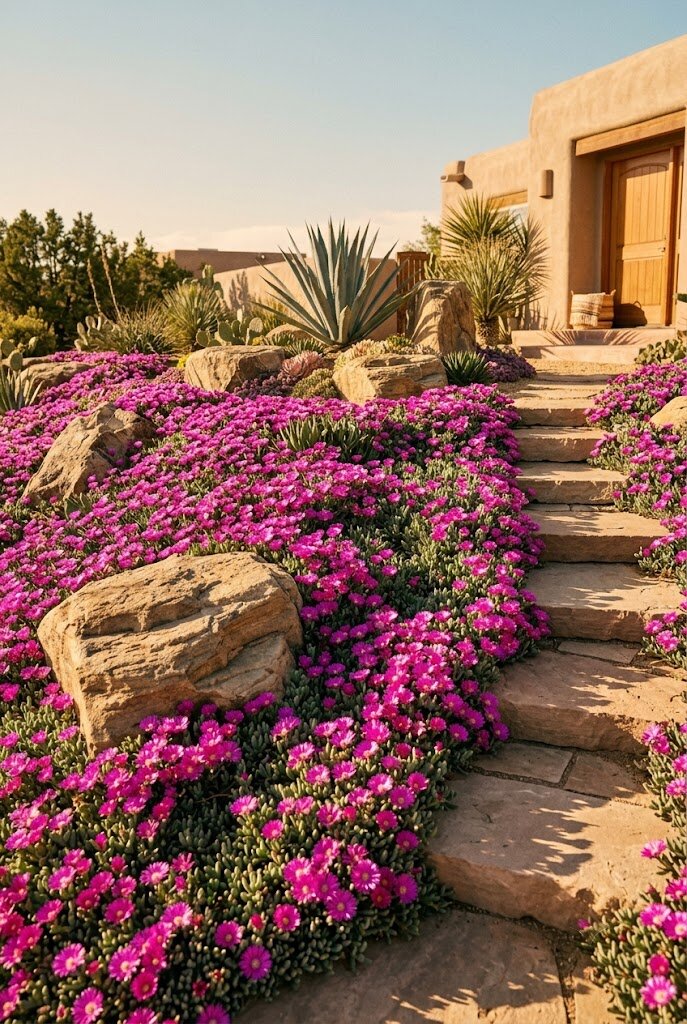
8. Plant a Slope or Hillside With Ice Plant
Ice plant (Delosperma) is the most effective and beautiful solution for stabilizing a sloped garden that is difficult to mow or plant traditionally. It spreads rapidly to cover bare ground, produces daisy-like flowers in brilliant magenta, orange, and yellow from spring through fall, requires no supplemental watering once established, and is cold-hardy down to USDA Zone 5. Plant ice plant plugs 12 to 18 inches apart on a prepared slope and top-dress with fine gravel. Within one growing season, the plants will begin to fill in; within two seasons, a solid mat of color-changing groundcover will cover the entire area — eliminating erosion risk and maintenance simultaneously.
9. Style a Succulent Coffee Table Centerpiece
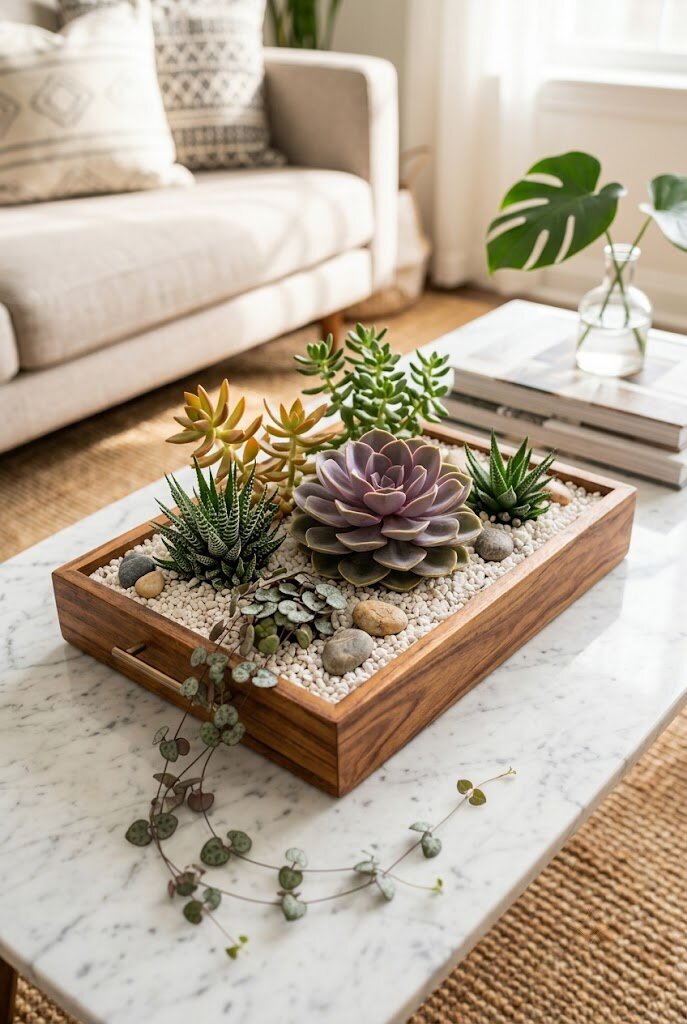
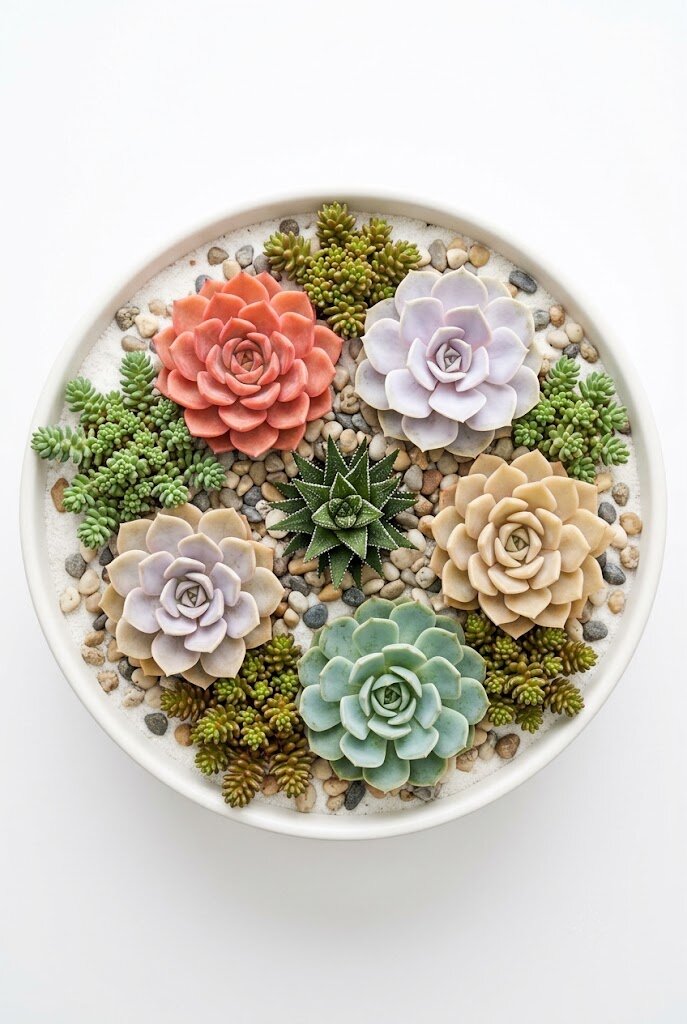
A low, wide shallow bowl or wooden tray planted with a mix of small succulents makes a living coffee table centerpiece that requires almost no maintenance and stays beautiful for months. Use a wooden serving tray or low ceramic dish lined with landscape fabric, fill with gritty succulent mix, and arrange five to seven small succulents — a purple echeveria in the center, smaller green haworthia and orange-tipped varieties around it, with a few small stones tucked between. Top-dress with fine gravel or sand. Water sparingly — once every two to three weeks is sufficient for a low-light indoor arrangement. This same approach works beautifully as a wedding table centerpiece, which is why succulent centerpieces are one of the most-searched wedding decor items on Pinterest every year.
10. Build a Succulent Raised Bed Garden
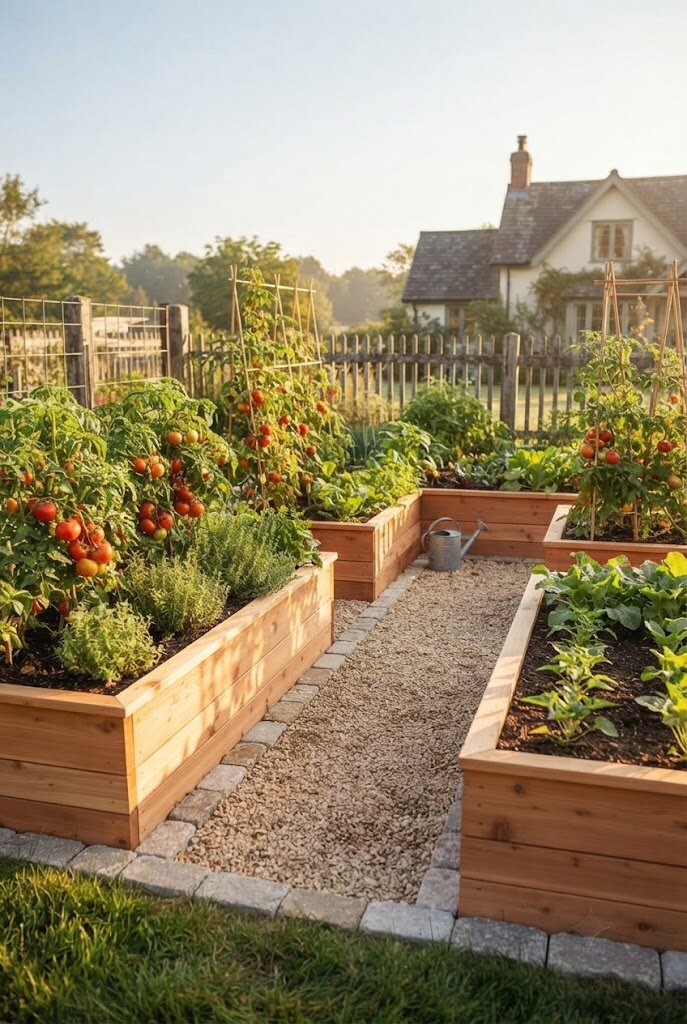
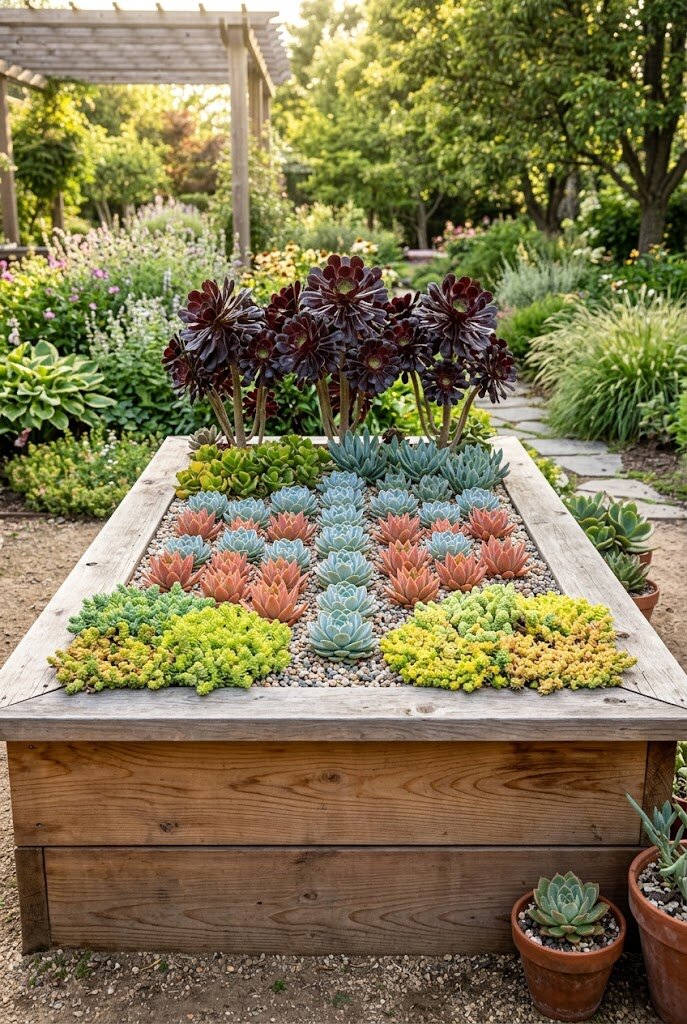
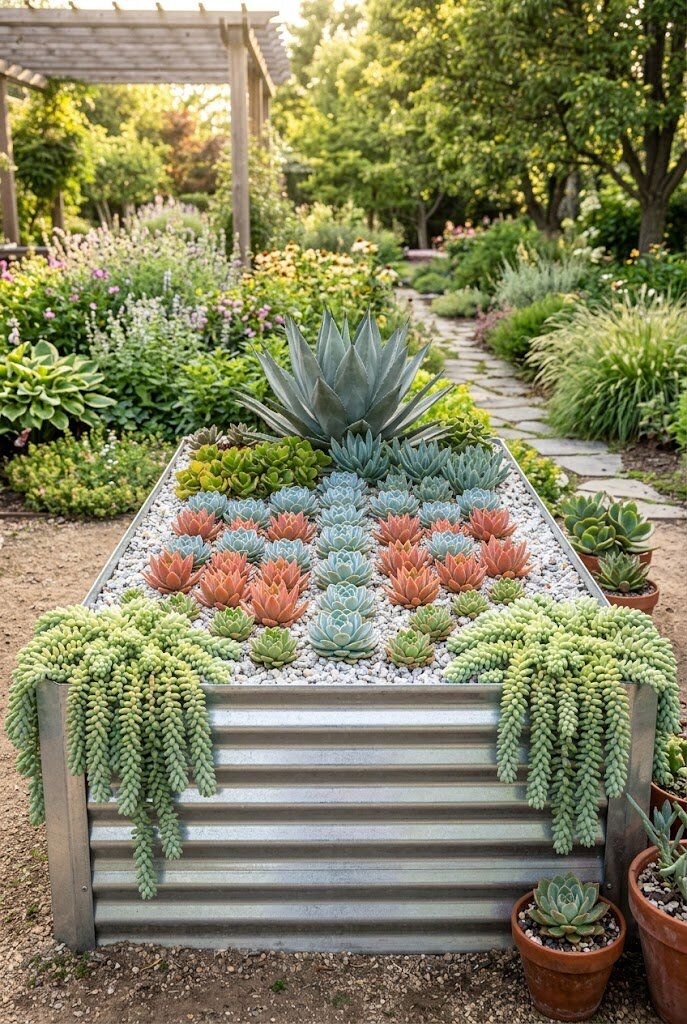
A raised bed filled with a gritty succulent-specific soil mix is the most controlled and visually organized way to create a large-scale outdoor succulent garden in climates with heavy rainfall or poor native drainage. The raised elevation keeps roots above the waterlogged native soil, allows you to perfectly customize the growing medium, and creates a framed, tidy display that looks intentional from every angle. Use cedar, redwood, or galvanized metal raised bed frames — all of which complement the desert palette of succulents beautifully. Fill with a 50/50 mix of cactus potting soil and perlite, and plant in a deliberate pattern with taller varieties at the back and cascading types at the front edges.
Galvanized Metal Raised Garden Bed — 4×2 ft or 8×4 ft
This exact raised bed style pairs beautifully with succulents. Rust-resistant galvanized steel, simple bolt-together assembly, looks premium from day one. Perfect for creating an organized succulent display like idea #10 above.
💰 Medium pick · $65–$120
Similar raised beds on Amazon →11. Create a Vertical Succulent Living Wall
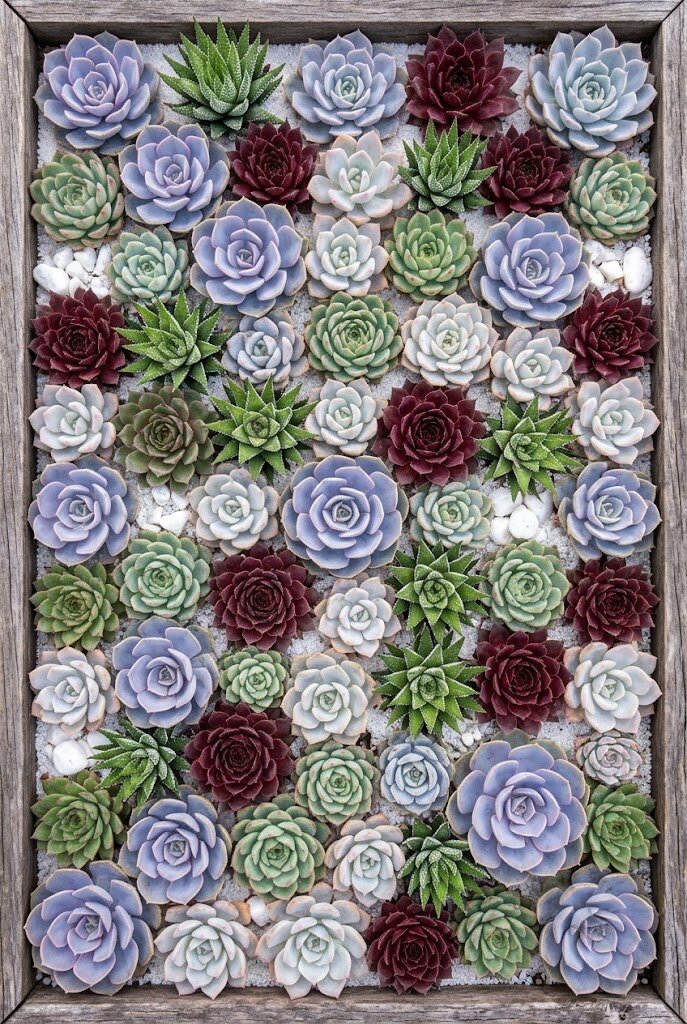
A vertical succulent living wall transforms a bare fence, exterior wall, or indoor feature wall into a living work of art that requires only occasional misting to maintain. Use a ready-made felt pocket vertical planter or a shallow shadow-box frame with chicken wire and sphagnum moss as the growing medium. Plant small rooted echeveria, sedum, and haworthia into the pockets or wire frame, lay flat for 3 to 4 weeks while roots establish, then mount vertically. For outdoor walls, choose weather-resistant frames and cold-hardy varieties. For indoor walls, near a bright window works best — a bathroom with a skylight or a kitchen wall beside a large window provides ideal light conditions.
12. Design a Minimalist Zen Succulent Garden
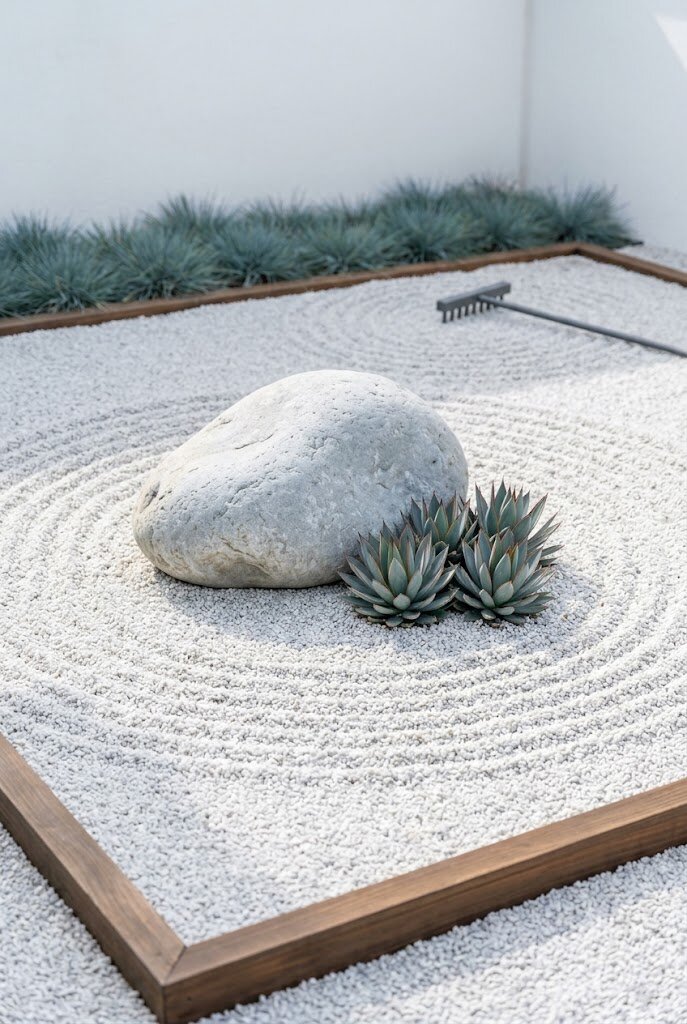
A minimalist zen succulent garden strips the design back to its essential elements: one or two architectural succulent specimens, a bed of raked white or silver gravel, and a single large stone as a focal point. This approach is inspired by Japanese karesansui (dry garden) design principles and works beautifully in small courtyard spaces, rooftop gardens, and modern front yard landscapes. Choose blue-green agave or a compact yucca as the primary plant, set in a bed of white decomposed granite. Add a large smooth river stone or a piece of pale driftwood beside the plant. Rake the gravel into concentric circles around the stone for the classic zen pattern. No watering, no maintenance, no weeds — just perfect form.
13. Style a Succulent Bookshelf Display Indoors
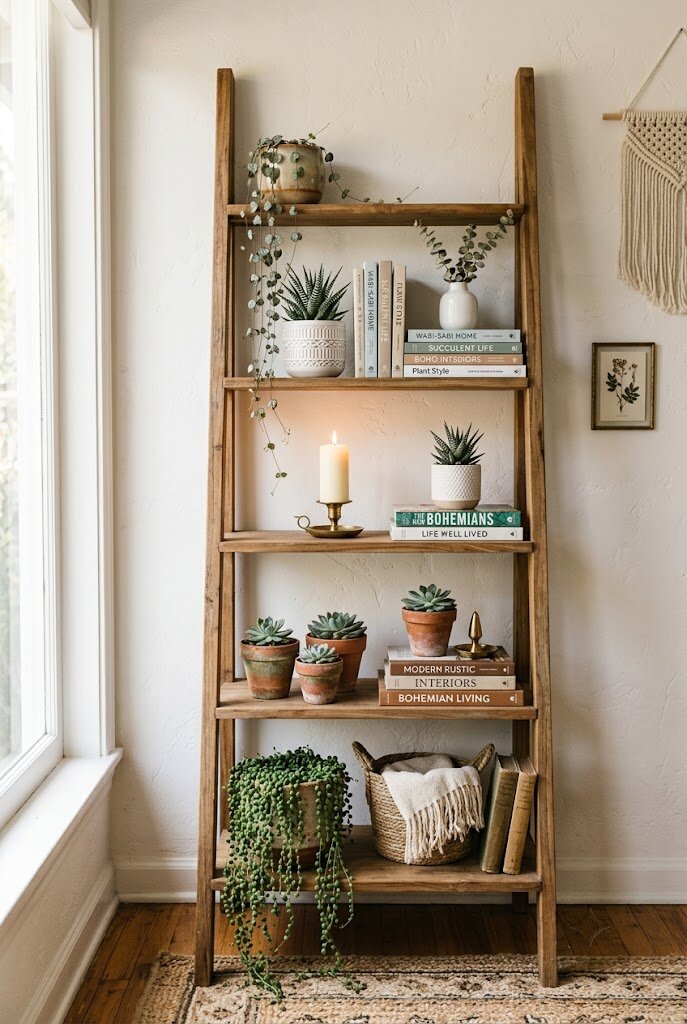
A curated succulent bookshelf display — mixing plants with books, candles, and small decorative objects — is one of the most widely pinned indoor plant styling ideas on Pinterest and achievable for almost any budget. Style a wooden or ladder shelf with a row of small succulent pots at varying heights, interspersed with a trailing string of hearts or pothos, stacked coffee table books in coordinating spines, and a small candle or ceramic vessel. Choose succulents that tolerate lower indoor light: haworthia, gasteria, and aloe are far more tolerant of indoor conditions than echeveria and sedum, which quickly stretch toward windows without sufficient direct sun.
14. Plant Burro's Tail in a Macramé Hanger
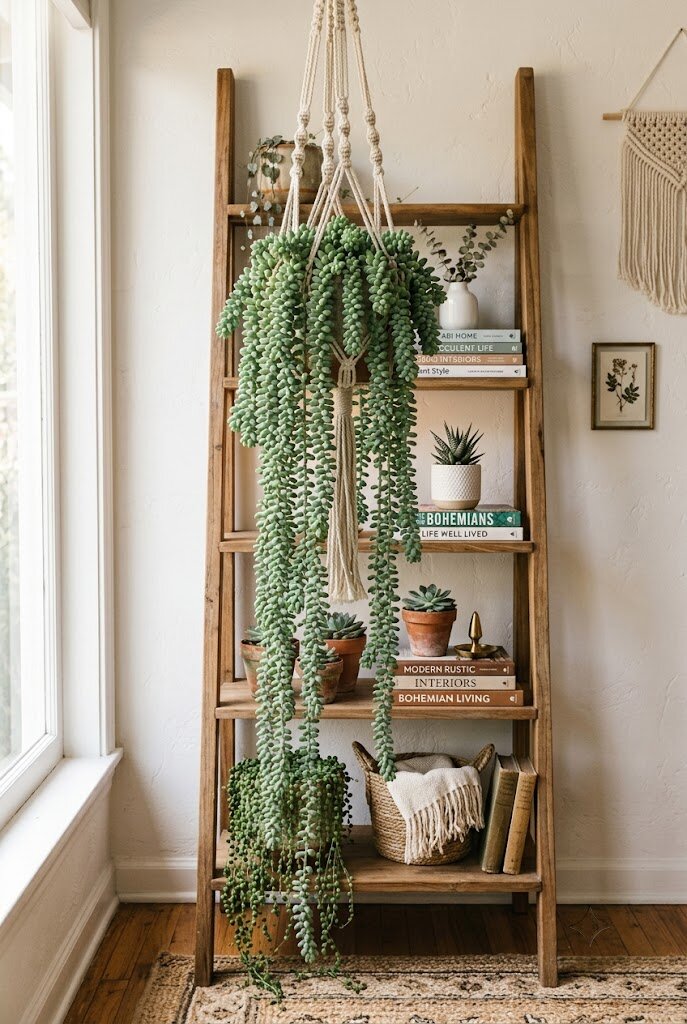
Burro's tail (Sedum morganianum) is a succulent that looks its best when displayed hanging — its thick, bead-like stems cascade downward in dense ropes of blue-green, growing more impressive the longer they are left undisturbed. Display in a handmade or store-bought macramé hanger in a bright window for a classic boho aesthetic that feels simultaneously on-trend and timeless. Burro's tail is fragile — the leaves detach at the slightest touch, so position it somewhere it will not be brushed against or disturbed during watering. Each fallen leaf can be pressed gently into gritty soil to propagate a new plant for free, so treat any accidental leaf-drop as an opportunity rather than a loss.
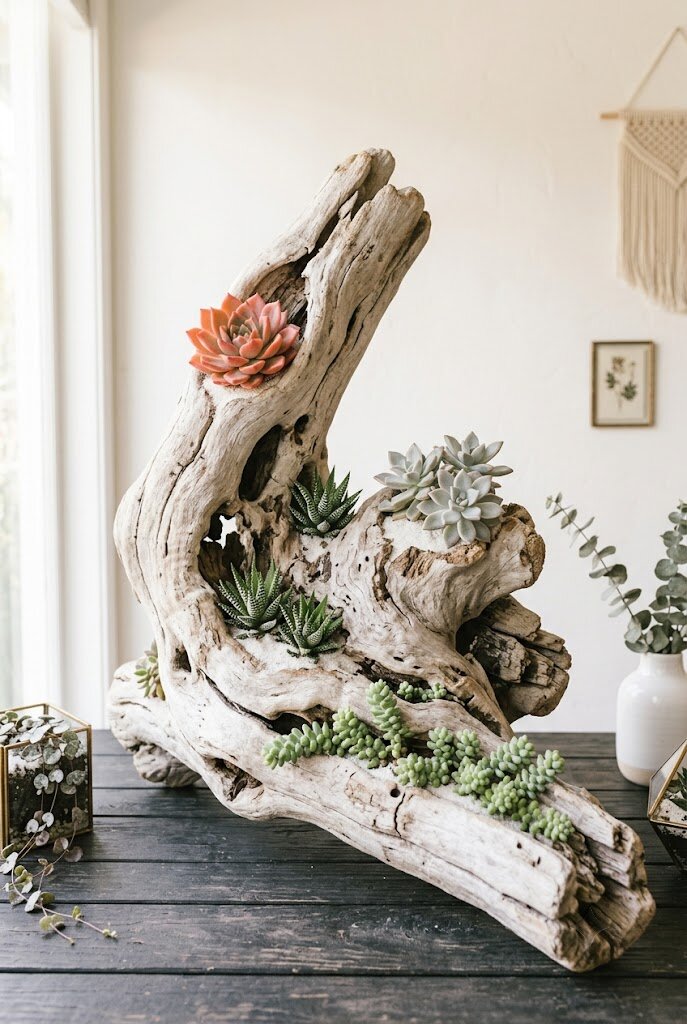
15. Create a Driftwood Succulent Planter
Hollowing out a piece of naturally weathered driftwood and planting it with a mix of small succulents creates a one-of-a-kind natural sculpture that looks beautiful both indoors and on a covered porch. Chisel out shallow pockets in the driftwood, line with sphagnum moss to hold moisture, fill with a tiny amount of gritty succulent mix, and insert small echeveria, sedum, or haworthia plants. The natural grain and texture of driftwood provides a stunning contrast against the geometric precision of succulent rosettes. Display on a windowsill, coffee table, or garden wall bracket. Mist lightly every week or two since the small soil volume dries quickly.
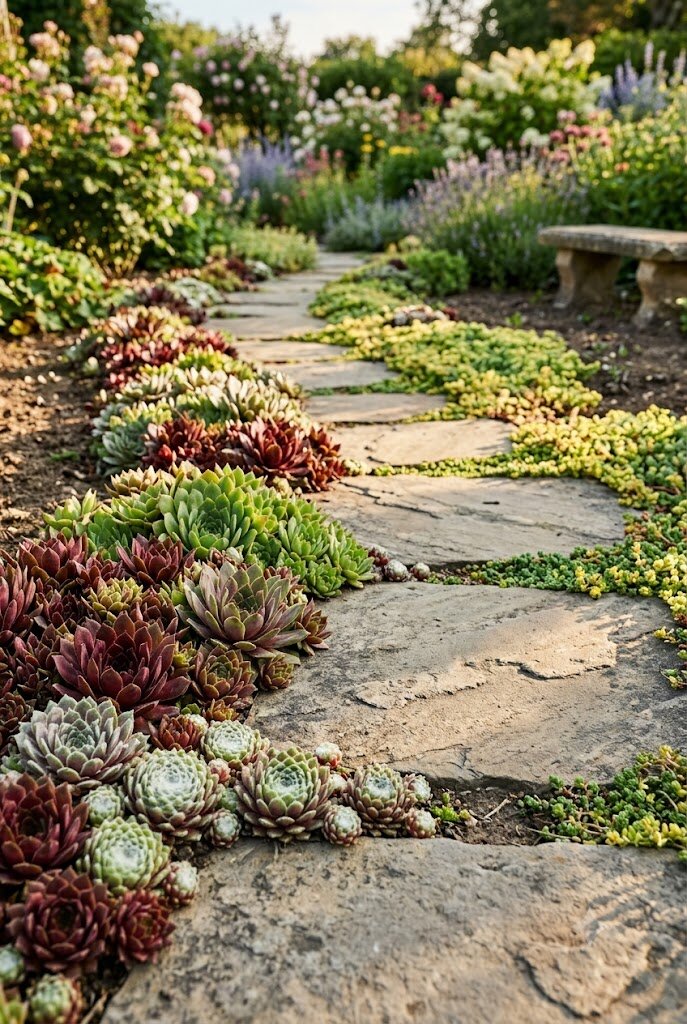
16. Line a Garden Path With Hens and Chicks
Hens and chicks (Sempervivum tectorum) are the perfect path-edging plant for a rock garden or gravel garden walkway — they are nearly flat, spread slowly to fill gaps without becoming invasive, tolerate foot traffic better than almost any other succulent genus, and produce charming circular offsets (the "chicks") that self-propagate indefinitely without any intervention. Plant along both sides of a flagstone or gravel path in clusters of three to five plants, spacing clusters 8 to 12 inches apart and allowing them to fill in naturally over 2 to 3 seasons. Their flat rosette form provides a beautiful contrast against the linear geometry of path stones and the coarser texture of surrounding gravel.
Macramé Plant Hanger Set — Handmade Cotton, 3-Pack
The exact style for displaying string of pearls, burro's tail, and trailing succulents like ideas #5 and #14. Woven cotton in natural tones pairs perfectly with terracotta and boho home decor. Adjustable loop fits most 4–8" pots.
💰 Impulse pick · $19–$35
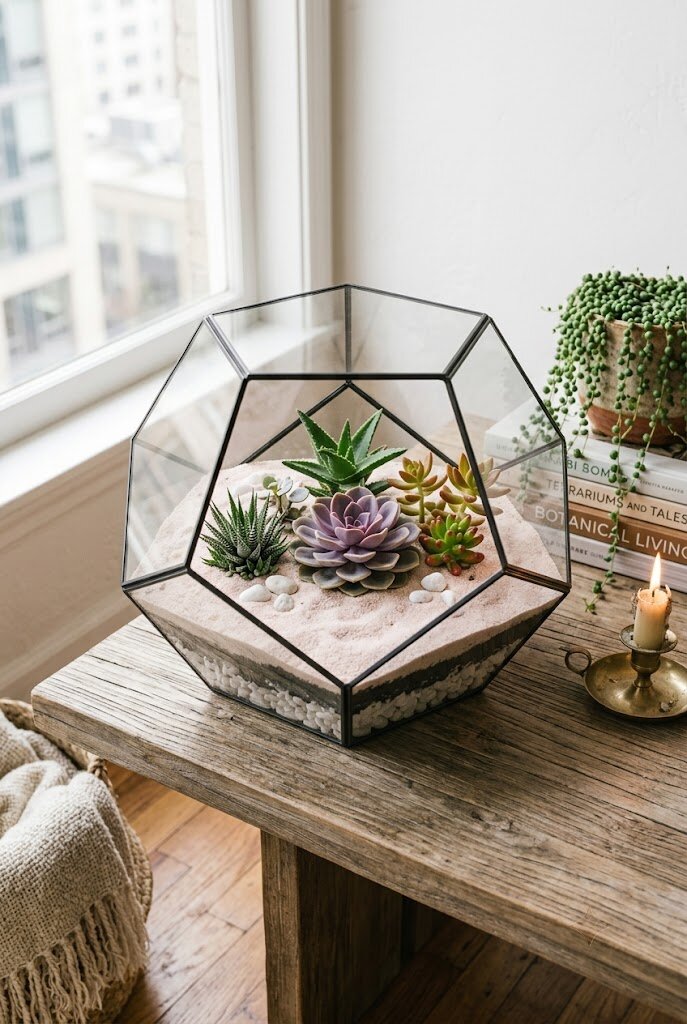
Budget-friendly version here →17. Build a Succulent Terrarium With Layers
A glass terrarium planted with small succulents and arranged in decorative layers — drainage pebbles at the bottom, activated charcoal layer, gritty succulent mix, and a top dressing of colored sand or fine gravel — creates a miniature landscape that displays beautifully on a coffee table, desk, or dining table. Use an open terrarium (not closed) for succulents — closed terrariums trap too much moisture and lead to rot. Geometric glass terrariums in black metal frames are particularly popular for succulents because the angular form contrasts beautifully with the organic shapes of echeveria rosettes and aloe. Arrange three to five small plants in each terrarium, grouping by color for maximum visual impact.
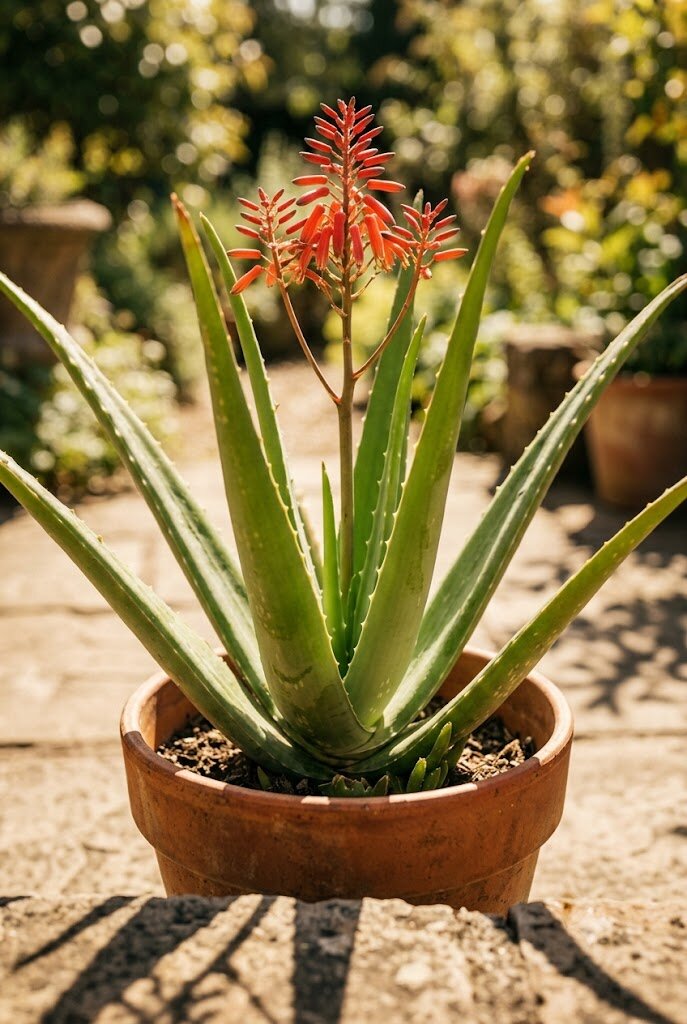
18. Plant a Colorful Mixed Aloe Collection
Aloe is far more diverse than most gardeners realize — beyond the common aloe vera, there are hundreds of species ranging from tiny Aloe haworthioides the size of a golf ball to tree aloe (Aloe barberae) that grows 30 feet tall. A mixed collection of three to five aloe species in coordinating pots creates a sculptural display with far more visual interest than a single specimen. Include a compact Aloe aristata with its spotted texture, a classic aloe vera for its familiar silhouette, and a smaller orange-flowered Aloe humilis for seasonal color. Aloes are among the most forgiving succulents for indoor growing — they tolerate low light better than echeveria and bounce back from missed watering better than most houseplants.
20. Design a Front Yard Drought-Tolerant Succulent Landscape
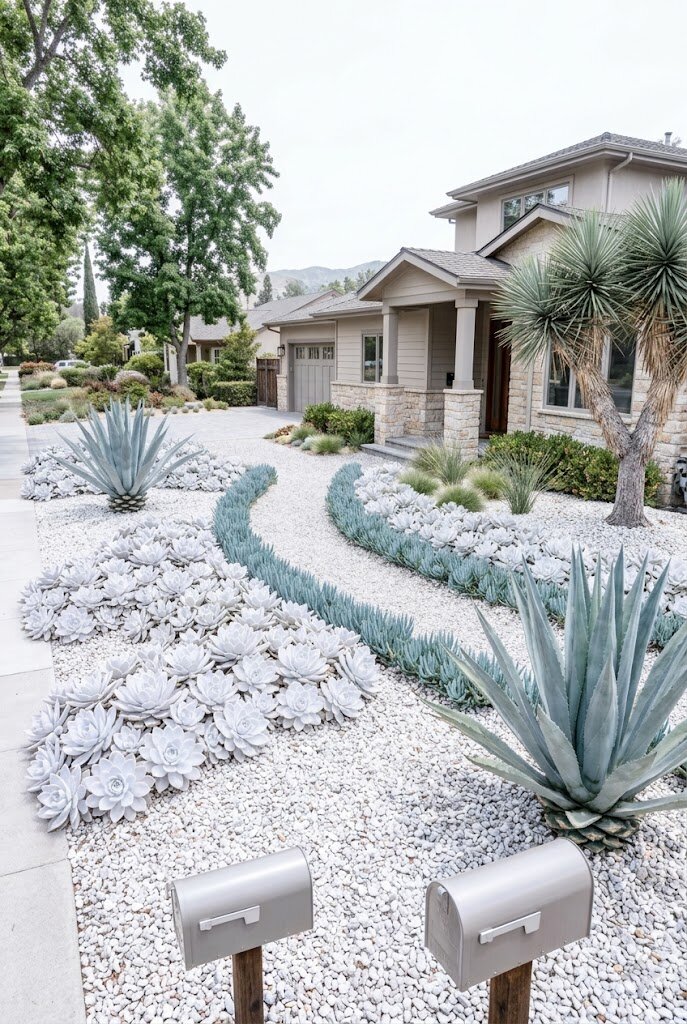
Replacing a traditional lawn with a drought-tolerant succulent landscape is one of the most impactful and increasingly popular landscape choices in water-restricted states like California, Nevada, Arizona, and Texas. A well-designed succulent front yard reduces outdoor water use by 50 to 75 percent, eliminates mowing entirely, provides year-round visual interest through foliage color and texture rather than seasonal bloom cycles, and increases home curb appeal measurably. The design elements are the same as any succulent garden: decomposed granite base, layered plant heights, repeated color clusters, and architectural specimen plants as focal points — but executed at a scale that reads well from the street, typically using larger bolder plants and wider plant spacing than a small bed or container garden.
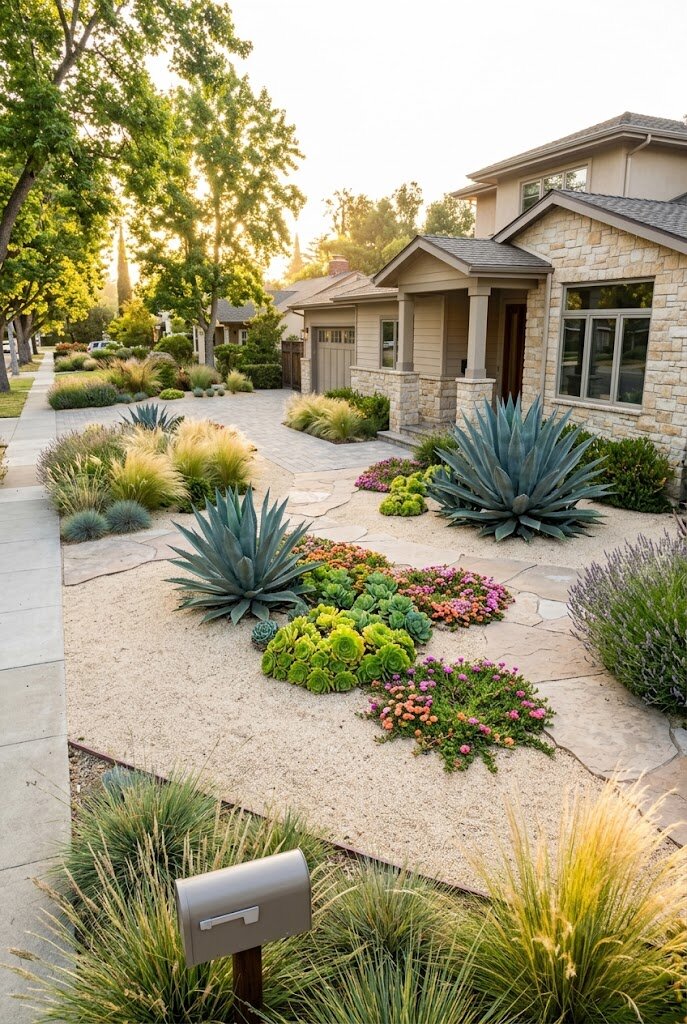
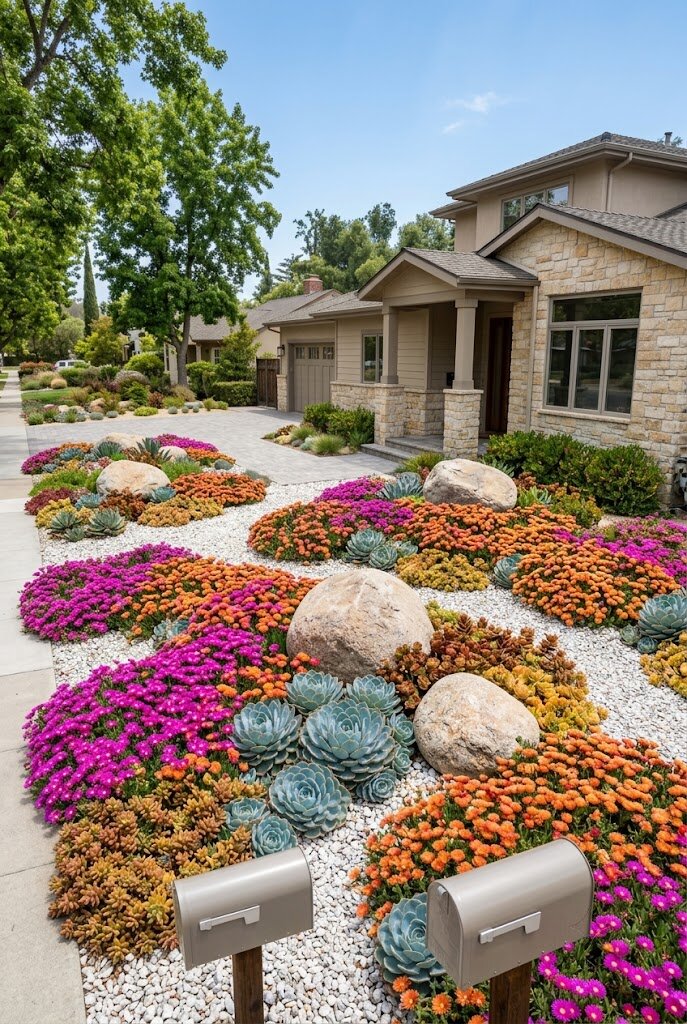
Large Outdoor Concrete Planter — Modern Architectural Statement
A large concrete or fibreglass planter like this is what gives front yard succulent landscapes that premium designer look. Perfect for a single large agave or multi-succulent arrangement as a driveway focal point. Frost-resistant, UV stable, and built to last decades.
💰 High-value pick · $280–$650
This exact planter style on Amazon →21. Propagate Succulents From Leaves for a Free Collection
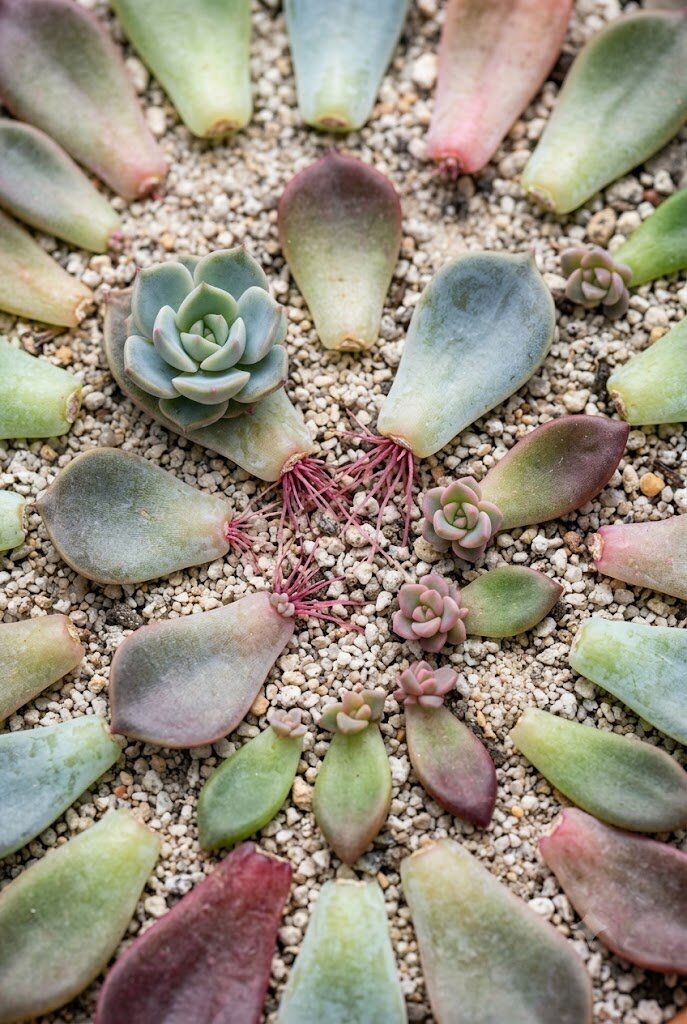
One of the most satisfying aspects of growing succulents is how easily most species propagate from a single leaf. Simply remove a healthy lower leaf from an echeveria or sedum by gently twisting it off at the base — it must come off cleanly with the leaf base intact. Lay the leaves on top of dry gritty succulent mix in a bright location and mist lightly every few days. Within 2 to 4 weeks, tiny pink roots emerge from the base, followed by miniature rosettes that grow steadily into full-sized plants. One mature echeveria can produce dozens of new plants from leaf propagation alone — turning a single $6 plant into a $200 collection over a single growing season.
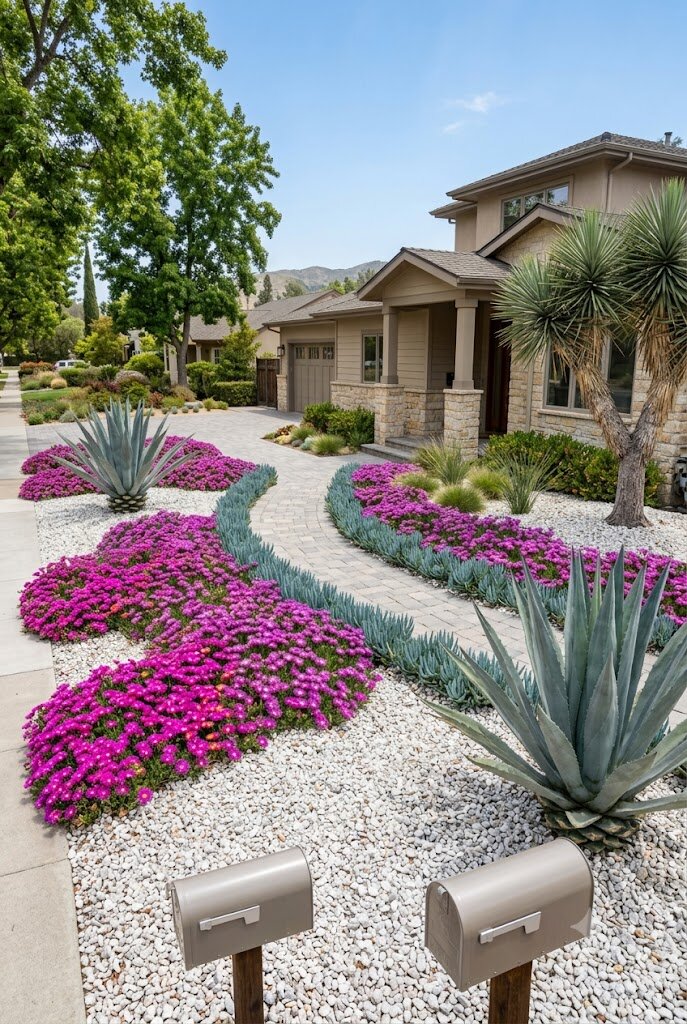
22. Style a Concrete Hypertufa Trough Planter
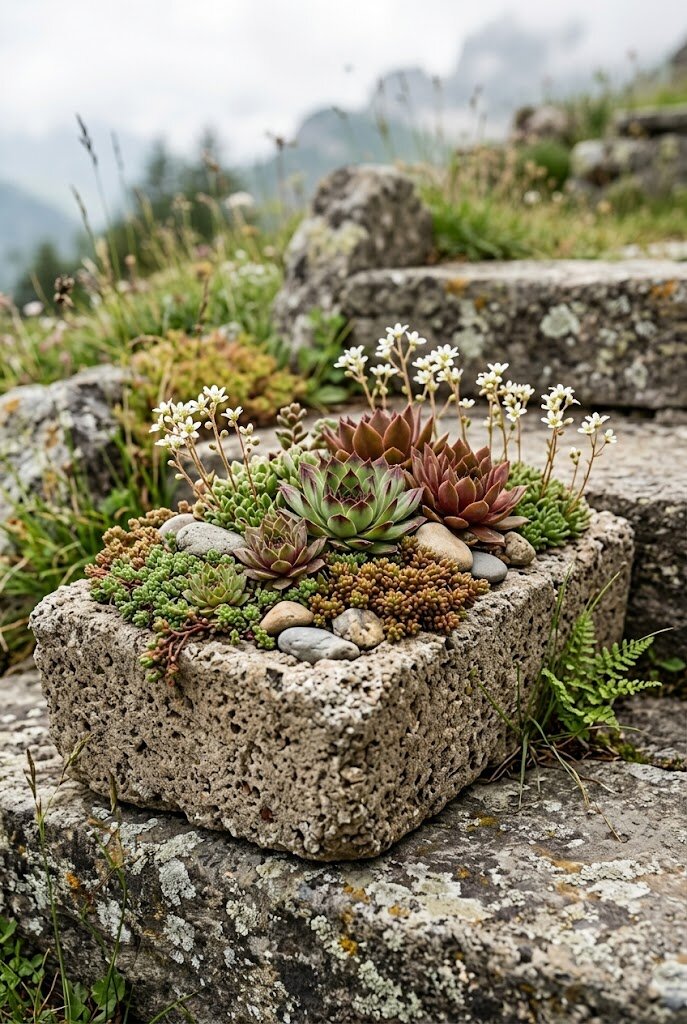
Hypertufa is a lightweight concrete-like material made from Portland cement, perlite, and peat moss that can be molded into any shape and sets to resemble aged stone — ideal for a rustic, alpine-inspired succulent planting that looks decades old the moment it is planted. DIY hypertufa troughs can be made for under $20 using a plastic tub as a mold and a basic mix recipe found online. Fill with gritty succulent mix and plant with alpine sedum, sempervivum, and small rock-garden plants for a display that looks like a museum garden piece. Alternatively, ready-made terracotta or composite troughs in rectangular or oval shapes are available at garden centers for $30 to $80 and achieve a very similar aesthetic.
23. Create a Colorful Cactus and Succulent Mix Garden
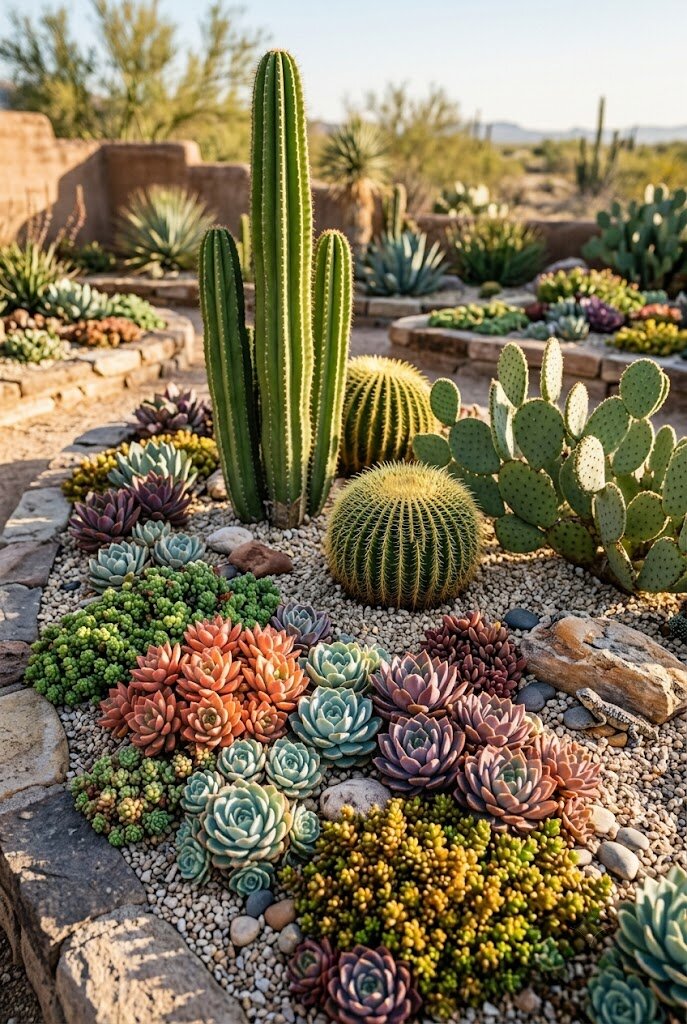
Mixing cacti and succulents in the same planting bed creates a visually richer, more textured composition than either group alone. Cacti contribute dramatic vertical structure — columnar saguaro, barrel cactus, and prickly pear — while succulents provide the low rosettes, trailing forms, and colorful groundcovers that fill the spaces between. In warm climates (zones 8–11), this combination creates a self-sustaining, near-zero-maintenance garden that looks beautiful in every season. In cooler climates, create the same effect in a large container that can be brought indoors in fall, or use cold-hardy cactus species like Opuntia (prickly pear) that survive down to Zone 4.
Live Succulent Assortment Pack — 20 or 36 Varieties, Rooted
Start your succulent collection fast. This live assortment gives you a mix of echeveria, haworthia, aloe, and sedum varieties — all rooted and ready to plant. Perfect for rock gardens, raised beds, or the propagation tray project in idea #21.
💰 Medium pick · $45–$95
Shop live succulents on Amazon →24. Plant a Moonlight White Succulent Garden
A monochrome white and silver succulent garden — using varieties with white-powdered leaves (Echeveria elegans, Echeveria 'Ghost'), silver-blue foliage (agave, blue chalk sticks), and white-tipped varieties — creates a sophisticated, ethereal planting that looks stunning in moonlight and photographs beautifully in both daylight and at dusk. Pair with white gravel mulch, pale limestone pavers, and a single white ceramic urn planter for a cohesive palette. This white succulent garden style is particularly popular for modern minimalist homes with white or grey exteriors, and it translates beautifully into indoor arrangements for bathrooms or living rooms with a neutral palette.
25. Build a Pallet Succulent Garden Wall
A wooden shipping pallet turned vertical and filled with succulents is one of the most popular, inexpensive, and visually impressive DIY garden projects on Pinterest — searched millions of times every year. Sand the pallet smooth, seal with outdoor wood stain or paint, staple landscape fabric to the back and sides to create planting pockets, fill with gritty succulent mix, and plant small sedum and sempervivum into the gaps between the slats. Lay flat for 4 weeks while roots establish, then prop or hang vertically against a fence, shed wall, or exterior house wall. A single pallet holds 20 to 40 plants and costs almost nothing beyond the plants themselves.
30. Create a Succulent Windowsill Garden
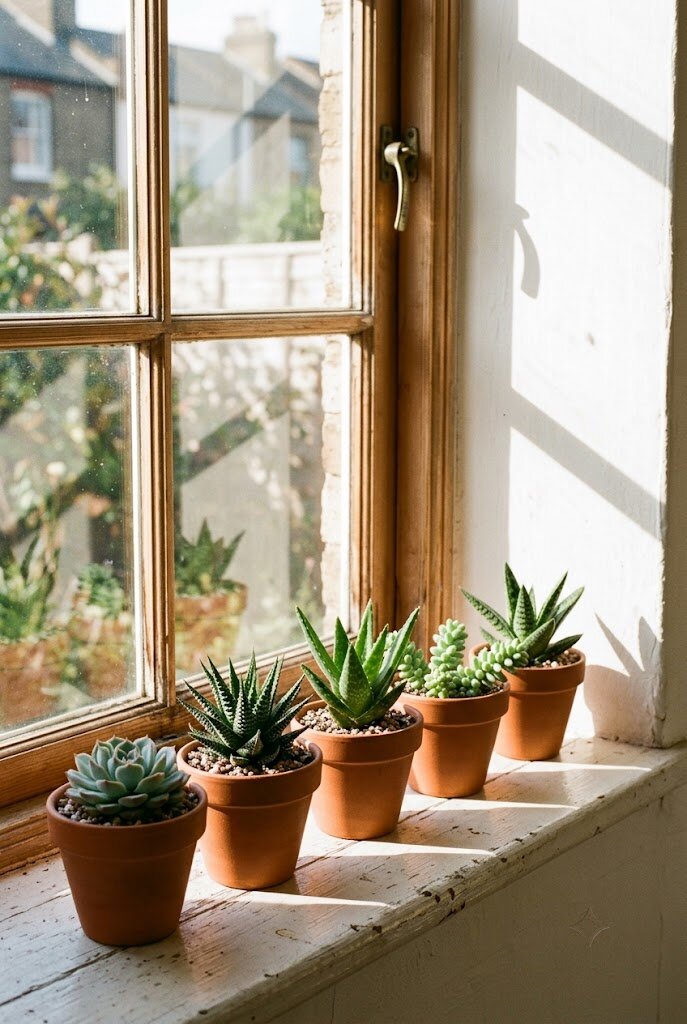
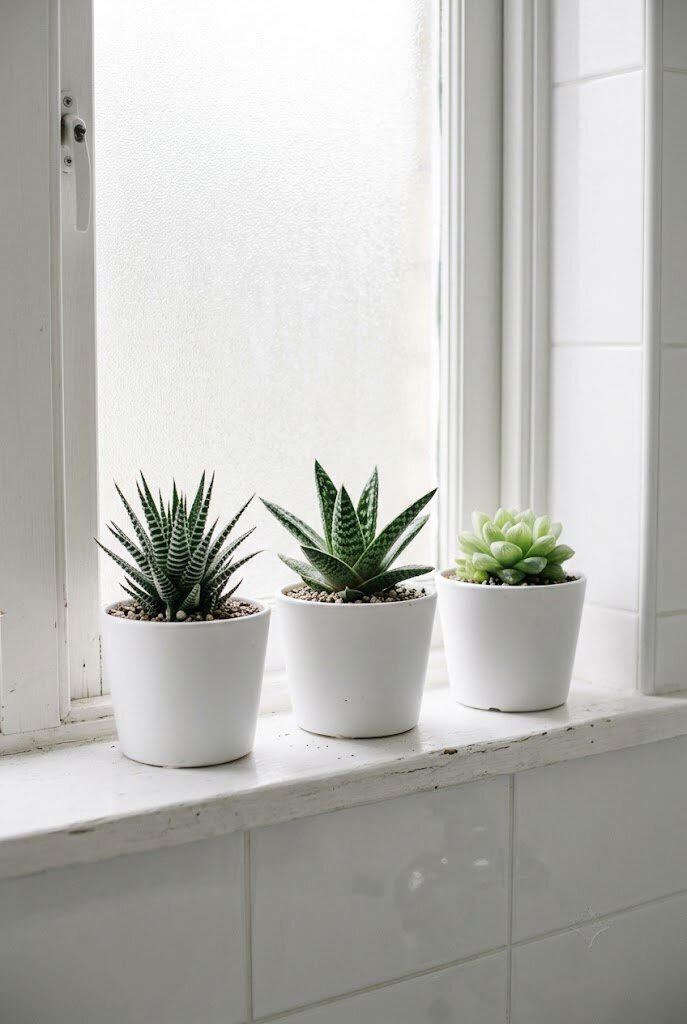
A south-facing windowsill lined with a row of small succulent pots is the most accessible and lowest-cost succulent garden idea available — no outdoor space required, no special equipment needed, and the result looks beautiful year-round. Use matching terracotta pots in a uniform size for a clean, minimal look, or mix pot shapes and sizes for a collected botanical feel. Top-dress each pot with white sand or fine gravel to complete the display and improve drainage at the crown. For maximum success, choose haworthia and gasteria for lower-light windows and east-facing sills; use echeveria and sedum only on true south-facing windows with at least 5 hours of direct winter sun.
31. Plant a Bee-Friendly Sedum Border
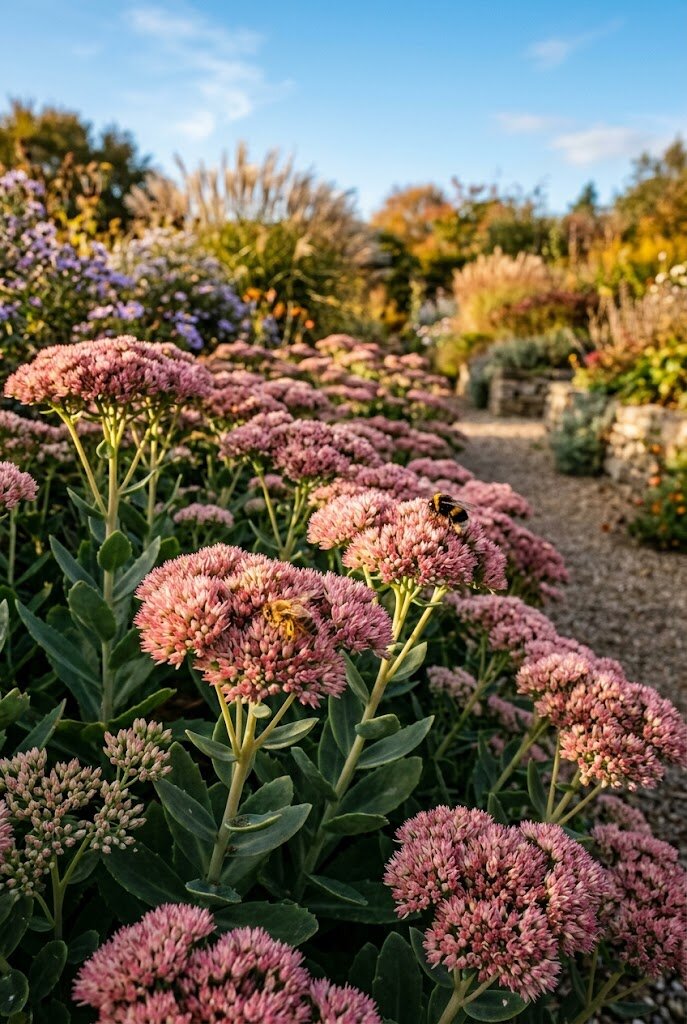
Sedum 'Autumn Joy' and similar tall sedum varieties are among the most valuable pollinator plants in the garden — their flat-topped flower clusters in pink, brick-red, and bronze attract bees, butterflies, and beneficial insects from late summer through fall when most other flowers have finished. Plant in a sunny border 18 to 24 inches apart, allow them to form loose clumps, and leave the dried seed heads standing through winter for structural interest and bird food. This is one of the few succulents that looks as good in winter as in bloom, making it ideal for four-season low-maintenance garden design.
32. Use Succulents as Wedding Table Centerpieces
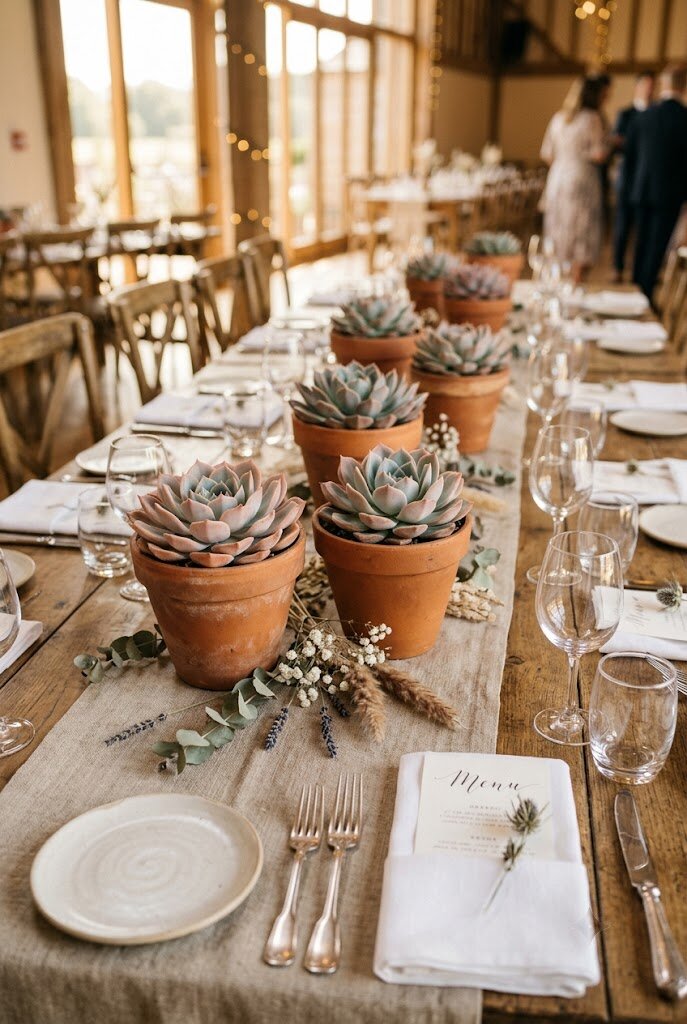
Succulent wedding centerpieces have become one of the most consistently searched wedding decor ideas on Pinterest — and they deliver exceptional value because the plants can be given to guests as living party favors after the event. Small echeveria rosettes in terracotta, concrete, or vintage teacup containers look beautiful as individual place settings or clustered together in a shallow wooden tray as a long table centerpiece. Succulents need no water for a full wedding weekend, stay fresh for weeks before the event without refrigeration, and are significantly cheaper per unit than cut flowers — making them the most practical and distinctive wedding centerpiece plant available.
Indoor LED Grow Light Panel — Full Spectrum for Succulents
If your indoor succulent windowsill doesn't get enough direct sun (ideas #13, #30), a full-spectrum LED grow light panel gives succulents exactly the light intensity they need for compact, vibrant growth year-round. The best investment for serious indoor succulent collectors.
💰 High-value pick · $65–$280
Shop grow lights on Amazon →33. Plant Ghost Plant for a Dreamy Silver-Blue Effect
Graptopetalum paraguayense, known as ghost plant, is one of the most ethereal-looking succulents available — its loose rosettes in pale lavender-grey or silver-blue have a dreamlike, chalky quality that looks extraordinary in photographs. Ghost plant tolerates neglect better than most succulents, trails beautifully over pot edges, and turns peachy-pink in bright sun. Group five to seven ghost plants together in a wide shallow bowl with white sand for an arrangement that looks like it belongs in an art gallery. The chalky farina (powdery coating) on ghost plant leaves should not be touched — it does not recover once disturbed.
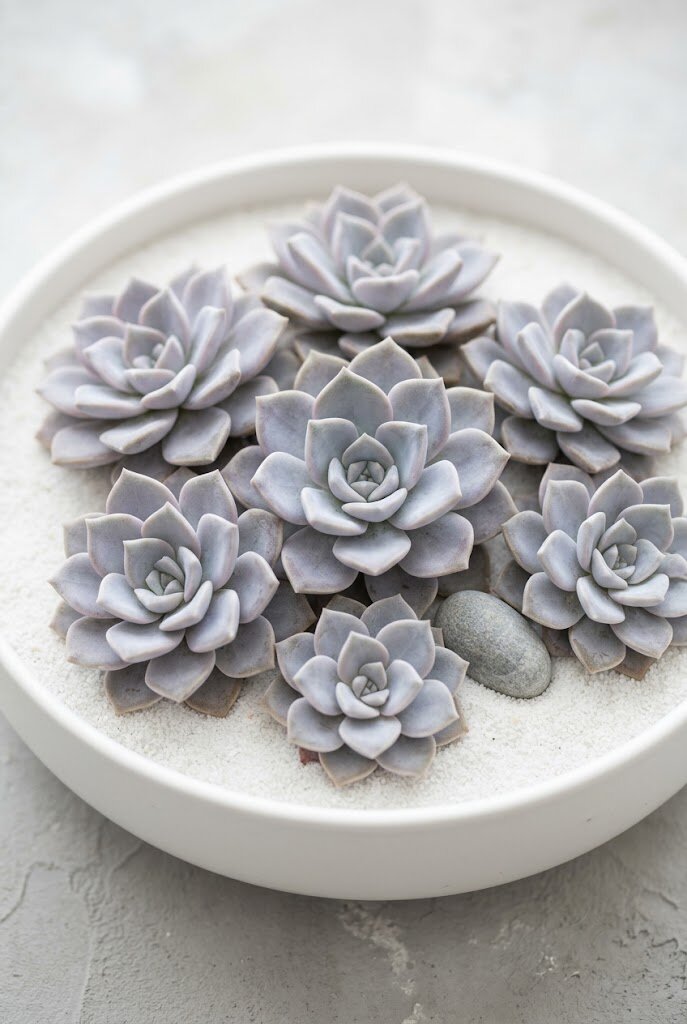
34. Create a Tiered Plant Stand Succulent Display
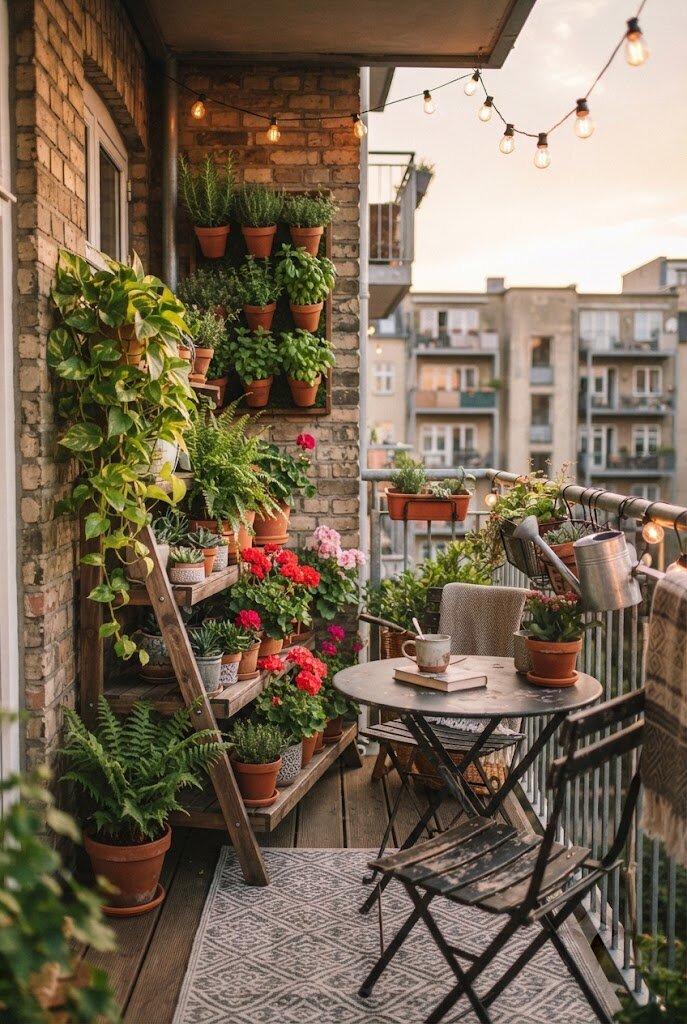
A three-tier wooden or metal plant stand filled entirely with succulent varieties creates a vertical display that looks styled, botanical, and intentional — and takes up only about 2 square feet of floor or patio space. Place the tallest specimens on the bottom tier, medium varieties in the middle, and the smallest or most delicate plants at the top where they get slightly more light. A plant stand display works beautifully on a sunny balcony, covered patio, or beside a south-facing window. Rotate pots weekly so all plants receive even light exposure and grow compact and symmetrical rather than leaning toward the window.
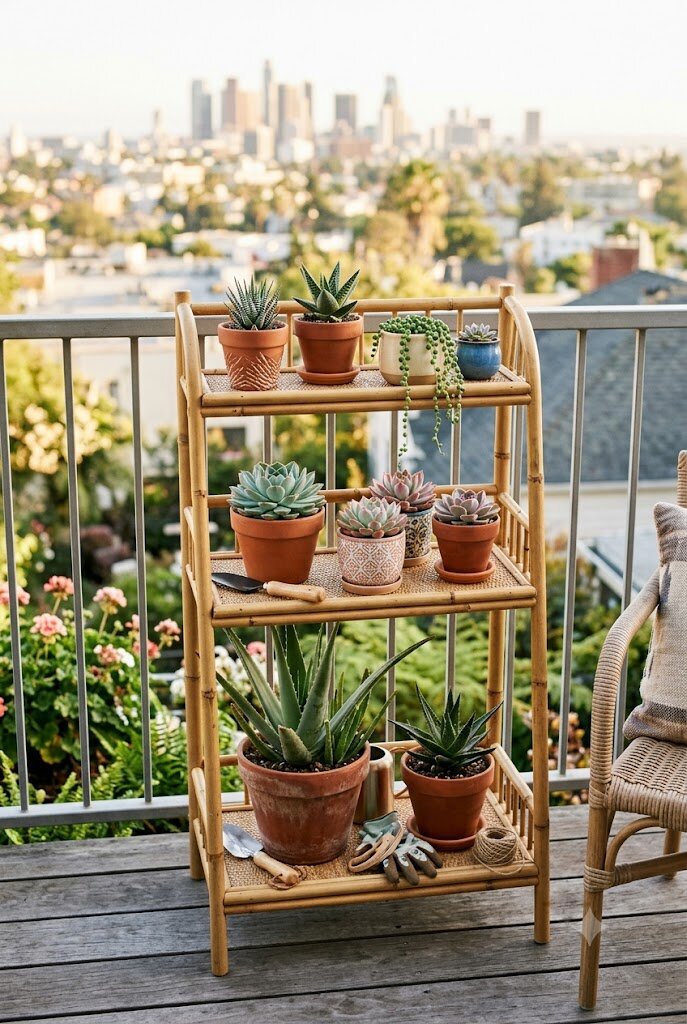
3-Tier Wooden Plant Stand — Indoor/Outdoor, Succulent Display
This exact tiered plant stand style holds 6–9 pots and is used by thousands of succulent enthusiasts for the display idea above. Bamboo or solid wood, compact footprint, holds up to 4 lbs per tier. Perfect for balconies and sunny patios.
💰 Medium pick · $35–$85
Similar plant stand on Amazon →35. Plant Aeonium for a Dramatic Dark Purple Statement
Aeonium 'Zwartkop' — known as black rose succulent — produces large dark purple-black rosettes on tall branching stems that look unlike any other plant in the garden. Planted in a terracotta pot or in the ground in zones 9 to 11, it grows 3 to 4 feet tall and commands attention in any setting. Pair with pale grey-green echeveria at the base for maximum color contrast. Aeonium grows actively in winter and spring and goes dormant in summer heat, curling its leaves inward — do not mistake this for distress or overwater during dormancy. Move indoor in zones below 9 before the first frost.
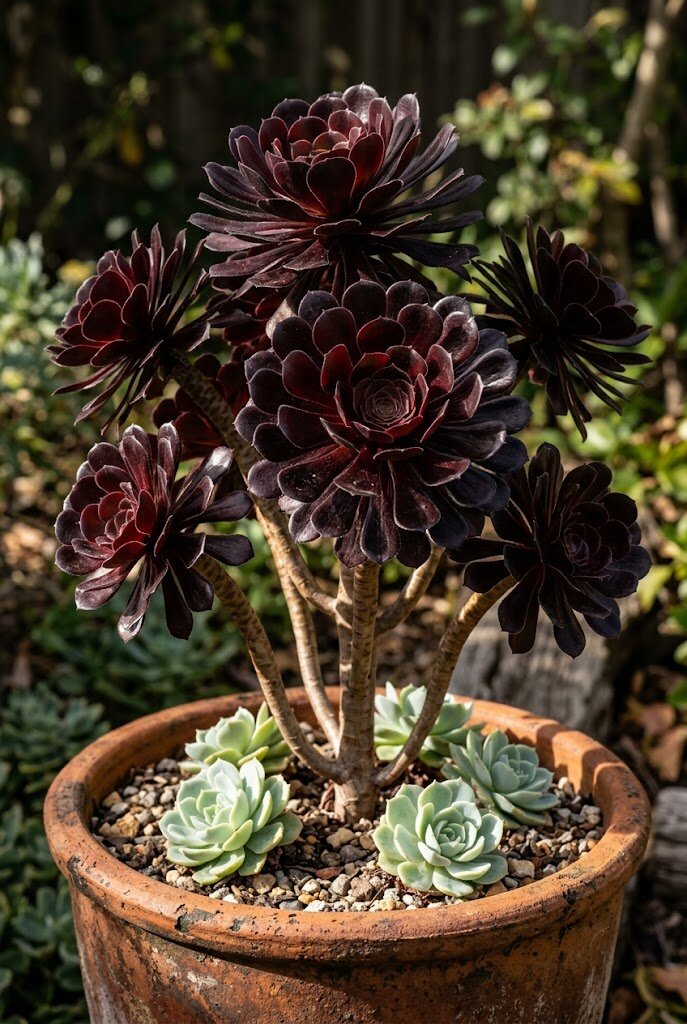
36. Design a Succulent and Ornamental Grass Combination Border
Pairing succulents with ornamental grasses creates a planting style that is both drought-tolerant and dramatically textural — the soft, flowing movement of grass contrasts beautifully with the rigid geometry of succulent rosettes and the bold architecture of agave and yucca. Use blue fescue (Festuca glauca) or blue oat grass beside echeveria for a blue-on-blue color palette that looks painterly. Use bronze-toned sedge or purple fountain grass beside orange-tipped succulents for a warm sunset palette. The grasses move in the wind while the succulents stay static — this dynamic contrast makes the planting feel alive in a way that succulents-only designs sometimes lack.
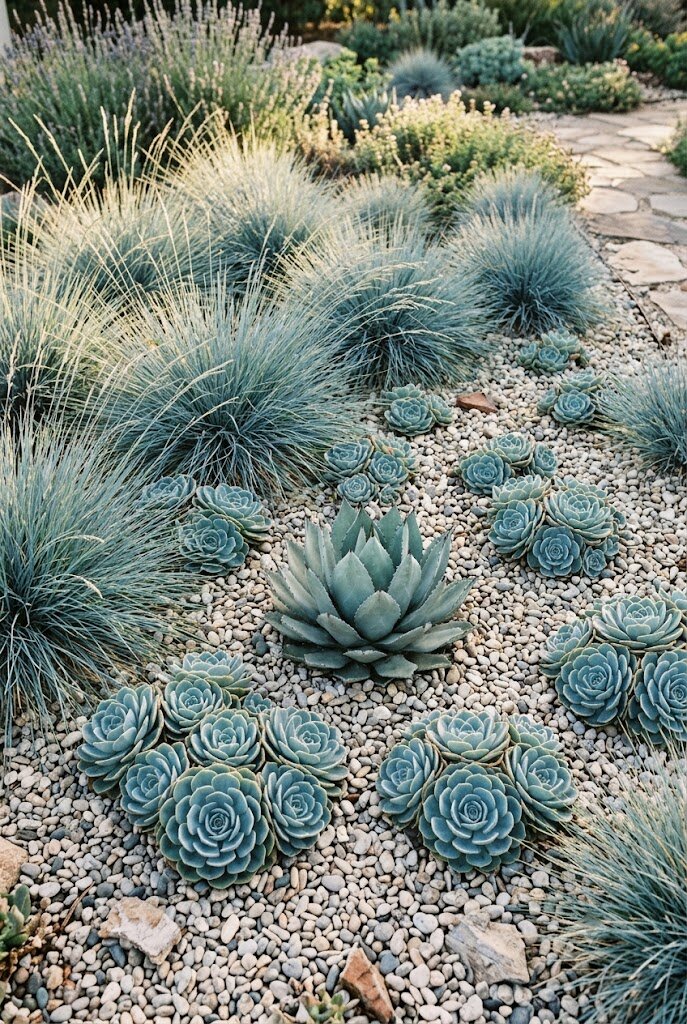
37. Create a Thriller-Filler-Spiller Succulent Container
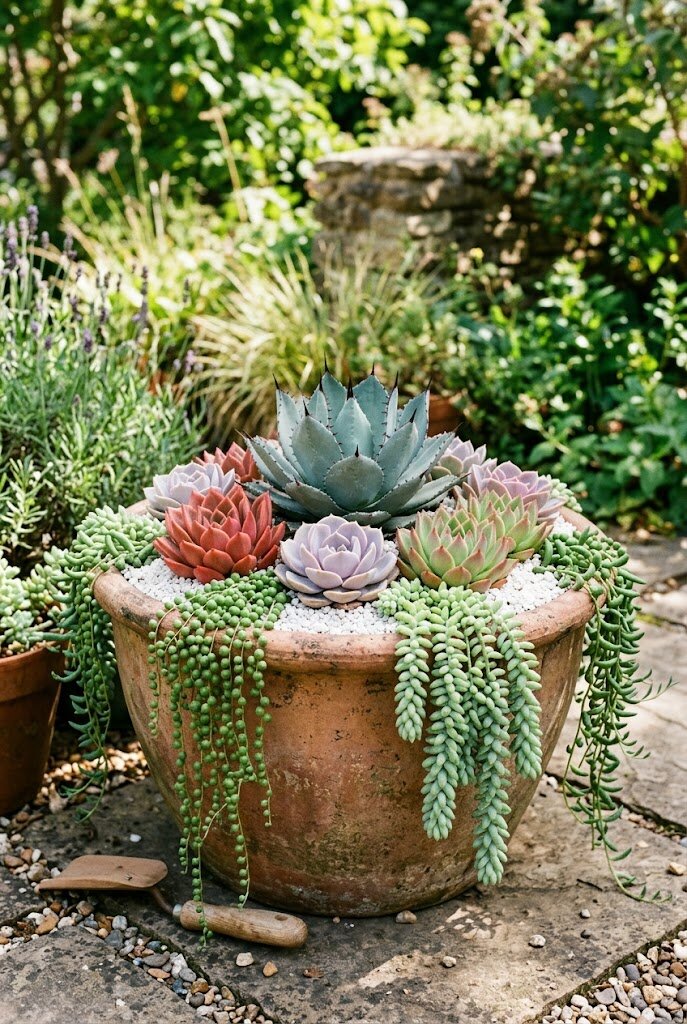
The thriller-filler-spiller method is the most reliable formula for creating a professional-looking succulent container arrangement every time. Choose a large pot (at least 12 inches in diameter) with drainage holes. Plant the thriller — a tall dramatic specimen like a small agave, aloe, or euphorbia — in the center back. Surround with fillers — medium-height rosette succulents like echeveria, kalanchoe, or haworthia — to add volume around the base. Add spillers at the very edge of the pot — string of pearls, burro's tail, or trailing sedum — to cascade over the rim and soften the container. Use one color family throughout for cohesion, or contrast warm (orange, red) and cool (blue, purple) tones for drama.
Succulent Top Dressing Gravel — Decorative Mixed Pebble Set
The finishing touch that makes succulent arrangements look polished and professional. Decorative top-dressing gravel in white, black, or mixed natural tones — just spread 1/2 inch over the soil surface after planting. Instantly elevates any pot or garden bed.
💰 Impulse pick · $12–$25
Budget-friendly version here →38. Repurpose Vintage Teacups as Succulent Planters
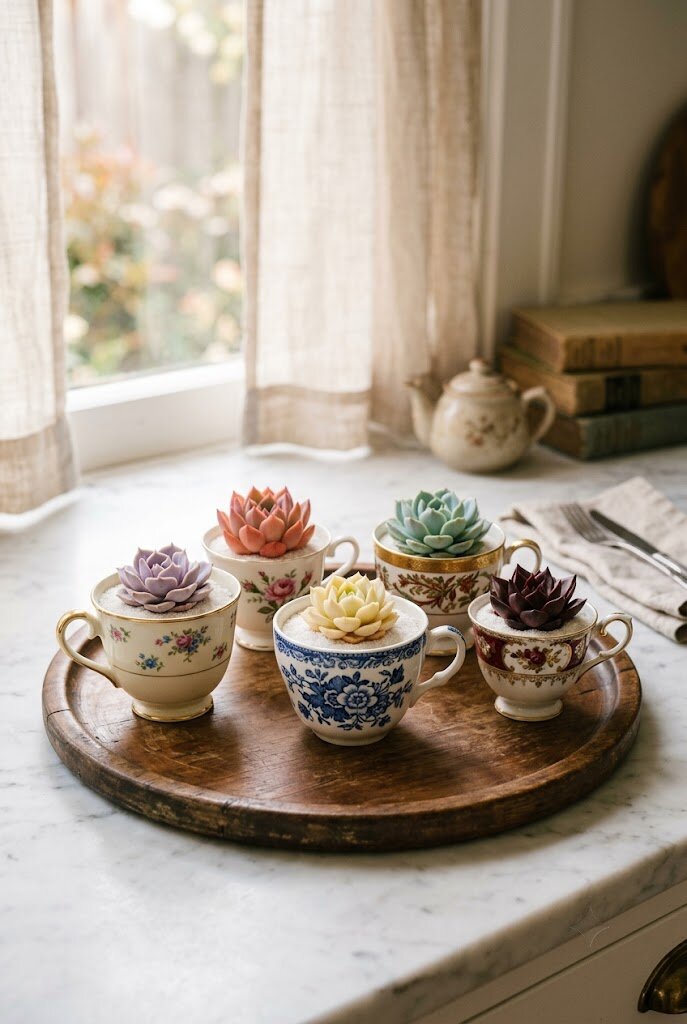
Vintage teacups, old tin cans, hollowed-out books, wooden crates, and mismatched ceramic bowls all make charming succulent planters that have a collected, eclectic character no purpose-made pot can fully replicate. Drill or punch a drainage hole in the bottom of any container that does not have one — drainage is non-negotiable for succulents — or layer extra perlite and charcoal at the bottom to create a drainage buffer. Group three to five mismatched vintage teacup succulents together on a serving tray for a tablescape that generates instant Pinterest saves and guest conversation.
39. Plant a Purple and Orange Contrast Succulent Bed
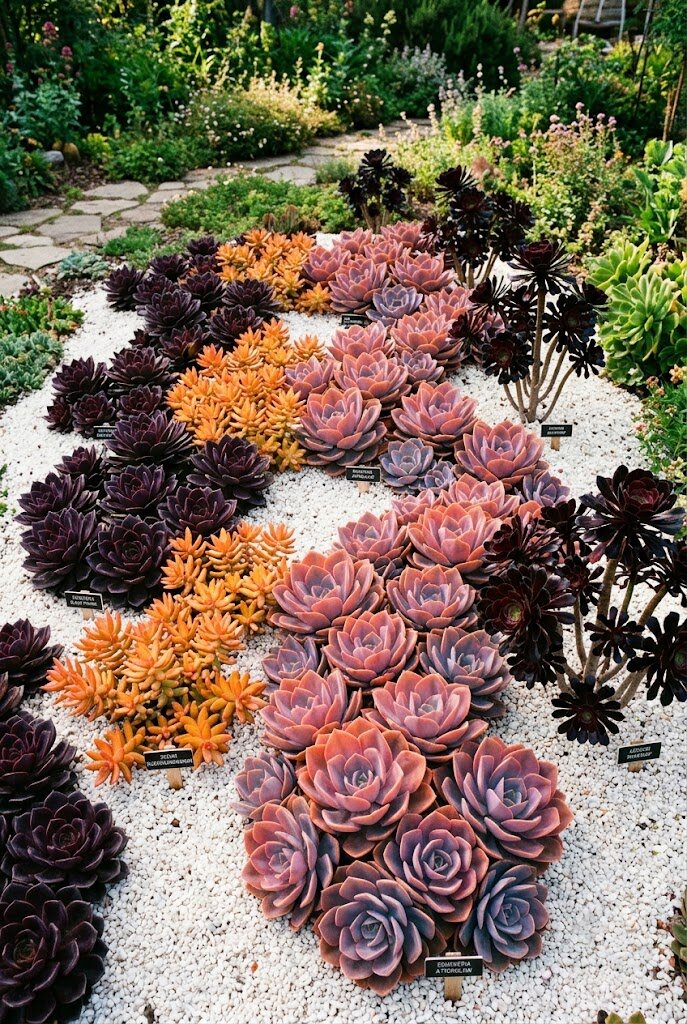
Pairing purple and orange succulents in the same planting bed creates one of the most dramatic and photographically powerful color combinations in garden design — the two colors sit opposite each other on the color wheel, creating maximum visual contrast. Use purple or burgundy echeveria (Echeveria 'Black Prince' or E. 'Perle von Nurnberg'), orange-tipped varieties (Echeveria 'Afterglow', Sedum nussbaumerianum), and deep purple aeonium together in the same bed with white gravel as a neutral ground. The combination photographs vividly in both daylight and with golden-hour light, making it particularly effective for garden content that will be shared on Pinterest or Instagram.
40. Use Succulents to Edge a Modern Driveway
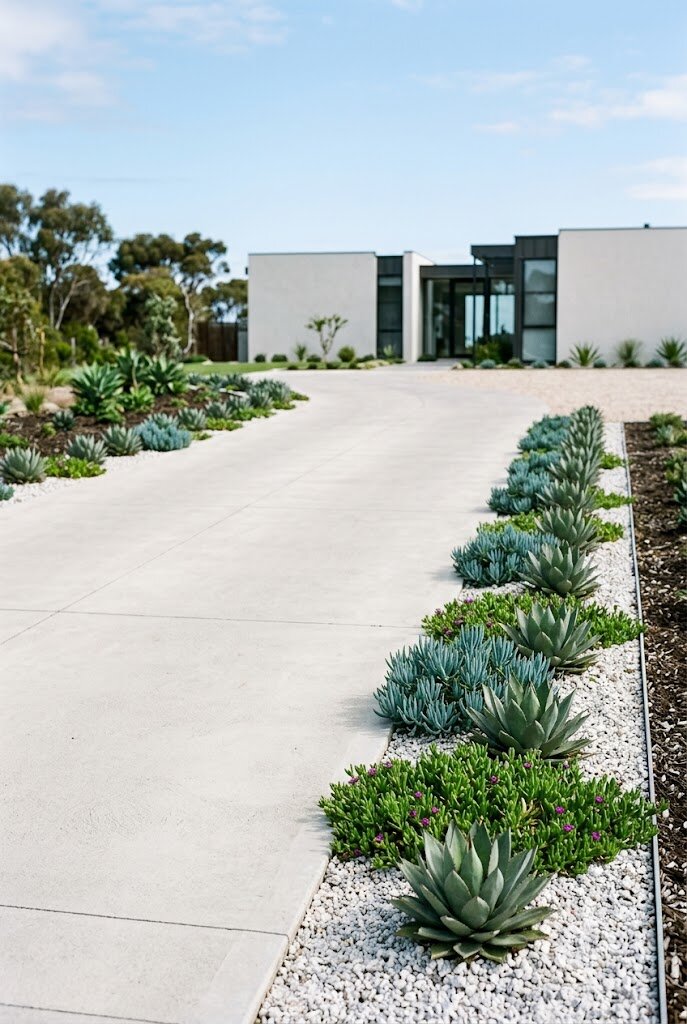
A row of low-growing succulents along both edges of a driveway creates a planted border that requires zero watering after establishment, zero mowing, and zero deadheading — while providing year-round color and texture. Use a single species (all ice plant, all compact agave, or all sedum) for a clean, architectural look suited to modern homes, or a mixed low groundcover planting for a more naturalistic cottage feel. Low upright agaves at regular 4-foot intervals create a rhythm along the driveway edge that mimics the formal planting style of high-end properties. Install landscape fabric beneath a 2-inch gravel layer between plants for a completely weed-free finish.
50. Design a Complete Backyard Succulent Oasis
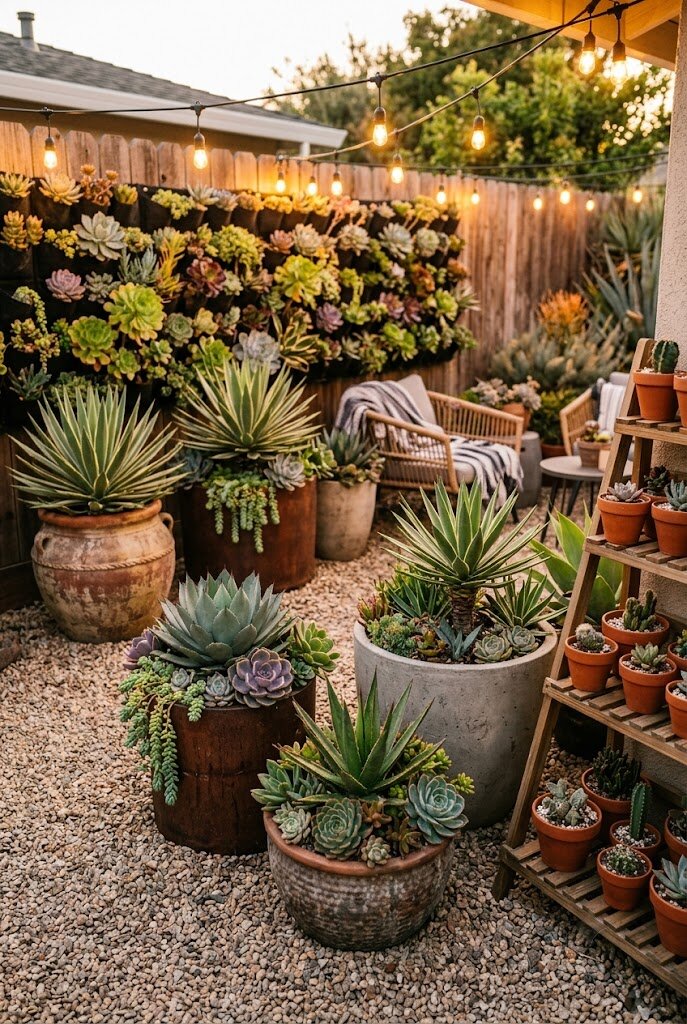
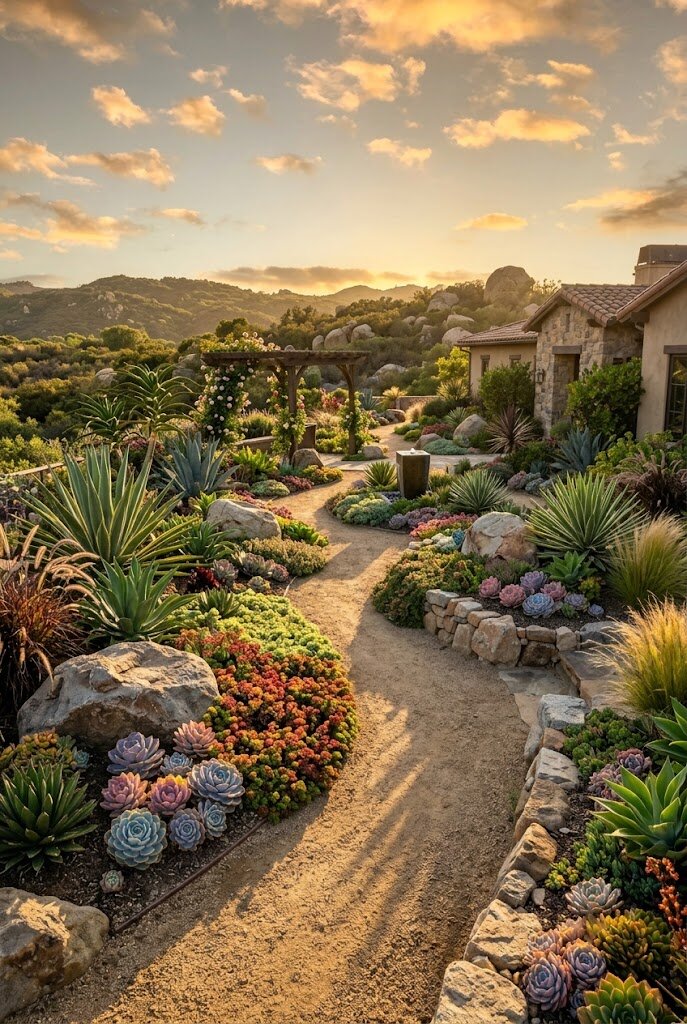
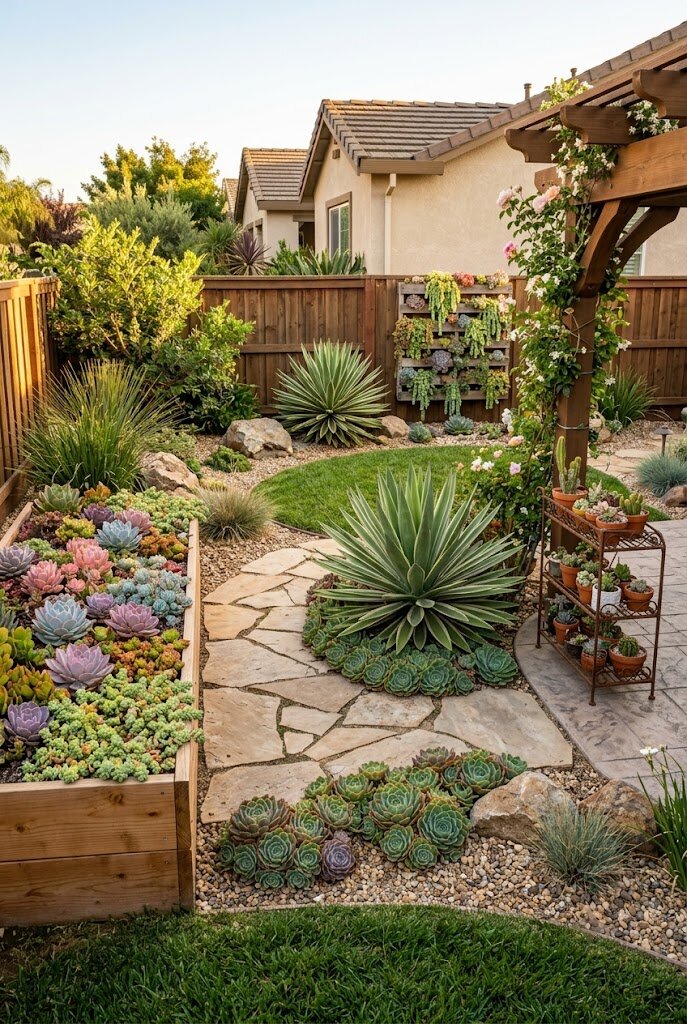
The ultimate succulent garden goal: a complete backyard oasis where every planted surface — borders, raised beds, containers, vertical walls, and path edging — features drought-tolerant succulents in a cohesive design. Choose a three-color palette and repeat it throughout the entire space. Use large agave and aloe as anchor plants at the corners and focal points. Fill raised beds with mixed sedum and echeveria. Line paths with hens and chicks and ice plant. Hang a vertical succulent wall on the fence. Place a tiered plant stand on the patio. The result is a garden that requires almost no watering, no mowing, no fertilizing, and only occasional cleanup of spent leaves — yet looks designed, intentional, and increasingly beautiful with every passing year.
How to Care for a Succulent Garden
Outdoor succulent gardens need deep watering every 1 to 2 weeks in summer, with the frequency decreasing significantly in fall and winter when plants are dormant or semi-dormant. The key is always letting the soil dry completely between waterings — more succulents are killed by overwatering than by drought. Fertilize lightly once in spring with a diluted balanced fertilizer (half strength); most established succulent landscapes need no fertilizer at all after the first year. Remove spent flower stalks after blooming, clear dead outer leaves from rosettes as needed, and divide crowded clumps every 2 to 3 years to maintain air circulation.
Expert Tips for Succulent Gardens
- Stressed succulents — those getting slightly less water and more sun than ideal — actually show the most vivid color
- Terracotta pots dry out 30–40% faster than ceramic or plastic — use this to your advantage with overwatering-prone varieties
- Echeveria rosettes look best when the bottom leaves are not buried — remove lower leaves that touch soil to prevent rot
- Top-dress pots with coarse grit or fine gravel to prevent water from collecting at the crown of the plant
- Propagate from leaves immediately after spring watering for fastest rooting success
- Group succulents with similar water needs together — haworthia needs more water than echeveria; never pot them together
- Morning watering is always better — leaves dry fully during the day, preventing fungal issues overnight
Common Succulent Garden Mistakes to Avoid
- Watering on a fixed schedule rather than checking soil moisture — always feel the soil before watering
- Using standard potting soil without amendment — it holds too much moisture and causes root rot within weeks
- Pots without drainage holes — water must escape or it will kill the roots, regardless of how little you water
- Placing shade-loving haworthia in full sun — the leaves turn orange and shrivel; always match plant to light conditions
- Overcrowding plants in containers — succulents need air circulation; packed pots develop rot and pest problems
- Removing the chalky farina from leaf surfaces — it never recovers and leaves permanent finger marks
- Planting tender tropical succulents (echeveria, aeonium) in-ground in zones below 9 without a plan to overwinter
Conclusion
Succulent gardens represent one of the smartest investments available in low-maintenance landscaping — they reward neglect, improve with time, propagate for free, and offer a range of sculptural beauty and color that no other plant category can match with so little effort. Whether you are creating a sweeping drought-tolerant front yard, styling a single windowsill collection, or building a living vertical wall, the 50 ideas in this guide offer a starting point for every space, budget, and skill level. Start with one or two of the easiest ideas — a terracotta pot collection, a rock garden with sempervivum, or a thriller-filler-spiller container — and let the garden grow from there. Within one or two seasons, you will have more plants than you started with, a more beautiful garden than you imagined, and the satisfaction of a landscape that thrives without demanding your constant attention.