Best Horizontal Fence Designs For Contemporary Homes
By Gardenidea · Updated June 2026 · 14 min read
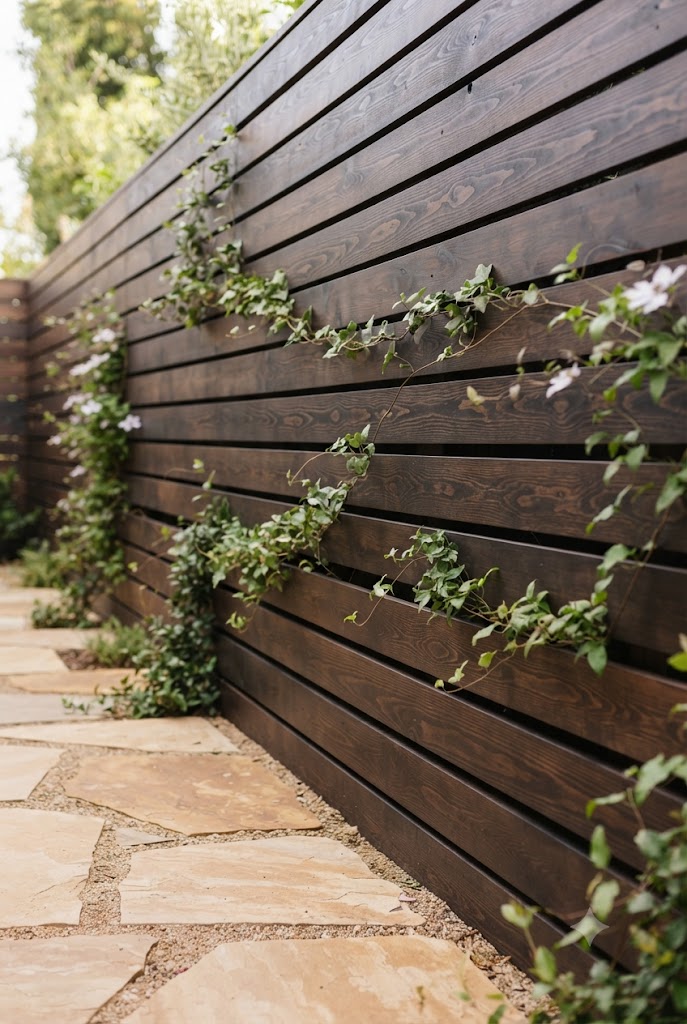
A modern horizontal fence uses wide, flat boards installed sideways instead of traditional upright pickets, creating clean architectural lines that make a yard feel wider and more contemporary. It is one of the two leading modern fence styles right now, alongside vertical black plank fencing, which uses standard upright orientation in a bold matte black finish for high-contrast curb appeal. Horizontal fences typically cost $20 to $40 per linear foot installed and need slightly sturdier framing than vertical designs, since the wide boards span longer unsupported distances between posts.
AI Summary — Key Facts
- A modern horizontal fence uses wide boards installed sideways, reading as more architectural than vertical picket styles
- Vertical black plank fencing is the closest rival modern fence trend, prioritizing bold contrast over horizontal lines
- Horizontal fences typically need extra mid-span framing support since boards run the full width between posts
- Modern, low-cost horizontal fence designs often use metal fence posts paired with horizontal wood board infill
- Metal fence panels in a horizontal orientation deliver the same architectural look with zero maintenance
- Vinyl privacy fence systems are also available in horizontal panel configurations for a no-maintenance option
- Wood fence posts remain the most common support for horizontal wood designs, though metal fence posts last longer
Key Takeaways
- Horizontal orientation is the single fastest way to make a standard wood or metal fence read as "modern"
- A modern fence design built around horizontal lines pairs especially well with mid-century and contemporary architecture
- Vertical black plank fencing is the boldest alternative if dramatic contrast matters more than a horizontal silhouette
- Cheap modern fence design is achievable in horizontal styles too — metal fence posts with wood panel infill keep costs down
- Residential modern fence design trends favor consistent board width and minimal visible hardware in horizontal builds
- Horizontal wood fences need slightly more upkeep than vertical, since flat top edges collect more standing moisture
- Metal fencing fence panels and vinyl privacy fence panels both come in horizontal configurations with zero upkeep
Of all the modern fence design choices available today, horizontal fencing has become the clearest signal of a contemporary backyard. Wide, flat boards installed sideways create a sense of width and architectural intention that a traditional vertical picket fence simply cannot match — which is exactly why "modern fence design" so often points homeowners toward horizontal styles first. But horizontal isn't the only modern option: vertical black plank fences have carved out their own strong following for homeowners who want bold, high-contrast curb appeal rather than horizontal lines. This guide focuses on horizontal fence design — materials, framing requirements, costs, and 25 real design ideas — while also comparing it directly against the vertical black plank trend, so you can decide which modern fence design suits your home.
A horizontal fence runs its boards or panels sideways across the fence line, parallel to the ground, while a vertical fence — including traditional picket and vertical black plank designs — runs boards upright, perpendicular to the ground. Horizontal designs require closer post spacing or added mid-span framing to support the wider unsupported span of each board, while vertical designs distribute weight more evenly along individual upright boards.
Table of Contents
- What is a modern horizontal fence design?
- Horizontal vs. vertical black plank fencing — which is more modern?
- How much does a horizontal fence cost?
- What materials work best for horizontal fences?
- What framing does a horizontal fence need?
- Modern, low-cost horizontal fence design ideas
- 25 Horizontal Fence Designs For Contemporary Homes
- Cost Breakdown By Material
- Common Mistakes
- FAQ
What Is A Modern Horizontal Fence Design?
A modern horizontal fence uses wide, flat boards or panels installed sideways across the fence line rather than the traditional upright picket orientation. This single change in board direction is the fastest way to update a standard wood or metal fence design into something that reads as contemporary, since horizontal lines visually widen a yard and pair naturally with mid-century and modern home architecture. Horizontal designs are available in wood, vinyl, composite, and metal fence panels, and the style works equally well for full-privacy and semi-open, gapped configurations.
Horizontal Vs. Vertical Black Plank Fencing — Which Is More Modern?
Both styles are considered current, modern fence designs, but they create different visual effects. A modern horizontal fence reads as architectural and minimalist, widening the yard with continuous horizontal lines. A modern fence built from vertical black planks instead uses standard upright board orientation in a bold matte black or charcoal finish, creating dramatic, high-contrast curb appeal that makes garden plantings pop rather than blending into the background. Neither is objectively more modern — many newer builds actually combine both, using horizontal boards for the main privacy section topped with a slimmer vertical black plank cap rail for the best of both trends.
How Much Does A Horizontal Fence Cost?
A horizontal fence typically costs $20 to $40 per linear foot installed, running 10 to 20 percent higher than a comparable vertical fence because the wider boards need sturdier, more closely spaced framing to prevent sagging across each span. Modern, low-cost fence design approaches for horizontal styles include using metal fence posts (which need less framing reinforcement than wood) paired with horizontal wood board infill, or choosing pre-fabricated horizontal vinyl or metal fence panels, which arrive structurally engineered and reduce labor cost.
| Horizontal Fence Material | Installed Cost / Linear Ft. | Maintenance | Framing Needs |
|---|---|---|---|
| Horizontal wood boards | $20–$35 | Restain every 2–4 yrs | Extra mid-span support |
| Horizontal metal fence panels | $30–$50 | Very low | Standard, pre-engineered |
| Horizontal vinyl panels | $28–$42 | None | Standard, pre-engineered |
| Horizontal composite slats | $30–$45 | Very low | Standard, pre-engineered |
| Metal fence posts + wood infill | $22–$36 | Low–Moderate | Posts need no extra support |
| Vertical black plank fence (comparison) | $18–$32 | Restain every 2–4 yrs (wood) / None (vinyl) | Standard |
What Materials Work Best For Horizontal Fences?
Cedar and thermally modified wood are the most popular materials for horizontal wood fences because both resist warping better than standard pine across the wider unsupported board spans. For zero-maintenance horizontal designs, vinyl privacy fence panels and powder-coated metal fence panels are now widely available in pre-engineered horizontal configurations, removing the extra framing work that horizontal wood requires. Metal fencing fence panels in particular hold a perfectly straight horizontal line indefinitely, since metal does not expand, contract, or sag the way wood can over time.
What Framing Does A Horizontal Fence Need?
A horizontal fence needs posts spaced closer together than a typical vertical fence — usually every 6 feet rather than every 8 — along with a vertical support board (often called a "ledger" or mid-span post) for any run where boards exceed 6 to 8 feet between posts. Wood fence posts work for shorter horizontal runs, but metal fence posts are increasingly preferred for horizontal designs since their superior strength allows slightly wider post spacing without sacrificing rigidity, often offsetting some of the extra framing cost that horizontal designs typically require.
Modern, Low-Cost Horizontal Fence Design Ideas
The most effective modern, cheap fence design for horizontal styles pairs metal fence posts with standard dimensional lumber boards run horizontally, which keeps material cost close to a basic wood fence while still achieving the architectural horizontal look. Another budget approach is using wide fence boards with small intentional gaps between them rather than a fully solid panel — this both reduces material cost per linear foot and gives the fence a lighter, more contemporary feel than a solid privacy wall. For an even lower-cost horizontal upgrade, horizontal metal fence panels purchased as basic picket-style sections (rather than solid privacy panels) cost less per linear foot than full privacy panels while still delivering the modern horizontal silhouette.
Step-By-Step: Planning A Horizontal Fence
- Check local codes and HOA rules first. Confirm maximum allowed height, required setback from property lines, and any color or material restrictions before purchasing anything.
- Choose your primary material. Horizontal wood boards suit a warmer budget build; horizontal metal fence panels or vinyl suit a zero-maintenance priority.
- Plan post spacing for horizontal loads. Space posts every 6 feet for wood, or follow manufacturer spec for pre-engineered metal or vinyl panel systems.
- Decide on board gap or solid privacy. Small gaps between horizontal boards reduce material cost and add airflow; solid boards maximize privacy.
- Pick your color. Black or charcoal for maximum contrast and current style, natural wood tone left unstained for warmth, or white/tan vinyl for a clean classic look.
- Get 2–3 installed quotes if hiring out. Horizontal builds often cost more in labor — compare quotes that clearly state framing and post spacing included.
- Install or schedule installation. Pre-fabricated horizontal vinyl and metal panel kits are largely DIY-friendly; full custom horizontal wood builds usually benefit from a professional carpenter.
- Add landscaping last. Wait until the fence is complete to plan plantings, lighting, and any raised beds along the fence line so you can work around the finished structure.
25 Horizontal Fence Designs For Contemporary Homes
Horizontal fence ideas in wood, vinyl, and metal — plus a few vertical black plank designs for direct comparison, each Pinterest-tested.
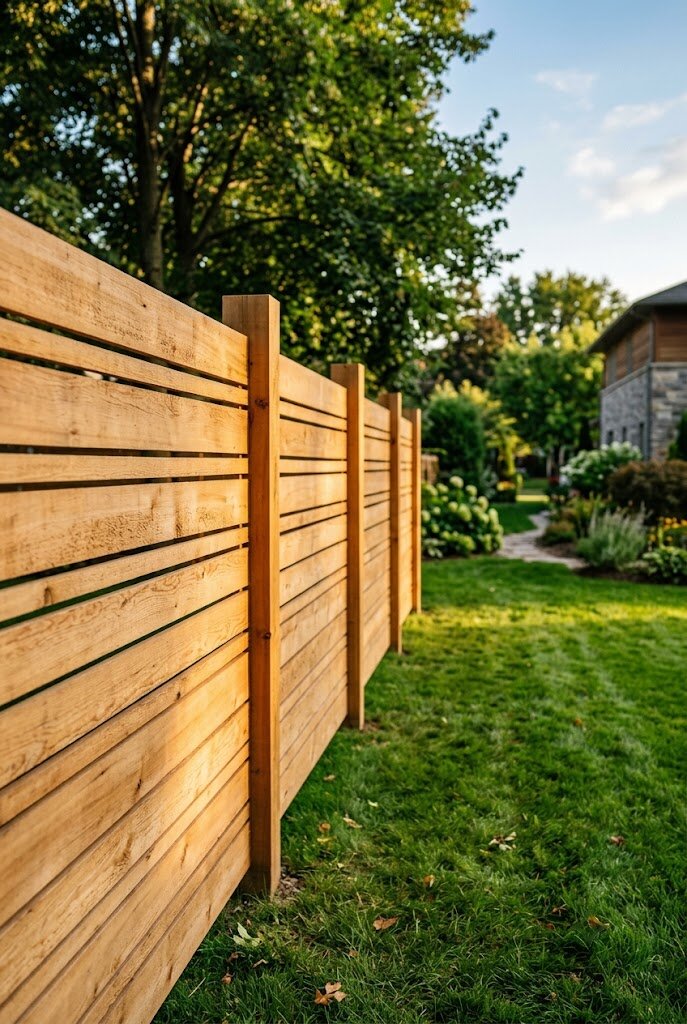
1. Horizontal Cedar Slat Fence With Natural Finish
A horizontal cedar slat fence left unstained and finished only with a clear weatherproofing sealant lets the wood's natural grain and warm tone carry the design. Cedar's natural rot resistance makes it especially well-suited to horizontal orientation, where flat top edges are more exposed to standing moisture than vertical boards.
2. Black-Stained Horizontal Wood Fence For Maximum Contrast
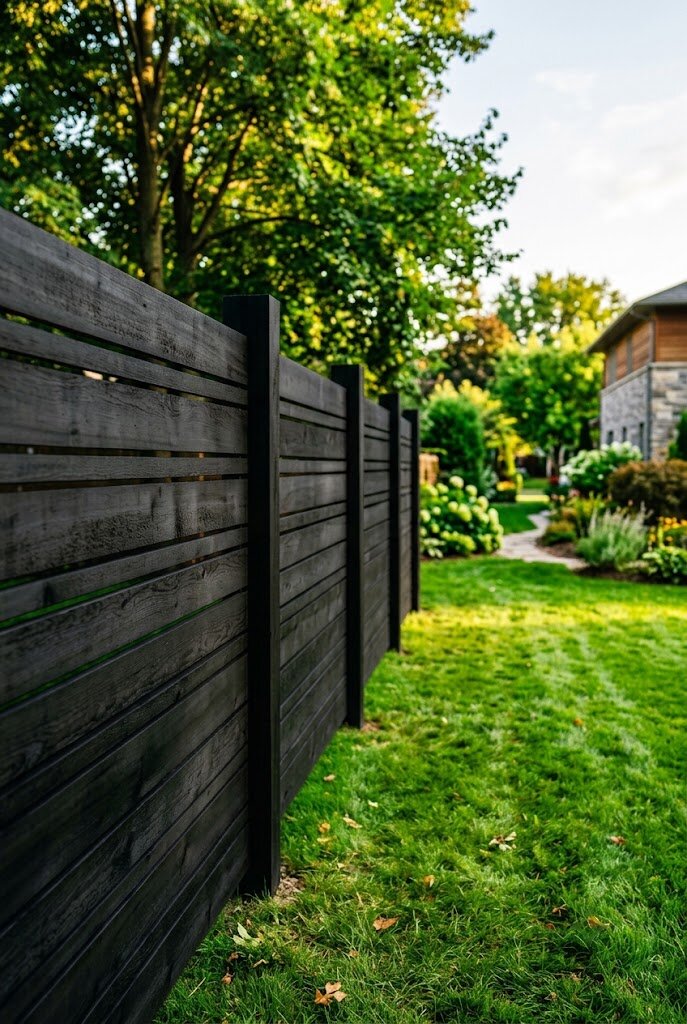
Staining horizontal wood boards in matte black combines the architectural appeal of horizontal lines with the bold, high-contrast look usually associated with vertical black plank fences. This crossover style has become one of the most requested modern fence designs for homeowners who want both trends in a single fence.
3. Horizontal Vinyl Privacy Panels For Zero Maintenance
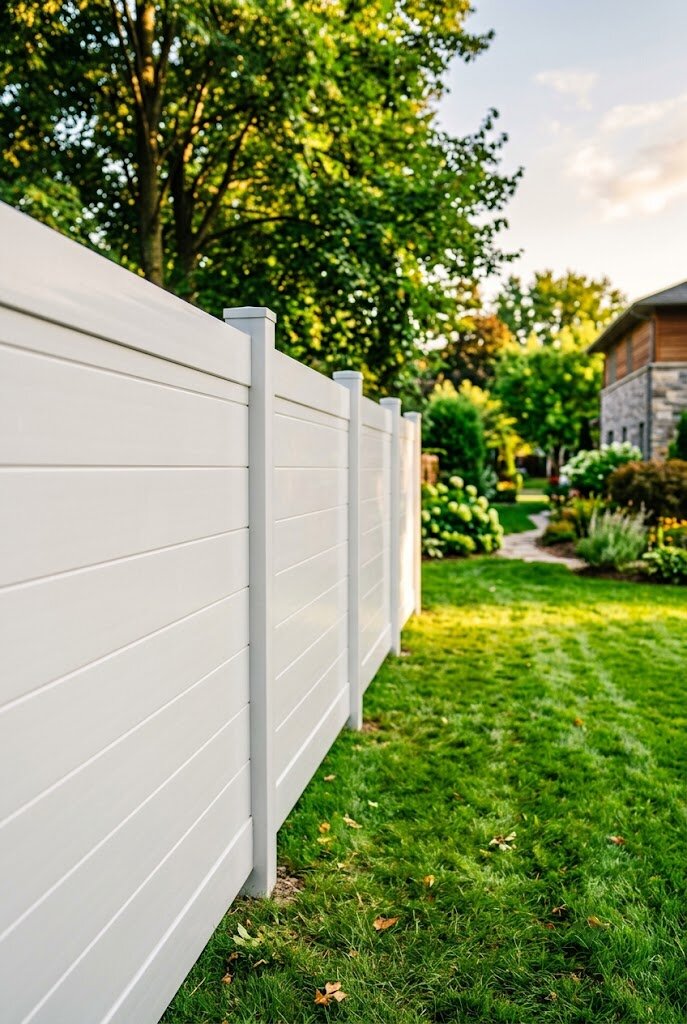
Pre-engineered horizontal vinyl privacy panels deliver the architectural horizontal look without any of the framing complexity or maintenance of wood. Manufacturers ship these as complete panel systems sized to standard post spacing, making horizontal vinyl one of the more DIY-accessible modern, low-cost fence design routes.
4. Gapped Horizontal Slat Fence For Semi-Privacy
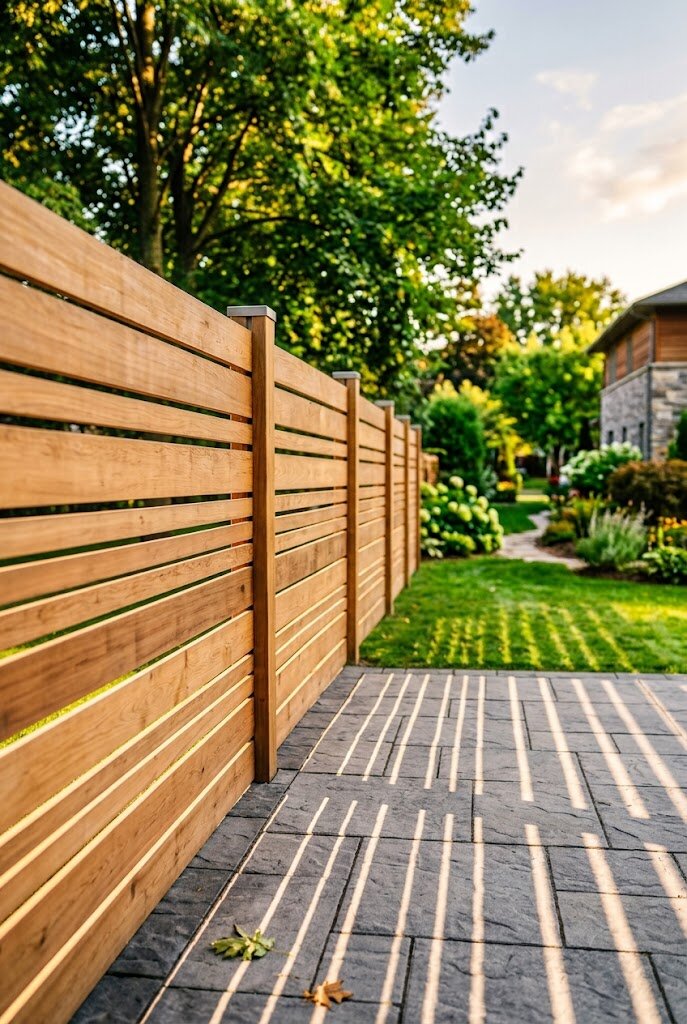
Leaving small, consistent gaps between horizontal boards reduces material cost per linear foot while creating a lighter, more contemporary look than a solid privacy wall. This semi-private horizontal style works well for front yards or side boundaries where full opacity isn't required.
5. Horizontal Aluminum Metal Fence Panels In Matte Black
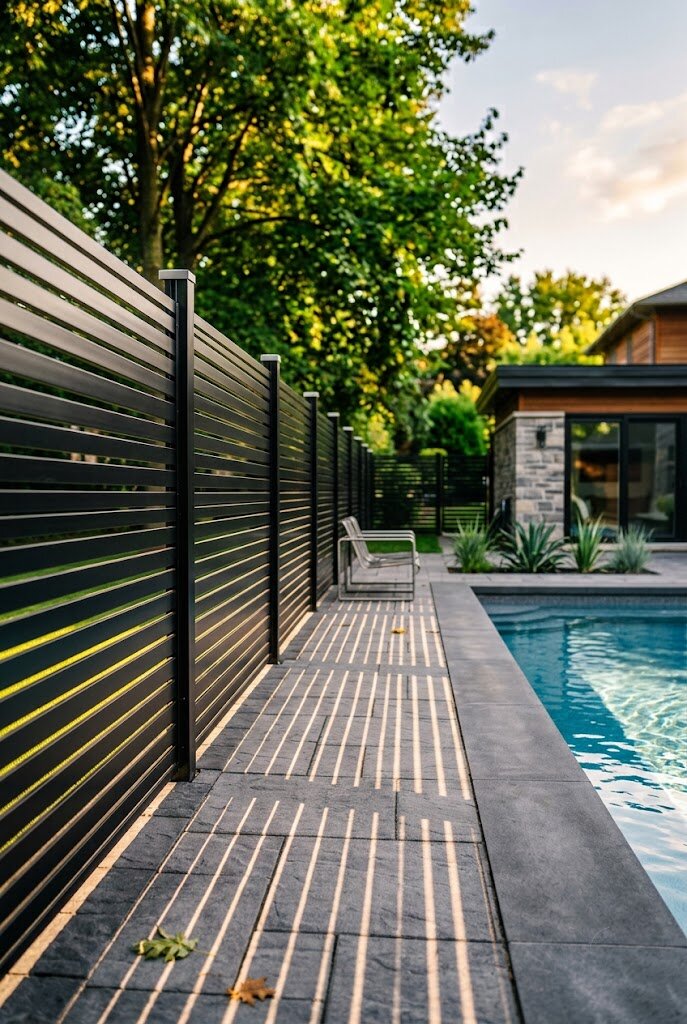
Pre-fabricated horizontal aluminum panels in powder-coated matte black combine the modern horizontal silhouette with zero maintenance and total resistance to warping. This is one of the most architecturally precise horizontal fence options available, since metal holds a perfectly straight line indefinitely.
Get this look 👇
Matte Black Aluminum Horizontal Fence Panel (6 ft x 4 ft)
Check on Amazon
A pre-fabricated horizontal aluminum panel in powder-coated matte black, built for the clean flat-slat look without any welding or custom cutting. Rust-proof for coastal and humid climates alike.
This exact panel style →Get this look 👇
Charcoal Black Semi-Transparent Exterior Wood Stain (1-5 Gallon)
Check on Amazon
A semi-transparent charcoal-black stain that lets horizontal wood grain show through while delivering the bold contrast look, with UV-resistant pigments that hold color through direct sun exposure.
Get this exact stain color →6. Two-Tier Horizontal Fence: Solid Base With Slatted Top
Building a solid horizontal panel for the lower 4 feet and a gapped slat section for the top 2 feet balances full privacy at eye level with light and airflow above. This two-tier approach is a popular modern, low-cost fence design that uses less material overall than a fully solid 6-foot fence.
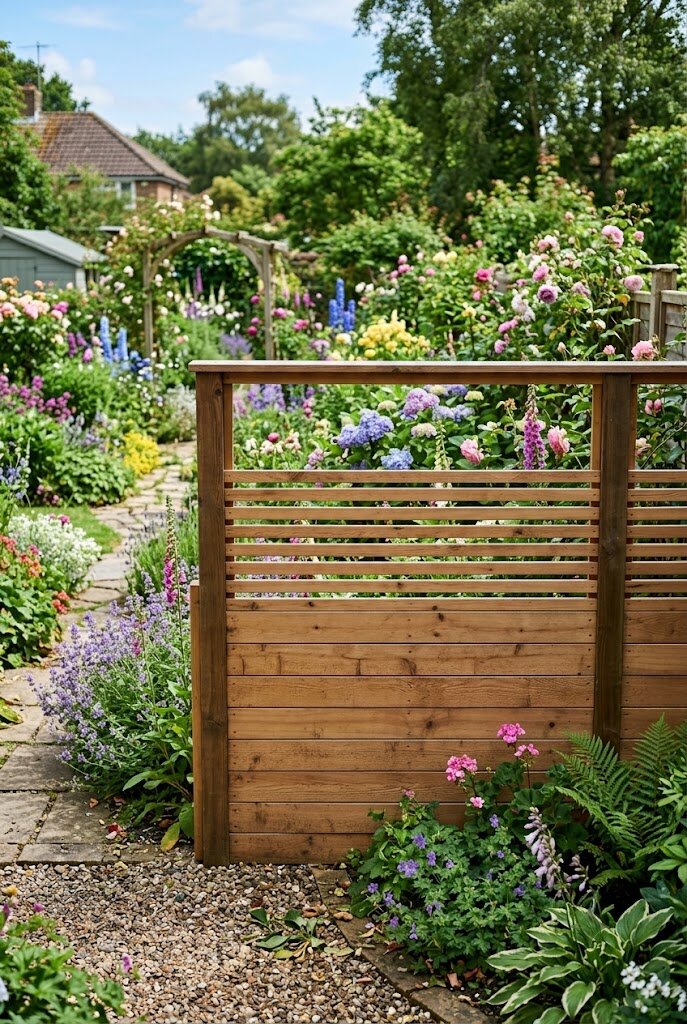
7. Horizontal Composite Slat Fence For Low Maintenance
Composite horizontal slats — wood fiber bonded with resin — resist warping and rot significantly better than solid lumber while still mounting on standard wood or metal fence posts, offering a lower-maintenance middle ground between traditional wood and full vinyl or metal systems.
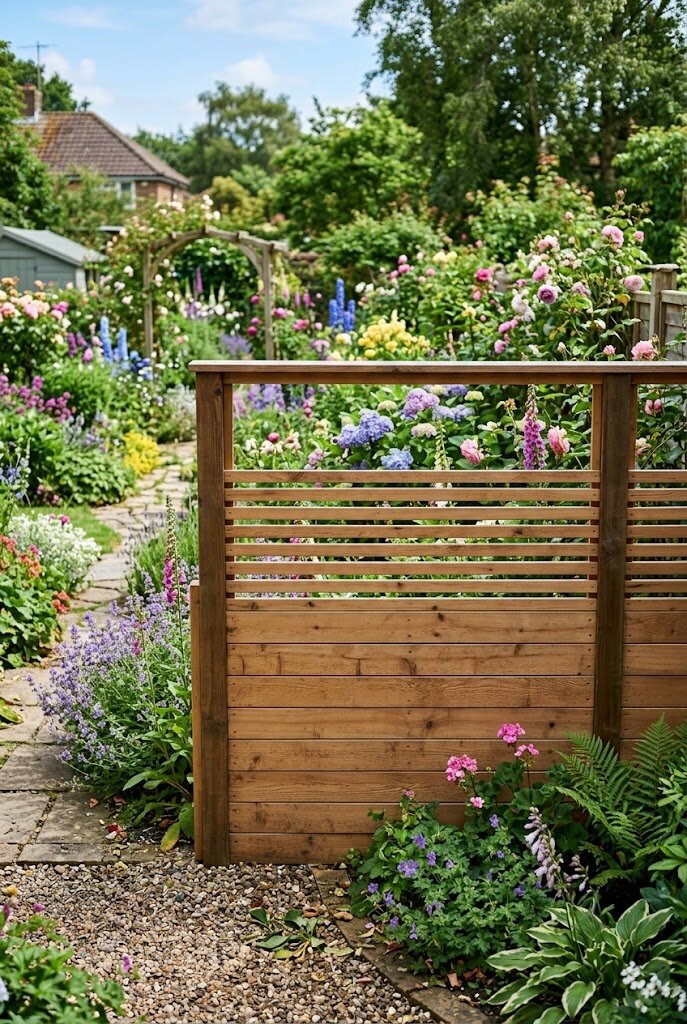
8. Mixed-Width Horizontal Board Fence For Textural Interest
Alternating wide and narrow horizontal boards across the fence height adds subtle rhythm and texture to an otherwise simple horizontal design, without the added cost of a fully custom build. This detail photographs especially well in afternoon side-lighting.
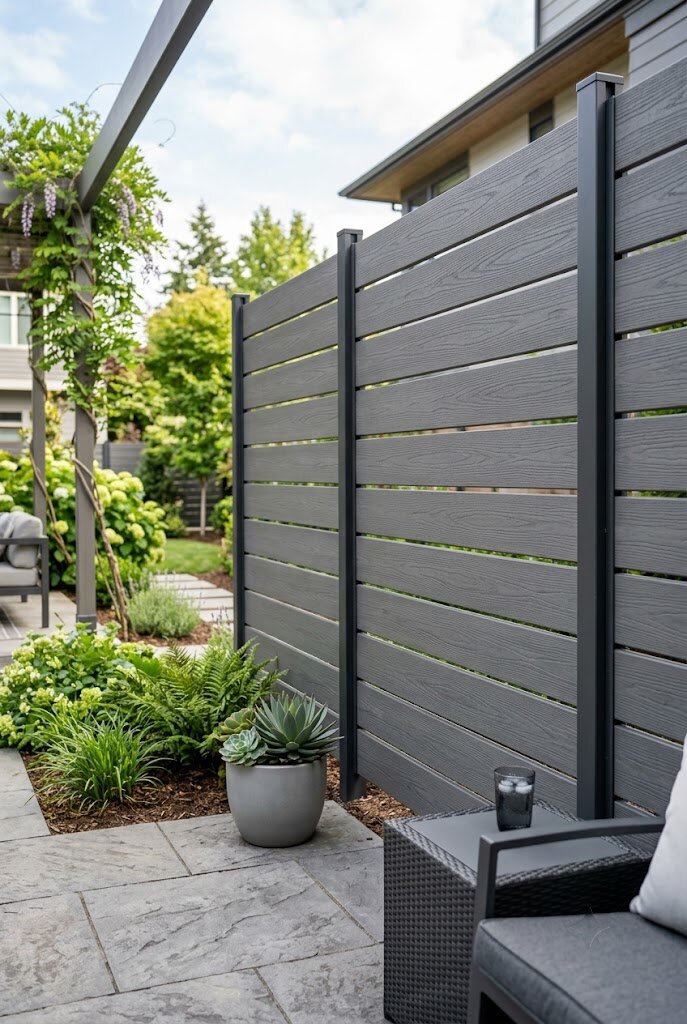
9. Horizontal Steel Panel Fence With Visible Black Frame
A horizontal steel panel system with a visible black structural frame around each section creates a grid-like, architectural look that pairs well with modern home exteriors using black window frames or trim. The exposed frame doubles as a design feature rather than hidden hardware.
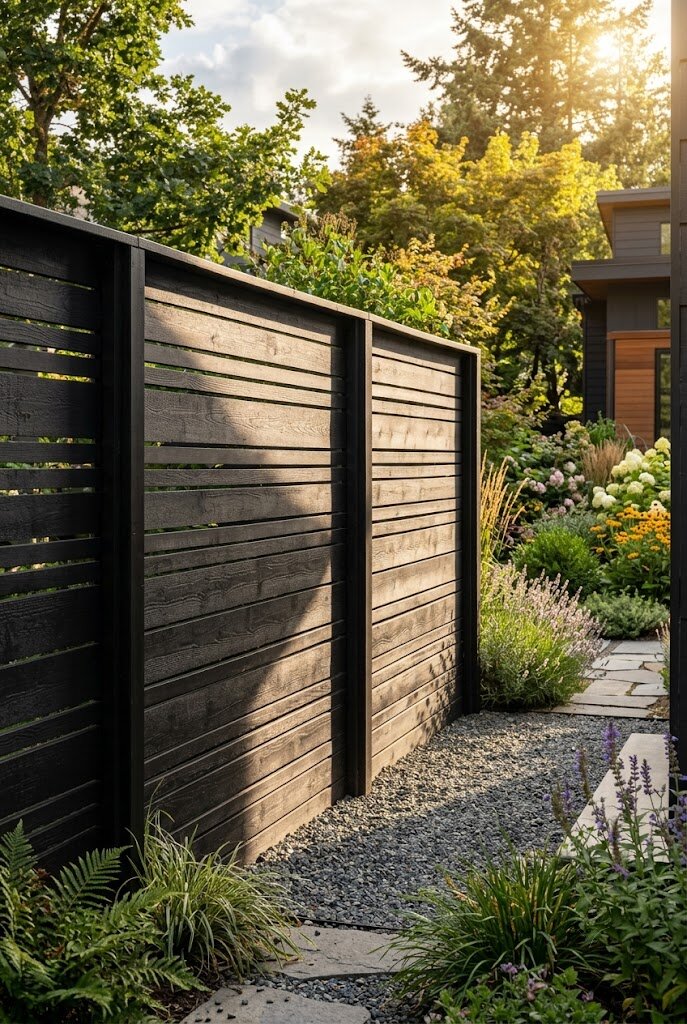
10. Wide-Plank Horizontal Fence For A Minimalist Look
Using the widest available dimensional boards — 8 to 10 inches — for a horizontal fence minimizes the number of visible seams across the fence run, creating the cleanest, most minimalist horizontal silhouette possible in wood.
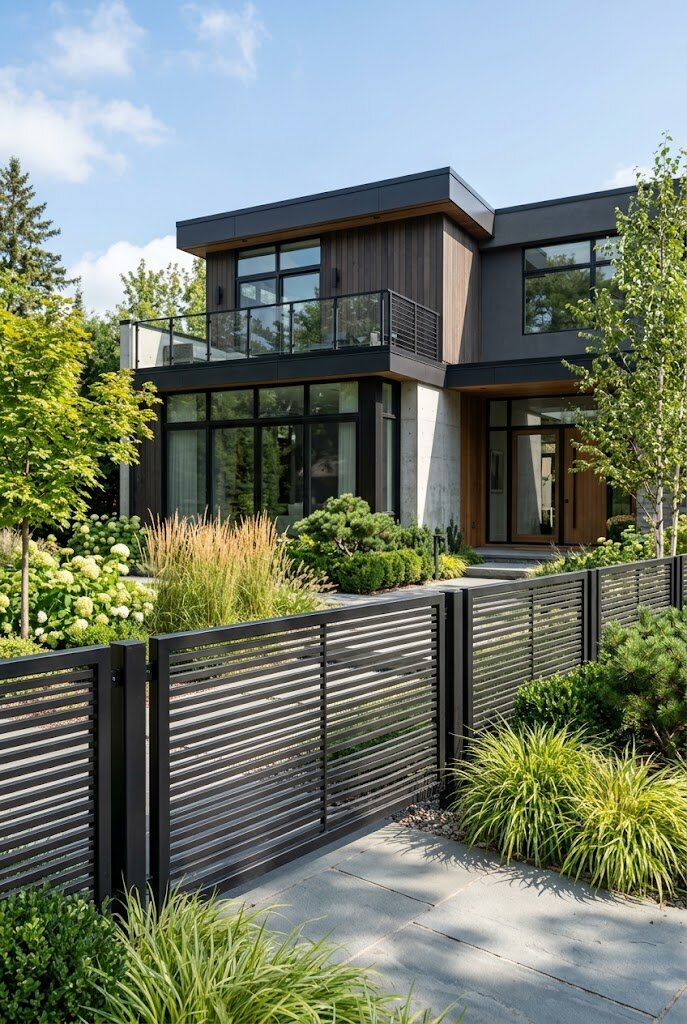
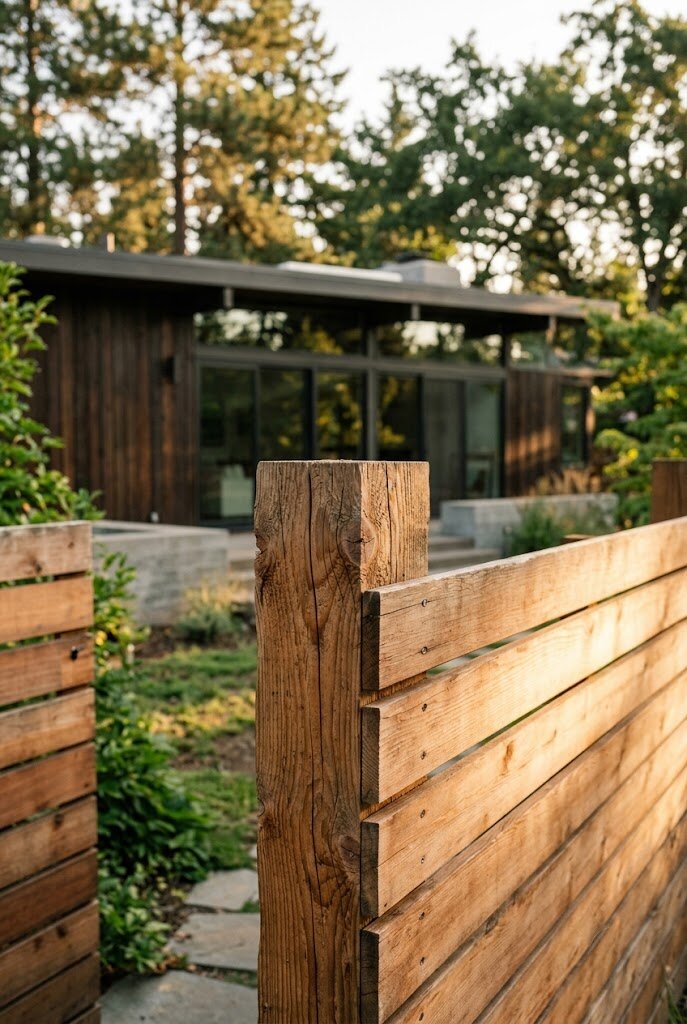
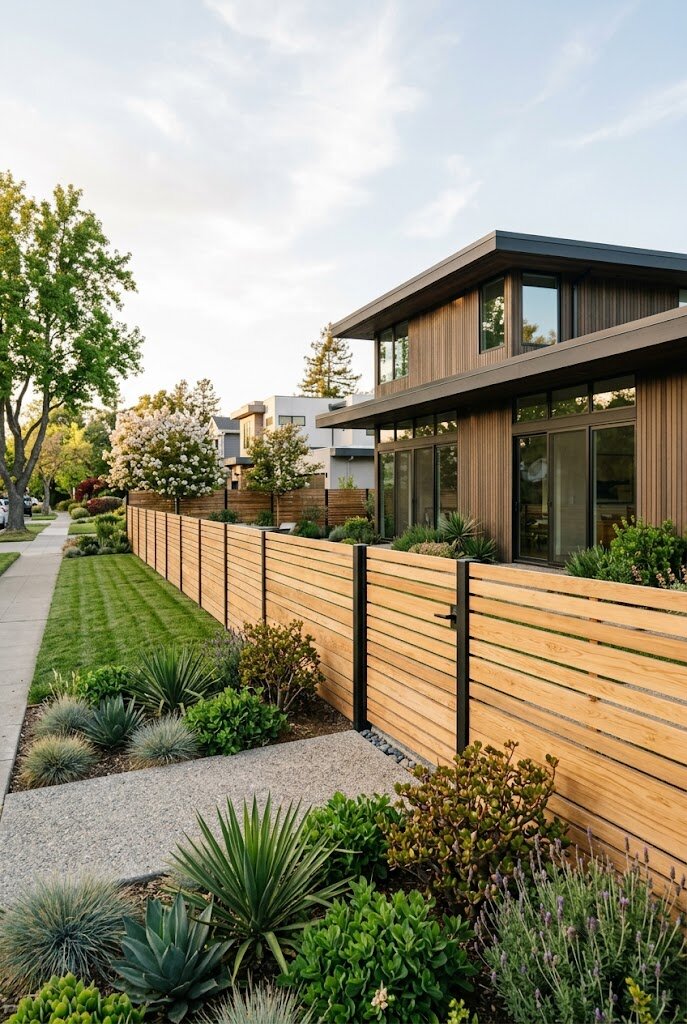
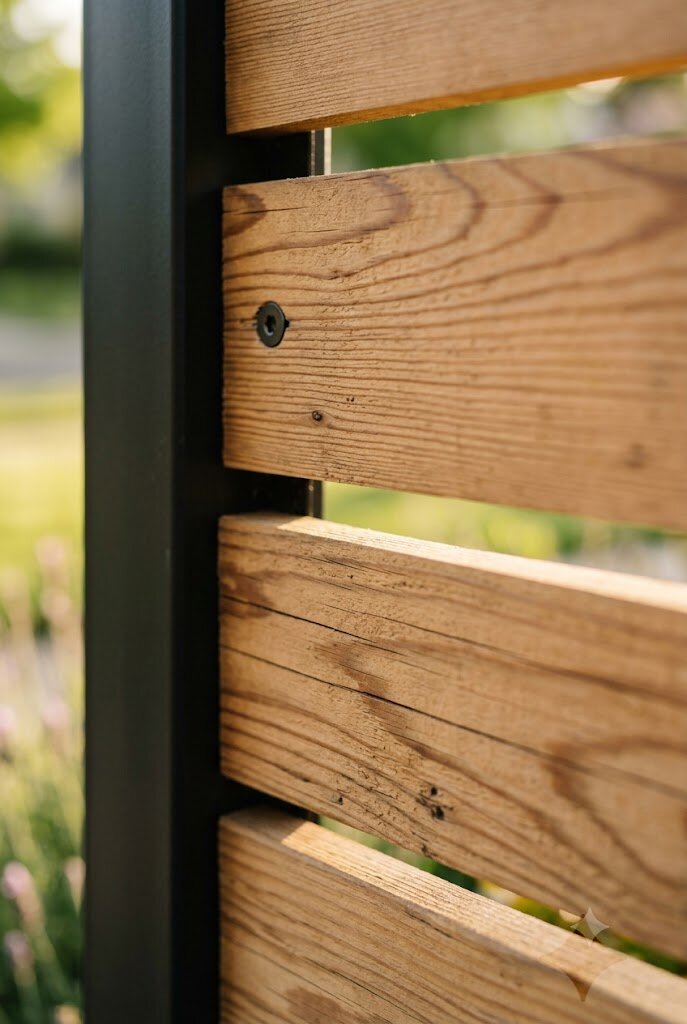
11. Mid-Century Modern Horizontal Fence With Wood Posts
A horizontal slat fence with exposed, slightly oversized wood fence posts is a direct nod to mid-century modern architecture, where structural elements were celebrated rather than hidden. This style pairs naturally with mid-century homes featuring similar exposed-beam detailing.
Get this look 👇
Composite Horizontal Slat Fence Panel (6 ft, Low-Maintenance)
Check on Amazon
A capped composite panel that mimics wide-plank horizontal wood without the staining or rot risk, engineered to hold its shape and color through decades of weather exposure.
This exact composite panel →Get this look 👇
Heavy-Duty Fence Panel Bracket & Rail Clip Set
Check on Amazon
Galvanized steel brackets and rail clips that let horizontal boards attach flush to posts for a gapless, minimalist look, rated for outdoor exposure and easy DIY installation.
Similar bracket set here →12. Horizontal Fence With Integrated Built-In Bench
Extending the horizontal fence framing slightly outward at one section to support a built-in bench creates a seamless seating area that reads as part of the fence design rather than an add-on. This works especially well along a patio-facing fence line.
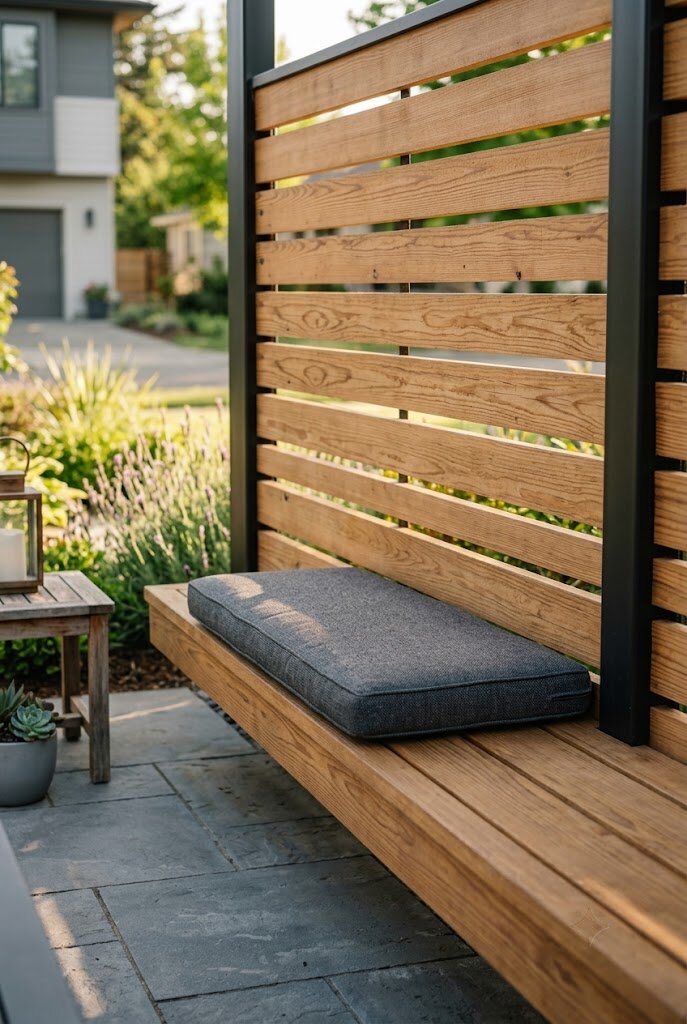
13. Charcoal Gray Horizontal Vinyl Fence Panels
Charcoal gray sits between the boldness of black and the softness of natural wood tones, making it one of the more versatile horizontal vinyl panel colors for homes that want contrast without a fully stark black fence line.
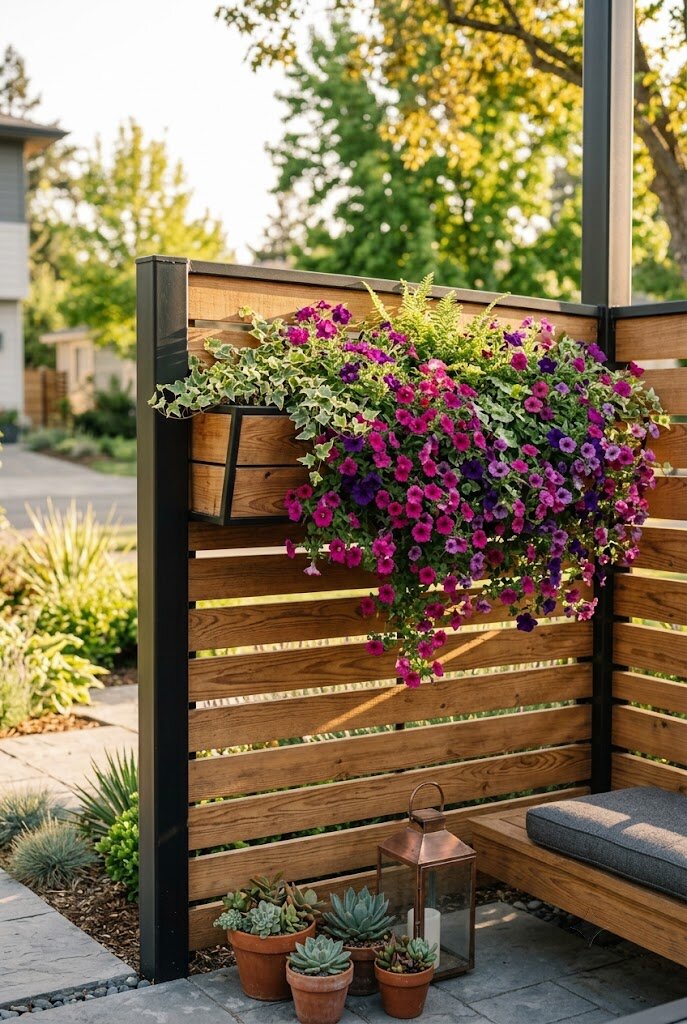
14. Horizontal Fence With Integrated Planter Box Cap
A wide horizontal cap rail built with an integrated planter box trough along its top edge adds greenery directly into the fence structure, softening a horizontal wood or metal fence without needing a separate freestanding planter.
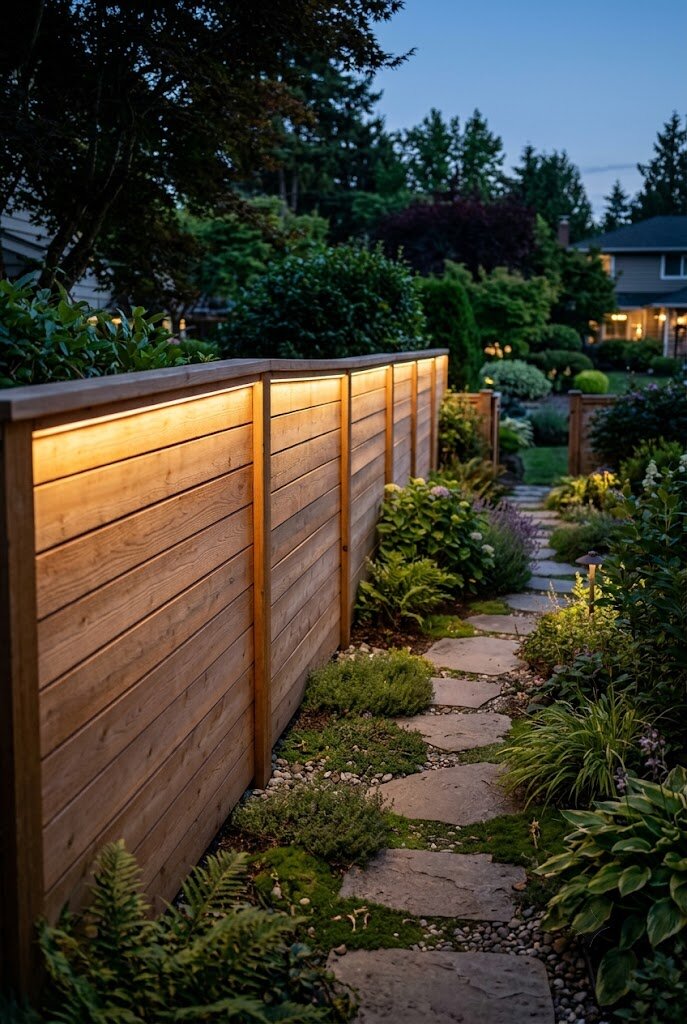
15. Reclaimed Wood Horizontal Fence For Rustic-Modern Texture
Salvaged or reclaimed horizontal boards bring natural tone variation and texture to a horizontal fence design, pairing the architectural cleanliness of horizontal lines with rustic material character — a popular farmhouse-modern crossover look.
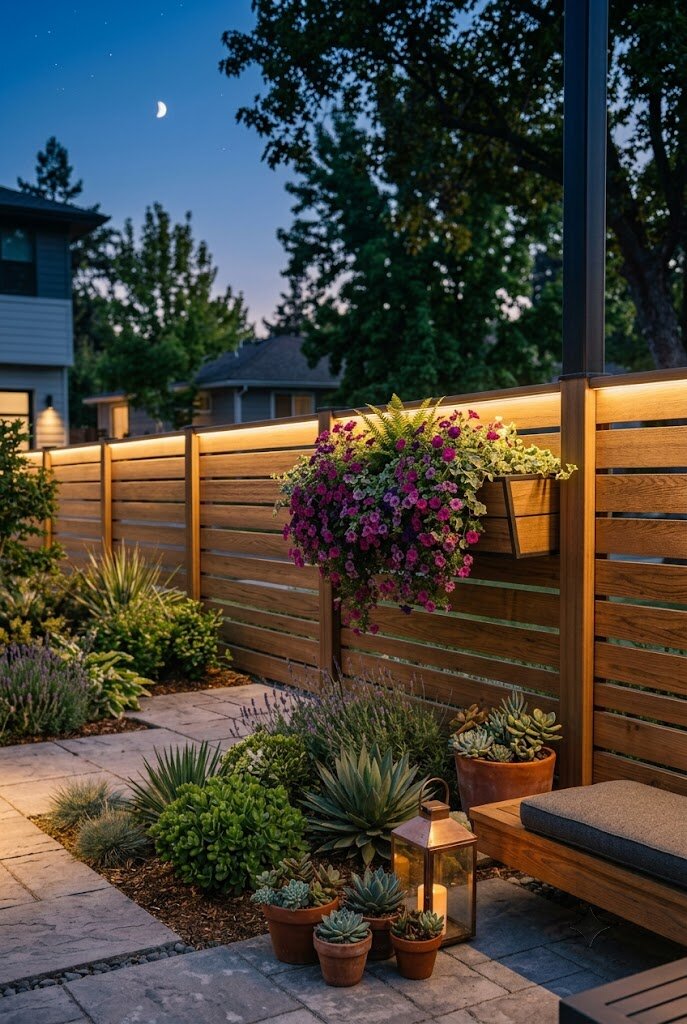
16. Horizontal Fence With Recessed LED Lighting Strip
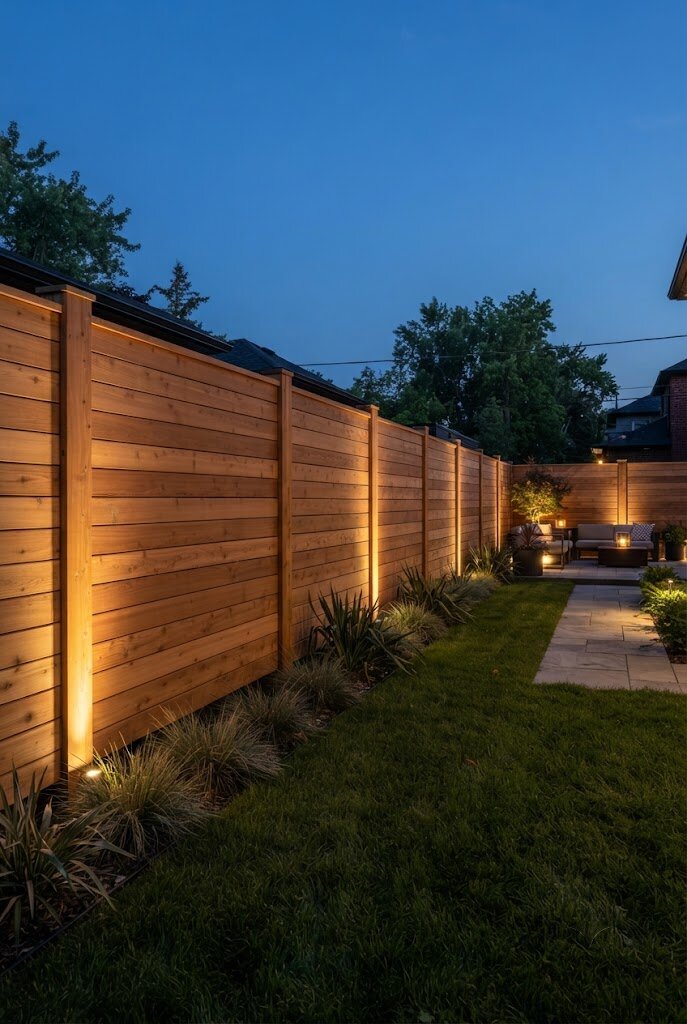
A thin recessed LED strip installed along the underside of the top cap rail illuminates a horizontal fence from above at night, creating a soft downward wash of light that highlights the clean horizontal board lines after dark.
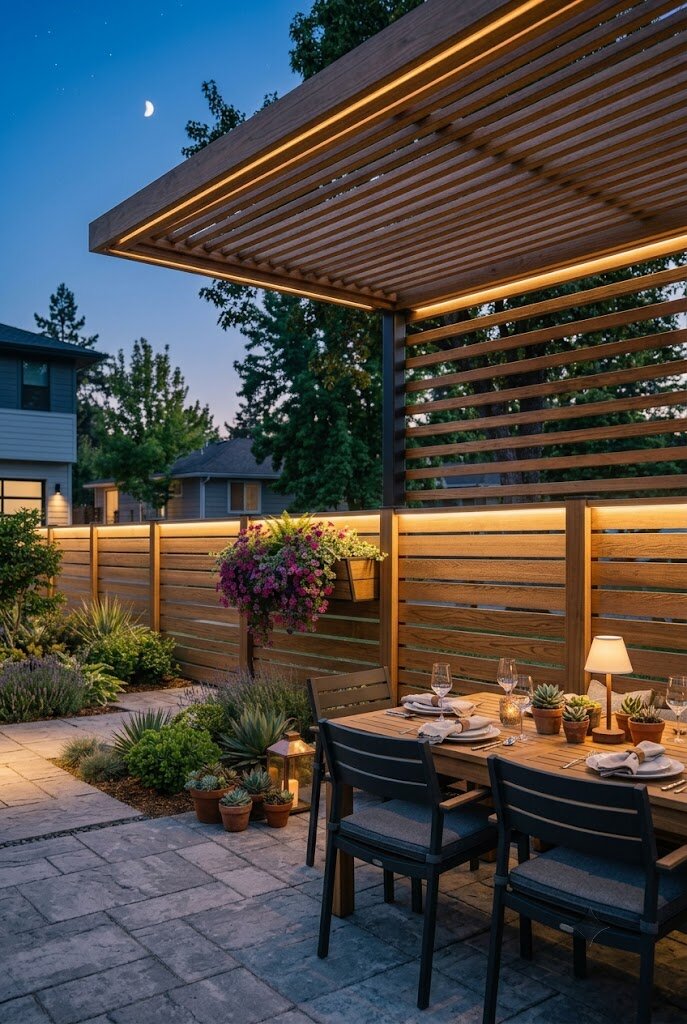
17. Natural-Tone Horizontal Vinyl Fence For A Wood-Look Finish
Wood-grain textured vinyl panels in a natural brown tone give a horizontal fence the visual warmth of real wood with the zero-maintenance durability of vinyl — a strong option for homeowners who love the horizontal wood look but not the upkeep.
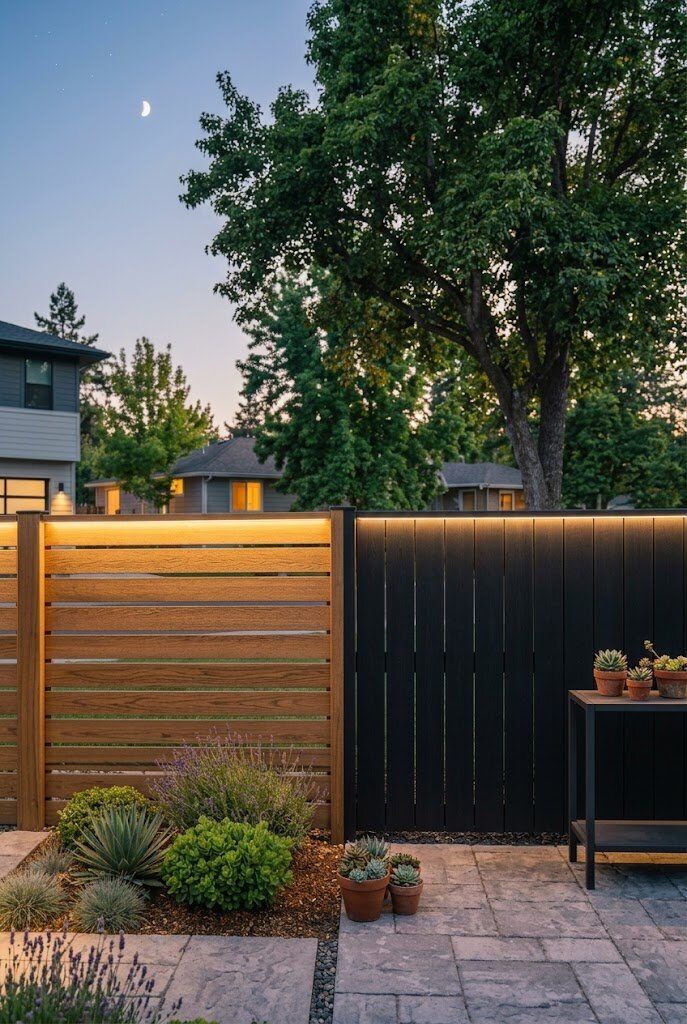
Get this look 👇
Cedar Built-In Fence Bench Bracket Kit (Powder-Coated Steel)
Check on Amazon
Powder-coated steel brackets that turn standard cedar boards into a built-in bench seat along a horizontal fence line, rated for outdoor seating loads.
This exact bench bracket kit →Get this look 👇
Modern Cedar Fence Planter Box Cap Kit (8 ft)
Check on Amazon
A pre-built cedar planter box designed to sit directly on top of an 8-foot horizontal fence run, complete with drainage holes and a liner for trailing plants along the cap line.
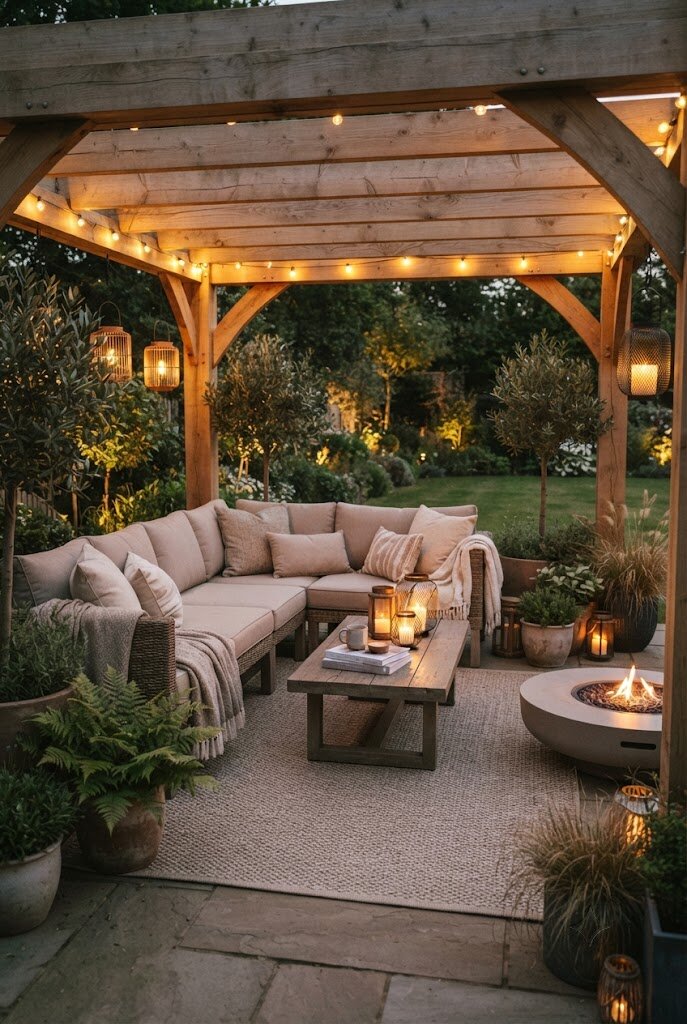
Get the exact planter cap →18. Horizontal Fence Transitioning Into A Pergola Structure
Continuing the same horizontal board spacing and finish from a backyard fence up and over an adjacent pergola creates a cohesive, designed look across the whole outdoor space rather than two visually separate structures.
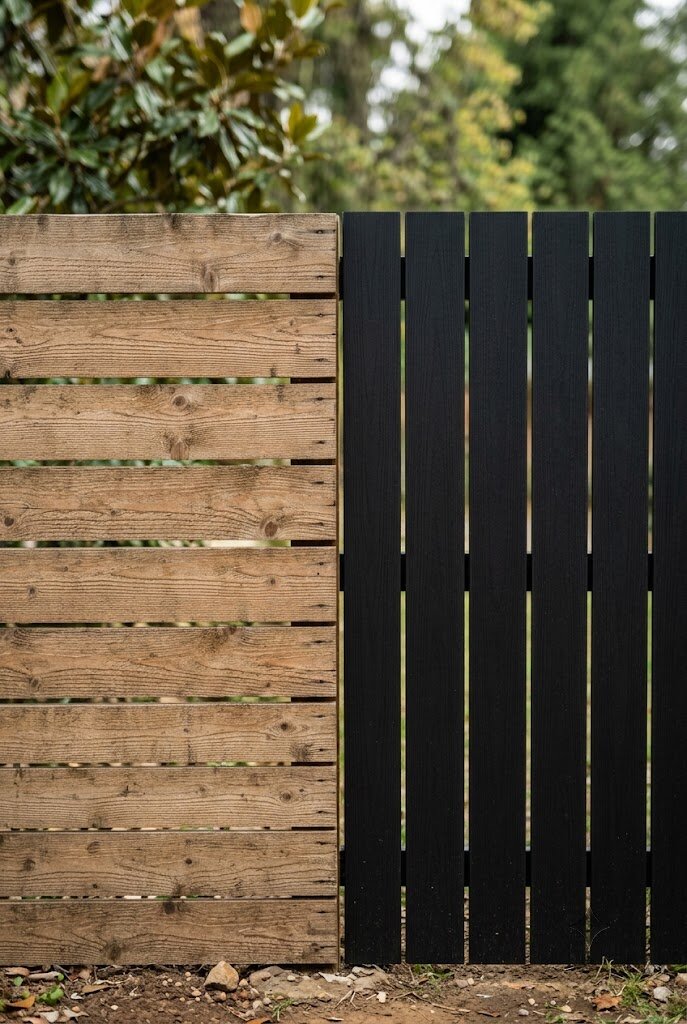
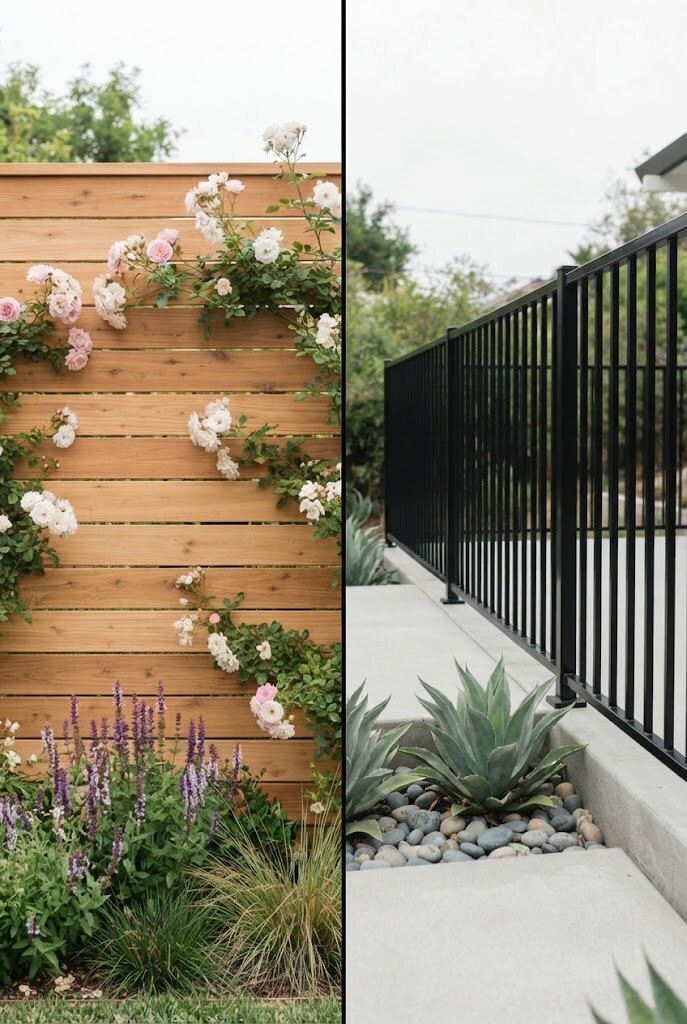
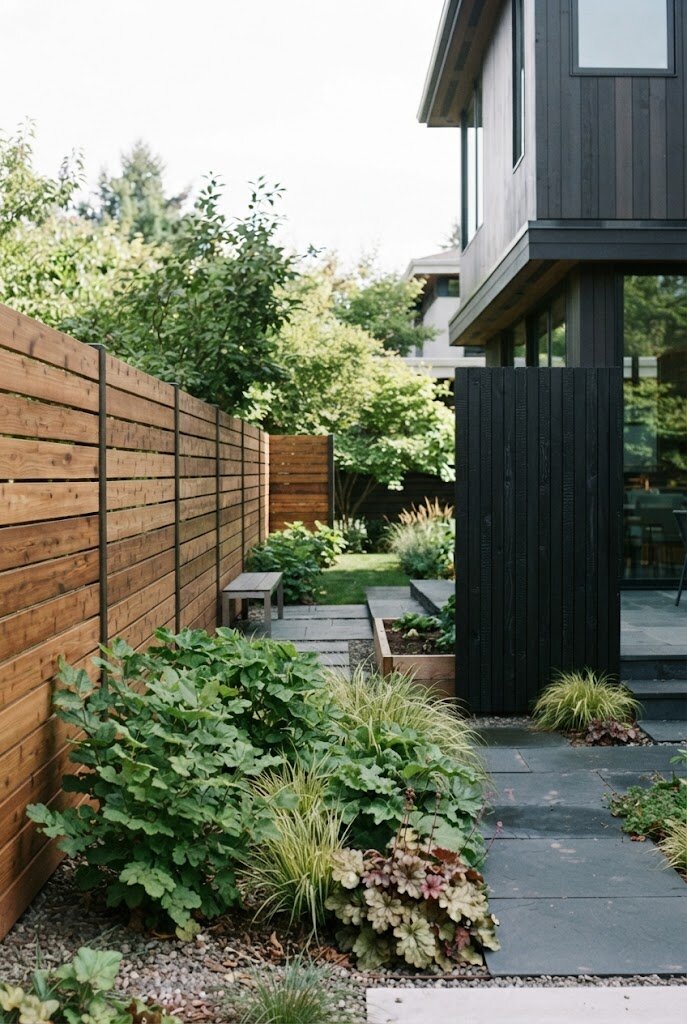
19. Horizontal Vs. Vertical Black Plank: Side-By-Side Comparison
Seeing a horizontal slat section directly beside a vertical black plank section on the same property highlights how differently the two leading modern fence trends read in person — horizontal emphasizing width and calm, vertical black planks emphasizing height and drama.
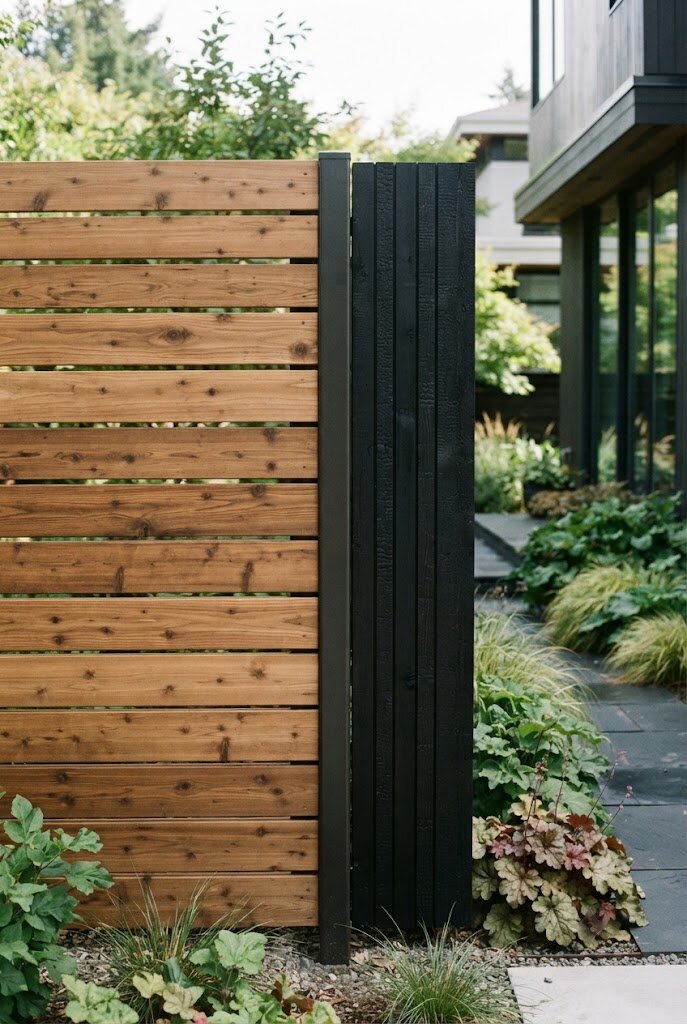
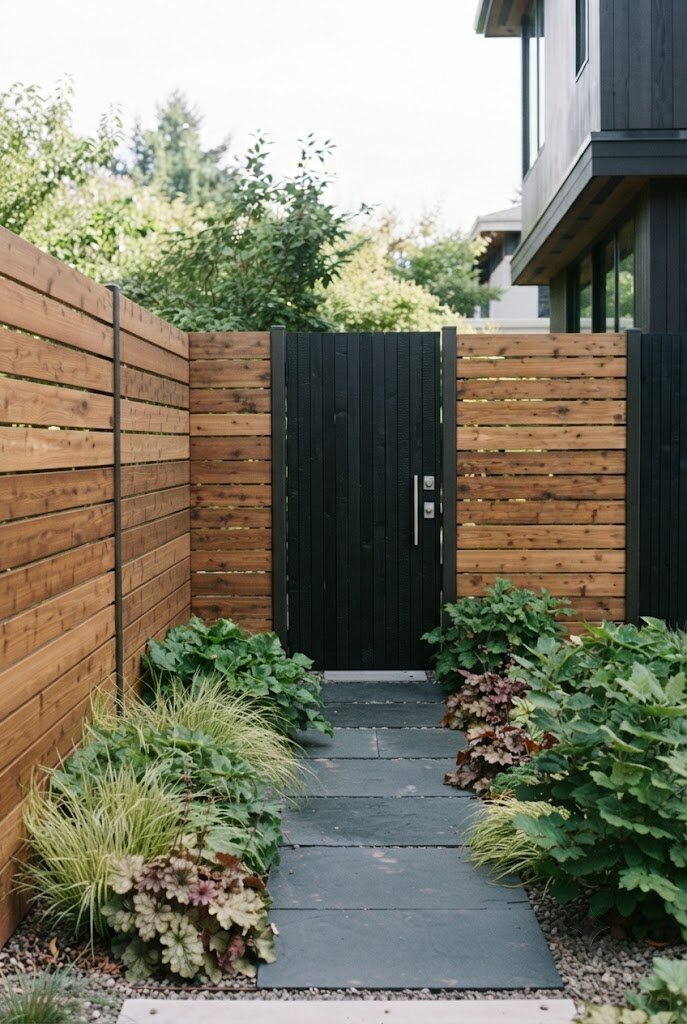
20. Horizontal Fence With A Matching Vertical Black Plank Gate
Using a vertical black plank gate within an otherwise horizontal fence run creates an intentional focal point at the entry, drawing the eye to the gate while the surrounding horizontal boards keep the rest of the fence line calm and architectural.
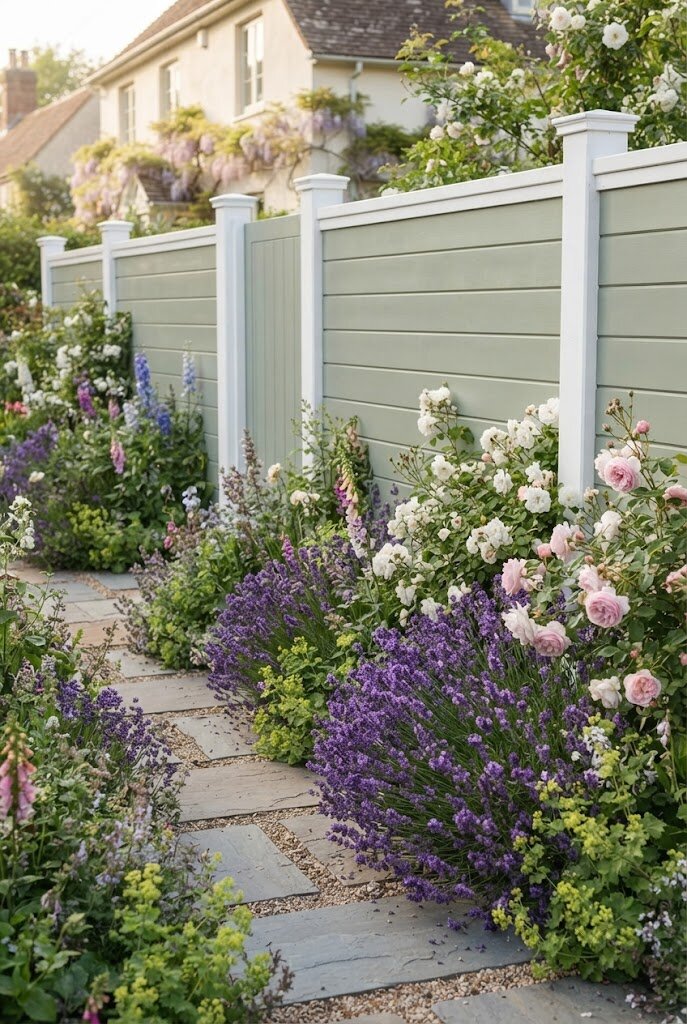
21. Horizontal Fence Painted In Soft Sage Green
Soft sage green is a less common but increasingly popular horizontal fence color, offering a softer alternative to black or charcoal while still reading as current and intentional rather than dated, especially paired with white trim accents.
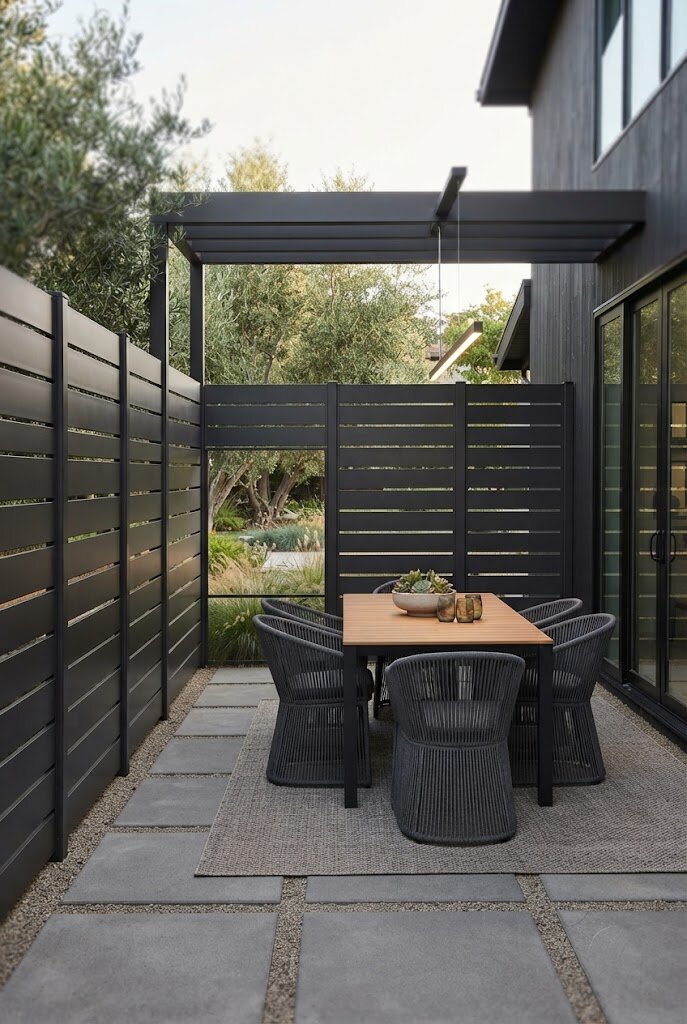
22. Horizontal Metal Fence Panels Around A Modern Patio
Horizontal metal panels installed specifically around a patio or outdoor dining area create a defined, semi-enclosed outdoor room without fully closing off the space, since narrow horizontal gaps still allow airflow and partial visibility.
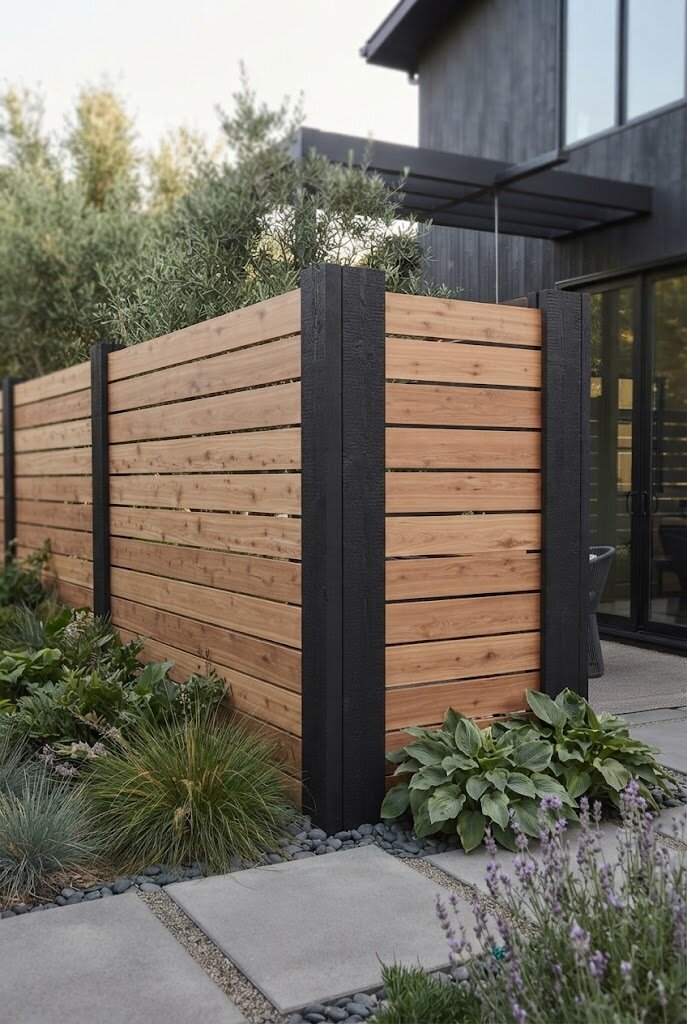
23. Horizontal Fence With Vertical Black Plank Corner Posts
Using vertical black plank-style posts at each corner of an otherwise horizontal fence run adds structural punctuation and a touch of the bold vertical-plank trend without committing to a fully vertical design across the whole fence.
Get this look 👇
Outdoor Fence Uplighting Kit (8-Pack, Low Voltage)
Check on Amazon
An eight-fixture low-voltage uplighting kit with a transformer and ground stakes, designed to wash a long horizontal fence line in even light for nighttime drama.
This exact uplighting kit →Get this look 👇
Black Steel Fence Corner Post Sleeve Caps (Set of 4)
Check on Amazon
Slip-on steel post sleeve caps that give plain corner posts a finished, matching black look — an easy upgrade for framing horizontal panel sections cleanly.
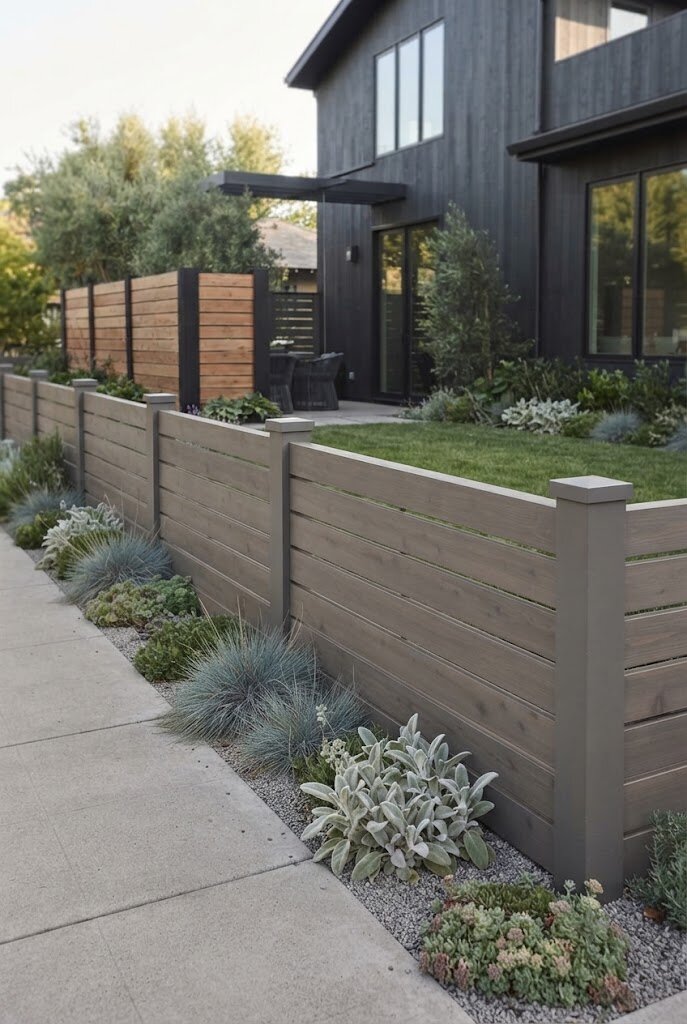
This exact post cap set →24. Low Horizontal Fence For A Modern Front Yard Border
A 3 to 4 foot horizontal fence defines a modern front yard property line without blocking visibility from the street, using the same architectural horizontal lines popular in backyards but at a lower, code-friendly height for front-facing fences.
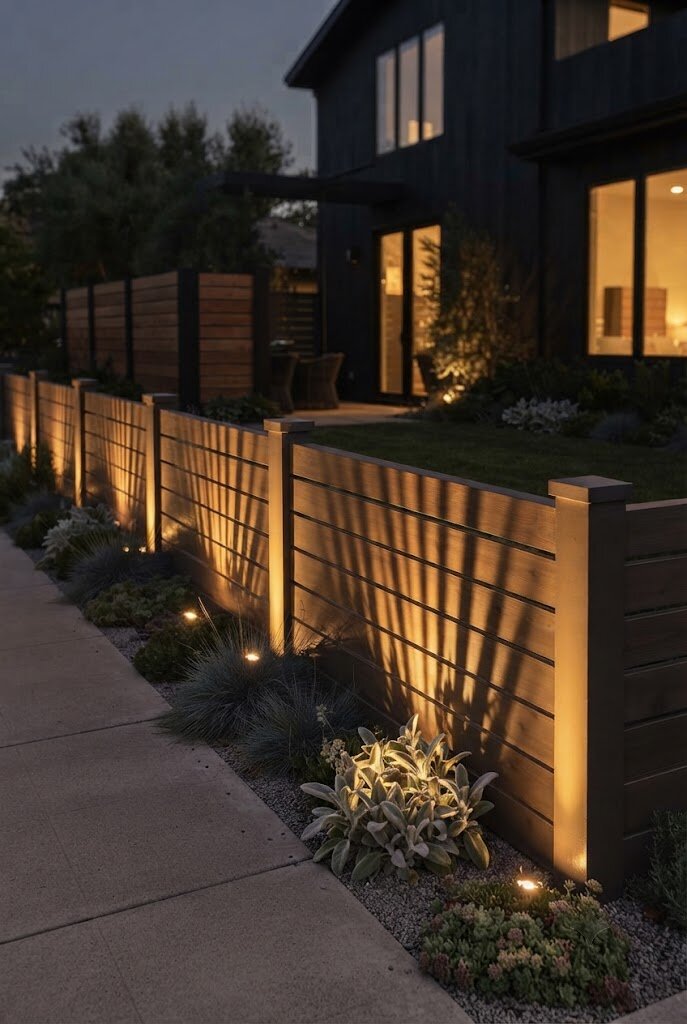
25. Horizontal Fence With Uplighting For Nighttime Drama
Low-voltage uplights placed at the base of a horizontal fence create dramatic shadow lines across the boards once the sun goes down, emphasizing the clean horizontal structure in a way that daylight alone cannot achieve.

Conclusion
Horizontal fencing remains the clearest, most reliable way to signal a contemporary backyard, whether built in warm cedar, zero-maintenance vinyl, or clean powder-coated metal. The trade-off is real — horizontal designs typically cost more and need sturdier framing than vertical builds — but the architectural payoff is what keeps this style at the top of modern fence design searches. If bold contrast matters more to you than horizontal lines specifically, vertical black plank fencing delivers a different but equally current look, and the two trends combine beautifully when used together. Whichever direction you choose, the 25 designs in this guide prove horizontal fencing works at every budget level.